• العربية
  • پښتو
  • فارسی
Brand
  • Afghanistan
  • Sport
  • Markets
  • Afghanistan
  • Sport
  • Markets
  • Theme
  • Language
    • العربية
    • پښتو
    • فارسی
  • Afghanistan
  • Sport
  • Markets
All rights reserved for Volant Media UK Limited
volant media logo

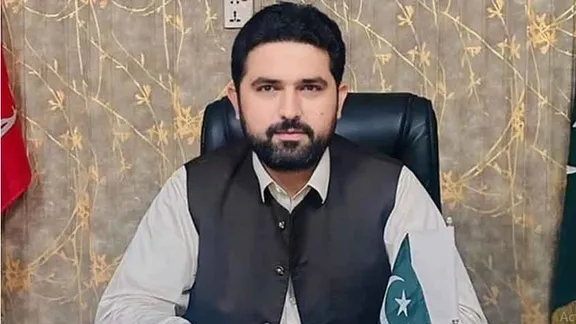
KP Chief Minister Urges Taliban To Halt Attacks As ‘Fellow Pashtuns & Neighbours’

Nov 23, 2025, 16:23 GMT+0

Sohail Afridi, chief minister of Pakistan’s Khyber Pakhtunkhwa province, says he would urge the Taliban to stop cross-border attacks, telling them that both sides as Pashtuns, Muslims and neighbours must cease hostilities. He added that his loyalty lies fully with Pakistan.

According to Insaf, a Peshawar-based newspaper, Afridi told reporters on Sunday that if the Taliban did not accept such an appeal, he would have “justified reasons” for taking a firm stance. He said Pakistan “belongs to us as much as we belong to Pakistan,” noting that his objections relate only to certain policies that need to be changed.

Afridi stressed that Pakistan is his country and that it is the responsibility of the national parliament and government to determine policies in the national interest. He said all issues can be resolved through dialogue and that political leaders have always emphasised negotiations.

Afridi, a member of Pakistan Tehreek-e-Insaf (PTI), was elected chief minister in October after Ali Amin Gandapur stepped down on the direction of the party leadership.

Most Viewed

Taliban Ignore Afghanistan’s Interests By Backing Militants, Says Pakistan Army Chief
1

Taliban Ignore Afghanistan’s Interests By Backing Militants, Says Pakistan Army Chief

2

United Nations Delivers Education Kits To Four Million Afghan Children

3

Taliban Renews Call For China To Launch Aynak Copper Mine

4

Taliban Leaders In South-West Hold Security Meet In Kandahar

5

Afghan Deportations Is Strategic Mistake, Says European Parliament Member

•
•
•

More Stories

Cutting Trade Ties With Pakistan Has Not Hurt Afghanistan’s Commerce, Says Taliban

Nov 23, 2025, 15:01 GMT+0

The Taliban’s Ministry of Finance says the suspension of trade with Pakistan has caused “no negative impact” on Afghanistan’s commercial activity and that customs revenues remain stable. The ministry said it will continue supporting traders seeking alternative transit routes.

The statement follows heightened border tensions between Kabul and Islamabad and the closure of key crossings. Pakistan’s Dawn newspaper reported on 11 November that the month-long shutdown of the Torkham crossing had caused more than 4.5 billion dollars in losses to trade and to the economies of both countries.

On 18 November, the Pakistan-Afghanistan Joint Chamber of Commerce and Industry said bilateral trade had dropped from an annual 5 billion dollars to less than 1 billion because of repeated border closures.

Earlier, the Taliban’s deputy prime minister for economic affairs urged Afghan traders to use alternative trade and transit routes.

Despite this, the Taliban’s Ministry of Finance insisted that cutting trade ties with Pakistan has “not affected Afghanistan’s commerce,” saying the country’s trade with regional and global partners continues “normally and without any challenges.” The ministry said it has provided “necessary facilities” for domestic and foreign traders to operate without relying on Pakistan.

The prolonged closure of border crossings has pushed the Taliban to expand commercial cooperation with regional countries, particularly Iran and Uzbekistan. The Taliban have announced that Afghan agricultural products will be exported by air via Uzbekistan to markets in Central Asia, South Asia and Europe.

Pakistan, EU Call For Launch Of Political Process In Afghanistan

Nov 23, 2025, 13:39 GMT+0

Pakistan’s Foreign Ministry and the European Union have jointly called for the start of a credible political process in Afghanistan under the UN-led Doha process.

In a joint statement issued after the seventh round of the EU–Pakistan Strategic Dialogue in Brussels, Pakistan’s Foreign Minister Ishaq Dar and the EU’s High Representative for Foreign Affairs and Security Policy, Kaja Kallas, voiced concern over Afghanistan’s worsening social and economic conditions.

They urged the initiation of a political process within the framework of the UN-led Doha process, created following the November 2023 assessment by UN Special Coordinator Feridun Sinirlioğlu. The roadmap outlines steps toward a political process involving a broad spectrum of Afghan political actors.

According to the statement, Islamabad and the EU support a peaceful, stable and self-reliant Afghanistan that contributes to regional security. They also called on the Taliban to respect human rights, particularly the rights of women and girls, and to protect vulnerable communities.

Both sides further pressed the Taliban authorities to play a constructive role in eliminating terrorism from Afghan territory.

The joint statement said EU and Pakistani officials discussed border tensions with Afghanistan and emphasised the need for regional peace, stability and prosperity, as well as resolving disputes among neighbours through dialogue.

Relations between Pakistan and the Taliban have sharply deteriorated following Pakistani airstrikes inside Afghanistan and subsequent deadly border clashes. Islamabad accuses the Taliban of supporting and sheltering Tehreek-e-Taliban Pakistan (TTP), a claim the Afghan Taliban deny. UN Security Council reports, however, have confirmed the significant presence of TTP commanders and fighters inside Afghanistan.

Resistance Front Does Not Seek Foreign Military Intervention, Says NRF Leader

Nov 23, 2025, 12:26 GMT+0

Ahmad Massoud, leader of the National Resistance Front, says his movement does not want foreign military intervention despite waging armed resistance against the Taliban.

In an interview with the French magazine L’Express, he stressed that what the resistance urgently needs is political support.

In the interview, published on 22 November 2025, Massoud said the Taliban now receive almost the same amount of international aid as the former Afghan republic once did. He said the group is not accountable to global institutions and that the funds are being used to support terrorist networks.

Massoud argued that under the previous government, Afghanistan received about 3 billion dollars annually and had to answer to international oversight bodies. He said the Taliban now receive similar sums but spend them without scrutiny while backing militant groups.

Asked whether Afghanistan has changed since the Taliban returned to power, Massoud said conditions today are “far tougher” than during the era of his father, Ahmad Shah Massoud, the anti-Taliban mujahideen commander. He said the Taliban now enjoy greater international support than ever before.

Massoud said the global community has failed to understand the reality inside Afghanistan, adding that Afghans have lost their international allies while the Taliban have gained more support. He said Western countries have shifted their priorities and Afghanistan is no longer at the centre of global attention, but warned that neglecting democracy could lead to another crisis in the next five to ten years.

According to Massoud, the Taliban claim to have trained 25,000 young men in jihadist schools over the past four years, a development he described as a severe and growing threat.

He said his father fought for freedom against tyranny and was the first Afghan political leader to sign a women’s rights charter. Massoud added that the National Resistance Front continues that vision and seeks a democratic, multicultural Afghanistan.

Massoud formed the National Resistance Front after Kabul fell to the Taliban in August 2021. Under his leadership, the group has carried out armed resistance against Taliban forces for more than four years and continues to build both political and military opposition to the regime.
Uzbekistan, China Discuss Afghanistan Security In High-Level Talks

Nov 23, 2025, 11:17 GMT+0

Uzbekistan’s President Shavkat Mirziyoyev met with China’s Foreign Minister Wang Yi in Tashkent to discuss bilateral cooperation and the situation in Afghanistan.

According to the Uzbek presidency, the talks placed particular emphasis on coordinating approaches to Afghanistan’s socio-economic and security challenges.

Wang Yi visited Uzbekistan to participate in a strategic dialogue of foreign ministers. After meetings with Uzbekistan’s president and foreign minister, he travelled on to Tajikistan.

Like most countries, with the exception of Russia, China and Uzbekistan do not recognise the Taliban authorities, though both maintain active diplomatic and economic engagement with Kabul. However, China and the Central Asian states remain wary of the potential spread of extremism and cross-border terrorist threats from Afghanistan.

In June, leaders of China, Tajikistan, Uzbekistan, Kyrgyzstan, Kazakhstan and Turkmenistan issued a joint statement in Astana expressing support for a peaceful, stable and prosperous Afghanistan free from terrorism and drug trafficking. The signatories also agreed to cooperate in combating terrorism, separatism and extremism across the region.

Afghanistan’s Exports Rose In October Despite Pakistan Border Closure, Says World Bank

Nov 23, 2025, 10:23 GMT+0

Afghanistan’s exports increased in October despite the closure of border crossings with Pakistan, according to a new World Bank report.

The bank said exports rose 13 percent compared with the previous month and 3.7 percent compared with the same period last year, reaching 267 million dollars.

The World Bank attributed the growth to increased exports to India and Uzbekistan. The report added that despite a halt in trade with Pakistan due to border skirmishes, exports were successfully redirected to India and Uzbekistan.

The bank noted that the peak harvest season and relatively low domestic inflation bolstered competitiveness and helped offset losses caused by the disruption of trade through Pakistan.

Food exports in October reached 238.4 million dollars, an 8.6 percent increase from a year earlier, reflecting strong regional demand, the report added.

Pakistan shut key border crossings after recent clashes with Taliban forces, halting trade and transit between the two countries for more than a month.

In response, the Taliban’s deputy prime minister for economic affairs banned the import of medicines from Pakistan and instructed Afghan traders to find alternative trade and transit routes. Following this directive, the Taliban’s commerce minister travelled to Iran to expand commercial ties.

The Taliban have also announced a memorandum of understanding with Uzbekistan for the export of Afghan agricultural products. On 22 November, the Taliban said exports of fresh produce to Uzbekistan and Central Asia had begun through the Hairatan commercial port.

The Pakistan-Afghanistan Joint Chamber of Commerce and Industry has previously urged the reopening of border crossings and the resumption of bilateral trade, warning that while trade potential exceeds 5 billion dollars annually, the volume has fallen below one billion due to repeated disruptions.