Taliban Continue Public Punishments With Flogging In Balkh
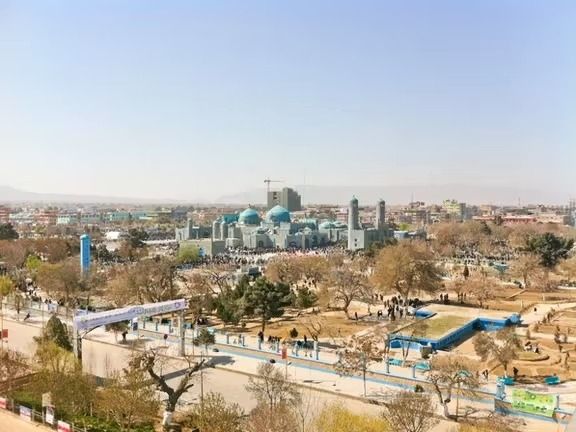
The Taliban’s Supreme Court said two people were publicly flogged in northern Balkh province, continuing the group’s use of corporal punishment under its rule.

The Taliban’s Supreme Court said two people were publicly flogged in northern Balkh province, continuing the group’s use of corporal punishment under its rule.
In a statement issued on Saturday, January 10, the court said the two individuals were convicted of smuggling alcoholic beverages and each received 39 lashes. The punishment was carried out in public in the presence of Taliban officials, clerics and local residents.
Despite repeated objections from international organisations to the use of corporal punishment and the torture of detainees, the Taliban have continued to conduct public floggings. Taliban authorities defend the practice as the implementation of their interpretation of “Islamic sharia”.
According to Taliban statements, six people were executed and 1,118 others flogged across Afghanistan in 2025 alone. Over the past four years, the group has also carried out at least 12 public executions, often in front of large crowds.
Human rights organisations say the Taliban lacks a standardised judicial system and that defendants are routinely denied basic fair trial guarantees, including access to legal representation and due process.


The Supreme Council of National Resistance for the Salvation of Afghanistan said it is closely monitoring protests in Iran and urged the authorities to address citizens’ legitimate demands through dialogue.
In a statement released on Friday, January 9, the council emphasised the right to peaceful protest and said it expects the Iran’s Islamic Republic to engage with demonstrators and respond to public grievances in a constructive manner.
The council said it hopes conditions will be created for the Iranian people’s demands to be addressed through civic and peaceful means, warning that failure to do so could lead to further escalation and instability.
It also rejected and described as unacceptable any “interference, provocation or exploitation by foreign actors” of sensitive social situations and legitimate public demands.
“The bitter and costly experiences of various countries, especially what the people of Afghanistan have endured as a result of foreign interventions, clearly demonstrate that such interference has not brought stability or calm,” the statement said. “Instead, it has deepened crises, weakened national sovereignty and eroded social foundations.”
The council reiterated its call on Iranian authorities to respond to citizens’ demands with prudence and responsibility, based on constructive dialogue, and to avoid actions that could inflame tensions.

The World Health Organization said health needs in Afghanistan have increased as winter conditions worsen, with growing demand for medical services across the country.
Tedros Adhanom Ghebreyesus, the WHO’s director-general, said on Friday that over the past three months the agency has distributed 223 metric tonnes of essential medicines and medical supplies to 193 health facilities in 25 provinces.
He said that with support from the European Union and the Japan International Cooperation Agency, more than 200,000 people are receiving assistance in areas where access to health care has been disrupted by heavy snowfall.
According to the WHO, the medicines and equipment are being used to treat respiratory infections, measles, malnutrition and other urgent health conditions. Tedros said the agency remains committed to working towards universal access to health care in Afghanistan.
Despite the additional aid, health needs remain acute. Reports indicate that current assistance is insufficient to sustain basic health services for millions of Afghans, with about one-quarter of the population lacking access to health facilities near their homes.
Assessments by humanitarian organisations cite a shortage of health centres in rural areas, a lack of doctors and health workers, and limited transport options as key barriers to accessing health care.
According to aid groups, more than half of Afghan families do not have access to basic health services, a gap that has put children’s health at particular risk, especially in remote and rural communities.

Afghanistan remains a major producer of narcotics, with Türkiye serving as a key transit route for Afghan drugs bound for Europe, according to a new report by Türkiye’s anti-narcotics police.
The report, titled Drugs in Türkiye 2025, says the Balkan route, which runs from Afghanistan through Iran and Türkiye into Europe, remains the most frequently used corridor for trafficking Afghan-origin opiates. It also highlights southern and northern routes passing through Türkiye as major pathways for drug smuggling.
According to the report, Türkiye’s strategic location places it among the leading countries for seizures of Afghan-origin heroin destined for European markets, the Turkiye Interior Ministry said.
While the report does not specify the total volume of Afghan-origin drugs seized in Türkiye, available data show that more than 15 tonnes of heroin were confiscated in the country between 2022 and 2024.
The report notes that the Taliban’s return to power and their ban on poppy cultivation have reduced cultivation levels and opiate production in Afghanistan. However, it says the country remains the world’s largest supplier of illicit drugs.
According to the report, poppy cultivation in Afghanistan, recorded at 10,800 hectares in 2023, rose by 19 percent in 2024. It adds that continued strict enforcement of the Taliban’s poppy ban could have significant consequences both within Afghanistan and in major global markets for illegal opiates.
The report also identifies Afghanistan, Morocco, Pakistan and Lebanon as major global producers and suppliers of powdered cannabis, and says Afghanistan is a primary source of methamphetamine production and trafficking.
However, it does not provide specific figures on methamphetamine seizures in Türkiye linked to Afghan production.
Türkiye is a major transit country between Asia and Europe, and authorities have repeatedly warned that regional instability and drug production in Afghanistan continue to pose serious challenges for international counter-narcotics efforts.

The Taliban have expanded a ban on publishing and broadcasting images of living beings to 24 provinces across Afghanistan, further tightening restrictions on media and freedom of expression, the Afghanistan Journalists Center said.
In a statement issued on Thursday, January 8, the Afghanistan Journalists Center said the Taliban’s Ministry for the Propagation of Virtue and Prevention of Vice has enforced the ban in Uruzgan province, ordering media outlets to stop publishing images and converting the provincial state television channel into a radio station.
The centre said the move is part of a broader, nationwide expansion of the policy, which now applies officially in 24 provinces. It added that new restrictions have also been imposed on the work of journalists and media organisations in Uruzgan.
According to the statement, Abdul Hai Omari, the Taliban-appointed head of the Ministry for the Propagation of Virtue and Prevention of Vice in Uruzgan, instructed local media outlets during a coordination meeting on Wednesday to refrain from taking or publishing images. He cited Article 17 of the ministry’s law and warned that “violators will be considered criminals and will face legal action”.
The Afghanistan Journalists Center said enforcing the ban violates fundamental principles of freedom of expression and free media, warning that it would have serious consequences for journalists and media outlets. The organisation called on the Taliban to ensure an environment in which media can operate freely and without fear.
Under the Taliban’s law on the propagation of virtue, the publication of images of “living beings” is prohibited. In enforcing the rule, the Taliban have suspended the operations of state television channels and other local media outlets in several provinces.
International organisations have repeatedly condemned the ban and urged the Taliban to review the policy and respect freedom of expression in Afghanistan.

Trade between Pakistan and Afghanistan has dropped by 53 precent amid the prolonged closure of key border crossings, Pakistani media reported, citing official data.
The Nation newspaper reported that bilateral trade fell from $1.26 billion in the first half of the 2024–25 fiscal year to $594 million in the same period of 2025–26. An official source told the newspaper the sharp decline was primarily due to the continued shutdown of border crossings between the two countries.
According to the report, Pakistan closed eight border crossing points with Afghanistan following clashes between Pakistani forces and the Taliban on October 11, 2025.
Pakistani exporters are losing an estimated $177 million per month as a result of the prolonged closures, the newspaper said.
Pakistan’s Foreign Ministry has repeatedly said the crossings will remain closed until Afghanistan’s rulers provide credible, written guarantees to prevent militant attacks and take action against Tehreek-e-Taliban Pakistan, or TTP.
Trade ties between Pakistan and Afghanistan have deteriorated amid rising security tensions, with Islamabad accusing the Taliban of failing to curb militant activity along the border, an allegation the Taliban deny.