Trump Questions NATO Contributions In Afghanistan, Sparks Criticism
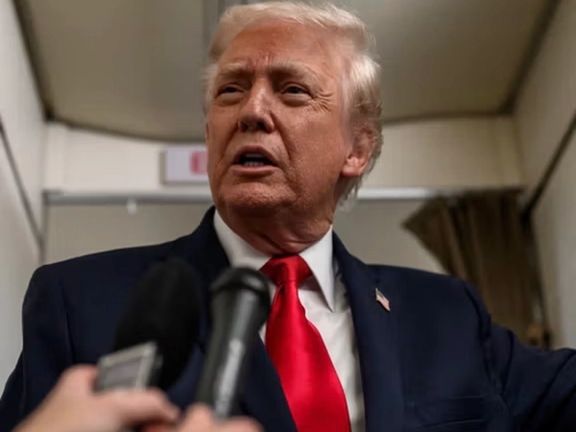
Donald Trump said the role of NATO forces in the war in Afghanistan has been exaggerated, claiming allied troops stayed behind US soldiers and away from front-line fighting.

Donald Trump said the role of NATO forces in the war in Afghanistan has been exaggerated, claiming allied troops stayed behind US soldiers and away from front-line fighting.
Speaking Thursday on the sidelines of the World Economic Forum in Davos, Trump told Fox News: “We’ve never needed them. We have never really asked anything of them. You know, they’ll say they sent some troops to Afghanistan, or this or that. And they did, they stayed a little back, a little off the front lines.”
Trump also voiced scepticism that NATO members would come to the United States’ defence if Washington were ever in need.
The remarks prompted strong reactions from several allied leaders and officials.
British Prime Minister Keir Starmer described the comments as “insulting and appalling”, noting that 457 British service personnel were killed during the Afghanistan war. In a video posted on his account on X, Starmer said the remarks had hurt the families of those killed as well as the wider British public.
Al Carns, the UK armed forces minister, also pushed back, saying British forces served on the front lines in Afghanistan and often beyond.
Polish Prime Minister Donald Tusk responded earlier by urging that Trump be reminded of Polish soldiers who were killed in Afghanistan.
In the United States, former national security adviser John Bolton described Trump’s comments as an attack on NATO. Writing on X, Bolton said: “Trump is embarrassing the American people by his attacks on NATO allies that fought with us in Afghanistan, not to mention justifiably outraging the allies.”
The White House, responding to the criticism, said: “President Trump is right.”


Rosemary DiCarlo, the United Nations under-secretary-general for political and peacebuilding affairs, has arrived in Afghanistan and is expected to hold talks with Taliban officials in Kabul, sources told Afghanistan International.
UN Secretary-General spokesperson Stéphane Dujarric said earlier that DiCarlo’s visit is aimed at following up on the Doha process, a UN-led diplomatic track focused on Afghanistan.
Her arrival coincides with the International Day of Education. For nearly four and a half years, the Taliban have barred girls from attending secondary school, and Afghan women and girls remain excluded from universities.
The Doha process, led by the United Nations, was established to create a political framework for dialogue between the international community, regional countries and the Taliban to address Afghanistan’s political, security and humanitarian crises.
Three rounds of the Doha process have been held so far. The most recent meeting was led by DiCarlo, with Taliban representatives in attendance.
DiCarlo previously visited Kabul several months after the Taliban returned to power in 2021. At the end of that three-day trip, she said the United Nations remained committed to the people of Afghanistan and would continue to support their efforts to build an inclusive, just and peaceful society.

A senior adviser to Uzbekistan’s president says the country joined the peace initiative launched by Donald Trump primarily over security concerns, including fears about the spread of extremism from Afghanistan.
Abdulaziz Kamilov, the Uzbek president’s foreign policy adviser, told state broadcaster Uzbekistan 24 that developments in the Middle East are directly linked to Afghanistan’s security situation and could have consequences for Central Asia.
He said that following the outbreak of conflict and war in the Middle East, extremist groups and movements relocated to Afghanistan, adding that some of these groups have links to Central Asia.
Explaining Uzbekistan’s decision to join the Trump-led initiative, Kamilov said the move was driven mainly by security considerations and aligns with the country’s national interests.
According to Kamilov, the goals and mission of the initiative are consistent with the core principles of Uzbekistan’s foreign policy. He said Tashkent has important interests in the region tied to national, regional and global security.
The Uzbek official said his country closely monitors developments in the Middle East, particularly threats linked to extremism. He added that some Uzbek citizens had joined extremist groups in the region and later attempted to cause problems after returning home. However, he said authorities facilitated their return and created conditions for their social reintegration and a fresh start.
Kamilov said this humanitarian approach has been praised by the United Nations and could serve as a model for other countries.
He again linked developments in the Middle East to Afghanistan’s security, saying that before the conflict there were no extremist or terrorist organisations in Afghanistan, but such groups emerged after the war as they moved in from the Middle East.
Kamilov stressed that coordinated international cooperation is essential to counter these threats.
Uzbek President Shavkat Mirziyoyev signed an agreement with Trump on the sidelines of the World Economic Forum in Davos to establish the peace initiative. The agreement was concluded in the presence of representatives from Middle Eastern countries, South America, two European countries and the South Caucasus.
Trump initially designed the initiative to help end the war in Gaza and later expanded its scope, a move some world leaders have criticised as undermining the United Nations.
Kyrgyzstan has also joined the initiative.

According to a document obtained by Afghanistan International, the Taliban’s Council of Clerics in Badakhshan has offered financial rewards and security guarantees to Ismaili Muslims who convert to Sunni Islam.
Sources say conversions are being enforced through threats and intimidation. The document shows that the Taliban clerics’ council in Badakhshan has drawn up formal guidelines aimed at supporting and encouraging the conversion of Ismailis to Sunni Islam.
The Taliban have established councils of clerics in every province, with members appointed directly by the group’s leader. These councils hold broad authority, and local officials are required to operate in consultation with them.
According to the document, the guidelines were prepared with representatives from the departments of Hajj and Religious Affairs, Education, the Appeals Court and the Office for the Implementation of the Taliban leader’s decrees.
Under the guidelines, Ismailis who convert to Sunni Islam are promised security guarantees, cash rewards and other forms of financial assistance. They are also to be offered placements for young people in religious schools outside Ismaili-populated areas, as well as jobs in government institutions.
The document further states that students who change their sect should receive financial incentives, while religious seminars will be organised to encourage and persuade conversions. It also refers to the deployment of religious teachers in schools in Ismaili areas and the construction or reopening of mosques in their communities.
Sources told Afghanistan International that Taliban morality police in Badakhshan are forcing people to convert through intimidation.
Earlier this year, the UN mission in Afghanistan reported that the Taliban had compelled more than 50 Ismailis to convert to Sunni Islam in the first three months of 2025.
At the same time, local sources said two Ismailis were wounded on Tuesday evening after being shot by unidentified gunmen in the city of Faizabad.
In the Taliban’s criminal courts code, a copy of which was recently obtained by Afghanistan International, followers of the Hanafi school are recognised as Muslims, while followers of other sects are described as deviant.
Recently, the Taliban’s minister for the propagation of virtue claimed during a meeting with Ismaili representatives that their rights are protected in Afghanistan. The Taliban said the meeting was intended to improve coordination, hear concerns and cooperate on religious outreach.

Local sources in Faizabad, the capital of Badakhshan province, say two young men from the Ismaili community were wounded after being shot by armed assailants.
According to the sources, the men, both residents of Shighnan district, were targeted on Thursday evening, in the Dasht-e Qargh area of Faizabad as they were closing their shop and heading home.
Sources told Afghanistan International that the two victims were taken to the central hospital in Faizabad, where their condition has been reported as critical. They were identified as Shah Nazar and Ghulam Hussein.
The assailants reportedly opened fire from inside a vehicle before fleeing the scene. Taliban local officials have not commented on the incident.
The attack comes amid growing concerns over violence against the Ismaili community in Badakhshan. Earlier, local sources reported that Mohammad Shah, an Ismaili Muslim from Shighnan district who worked for a private office, was shot dead by armed individuals in the same area of Faizabad.
According to local sources, pressure on followers of the Ismaili faith has intensified sharply in recent months, particularly in Badakhshan. They said that at least three Ismaili men were killed by unidentified gunmen in the province over the past month alone.
A report by the United Nations Assistance Mission in Afghanistan said that during the first three months of 2025, Taliban officials coerced more than 50 Ismaili Muslims into converting to Sunni Islam, using beatings, intimidation and death threats against those who refused.
Documents obtained by Afghanistan International show that the Taliban’s Council of Ulema in Badakhshan has drafted a directive ordering the conversion of Ismaili followers.
Earlier, Khalid Hanafi, the Taliban’s minister for the propagation of virtue and prevention of vice, claimed during a meeting with an Ismaili Shiite delegation that the rights of Ismailis are protected in Afghanistan.

The United Nations has urged urgent assistance as heavy snowfall continues across Afghanistan, with UNICEF warning that worsening weather is compounding the suffering of children affected by recent earthquakes in the east of the country.
UNICEF expressed concern that snowfall has intensified an already dire humanitarian situation, while Taliban authorities reported deaths, injuries and the closure of major transport routes due to severe weather conditions.
Mohammad Ashraf Haqshenas said two people were killed and 12 others injured as a result of avalanches and severe storms in the Do Shakh area of the Salang Pass. He said the Salang highway and several other major routes remain closed to traffic, adding that snow-clearing operations are under way in multiple locations.
Taliban officials in Herat also reported that the Herat–Kandahar highway has been closed to all vehicles because of icy conditions. Storms and strong winds continued in some areas on Friday, particularly in South Salang. The Taliban urged citizens and drivers to avoid travelling on impassable routes.
In a post on X, UNICEF said: “Heavy snowfall overnight has made an already dire situation even harder for children in eastern Afghanistan affected by the earthquake. We are responding with continued services, but the needs are growing fast, and more support is urgently needed.”
Heavy snowfall has caused widespread human and financial losses. Afghanistan’s state-run electricity company, Da Afghanistan Breshna Sherkat, said on Thursday that the imported power line from Uzbekistan along the Pul-e-Khumri–Kabul route had been cut.
The Taliban said on Thursday that the nationwide death toll from heavy snowfall and rainfall has risen to at least 14.