Kazakhstan Reports Sharp Rise In Grain Exports To Afghanistan

Grain exports from Kazakhstan to Afghanistan nearly doubled between September 2025 and the end of January 2026, the country’s national railway company said.

Grain exports from Kazakhstan to Afghanistan nearly doubled between September 2025 and the end of January 2026, the country’s national railway company said.
Kazakhstan Temir Zholy said shipments to Afghanistan rose from 216,000 tonnes to 416,000 tonnes over the five-month period.
During the same timeframe, Kazakhstan exported 5.8 million tonnes of grain worldwide, an increase of about one million tonnes compared with the same period a year earlier, the company said.
It said exports to Afghanistan increased by about 1.9 times as trade relations between Afghanistan and Pakistan remain suspended and Taliban authorities seek alternative trade routes.
Most of Afghanistan’s grain imports are currently supplied by Central Asian countries, particularly Kazakhstan. Following disruptions to trade and transit routes with Pakistan, Afghanistan’s reliance on imports from Central Asia has grown significantly.
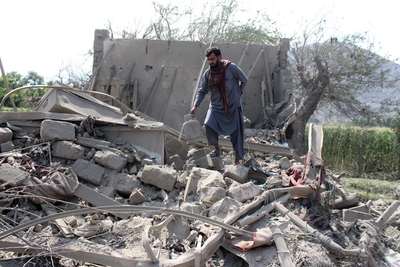

Human Rights Watch said in its annual report that the Taliban expanded repression in 2025 by tightening restrictions on women and girls, increasing media controls and presiding over a deepening humanitarian crisis.
The watchdog said that it is while aid declined and migrants were expelled from neighbouring countries.
The report examines women’s and girls’ rights, corporal punishment, the treatment of people with diverse sexual orientation and gender identity, attacks on media and civil society, the situation of minorities, the economic and humanitarian crisis, and issues of justice and accountability.
Situation of Women and Girls
According to the report, the Taliban maintained the ban on girls’ education in 2025 and imposed further restrictions on women’s freedom of expression. It said the group’s morality police even barred women’s voices from being heard while reciting the Quran in public.
The report added that in September the Taliban banned the teaching of books written by women at universities and, through strict dress and behaviour rules, set up committees to monitor public spaces.
Corporal Punishment and Enforced Disappearances
Human Rights Watch said the Taliban carried out at least four executions last year in Nimroz, Badghis and Farah provinces. Citing the United Nations Assistance Mission in Afghanistan, the report said 414 people, including 83 women, were publicly flogged during the same period.
The report also documented 31 cases of arbitrary arrest and detention and eight allegations of torture and ill-treatment of former government officials and former members of the security forces.
Sexual Orientation and Gender Identity
The group said LGBT people in Afghanistan faced systematic abuse in 2025, with Taliban authorities targeting them for arrest and exploitation.
Attacks on Media, Civil Society and Minorities
The report said the Taliban continued to restrict the media, arbitrarily detaining journalists and critics, and banning political programming and reporting on human rights violations.
Activists, academics, writers and artists were also targeted and face a serious risk of arrest and abuse, it said. The report cited several cases of arbitrary detention.
It also said Taliban members used physical violence and death threats to pressure about 50 members of the Ismaili community in Badakhshan to convert to Sunni Islam, while pressure on Hazaras and other minorities persisted.
Economic and Humanitarian Crisis
The report said Afghanistan’s economic and humanitarian crisis worsened in 2025 following sharp cuts in foreign aid, Taliban restrictions and the mass forced deportation of migrants from Iran and Pakistan.
More than 22 million people faced food insecurity last year, over 400 health centres closed because of funding shortages, and millions suffered from malnutrition and required urgent humanitarian assistance, it said.
Return of Migrants
More than two million Afghans were forcibly deported from Iran and Pakistan in 2025, the report said. Many returnees faced the risk of arrest, torture and ill-treatment after returning.
It added that the suspension of resettlement programmes in countries including the United States, the United Kingdom, Germany and Canada left thousands of Afghan refugees in prolonged uncertainty.
Attacks on Civilians
Human Rights Watch referred to cross-border clashes between Taliban forces and Pakistani troops, saying fighting and Pakistani airstrikes last year killed and wounded civilians, including children, in eastern Afghanistan.
According to the report, the Islamic State group also claimed responsibility for several deadly attacks against civilians, including a suicide bombing at a bank in Kunduz province.
Justice and Accountability
Human Rights Watch said that in 2025 the United Nations Human Rights Council established an independent international accountability mechanism for Afghanistan, and the International Criminal Court issued arrest warrants for senior Taliban leaders on charges of crimes against humanity.
The report added that UNAMA’s mandate was extended last year, judicial investigations into alleged crimes by military forces continued in countries such as the UK, and international efforts to pursue accountability for systematic discrimination against Afghan women intensified in international courts.

Afghanistan ranks third globally for the highest number of casualties caused by explosive ordnance, the United Nations Mine Action Programme said, warning that explosive remnants of war continue to threaten livelihoods and food security.
According to the UN assessment, contamination from landmines and unexploded ordnance has restricted access to agricultural land, water resources, residential areas and grazing land.
The report says more than 1,069 square kilometres of Afghan territory remain contaminated with explosive ordnance. Grazing land alone accounts for about 756 square kilometres, posing a severe threat to families dependent on livestock and agriculture.
Children are the primary victims of landmines and unexploded ordnance, accounting for about 80 precent of casualties, the programme said. Many are injured or killed while playing and coming into contact with explosive materials.
The data show contamination has also restricted access to more than 120 square kilometres of farmland and over 155 square kilometres of residential areas and public facilities.
The UN warned that widespread contamination by landmines and other explosive ordnance remains one of Afghanistan’s most serious humanitarian challenges, with direct economic and food-security consequences for local communities.
About 2.7 million people live within one kilometre of contaminated areas, the report said, with 1,565 local communities and 258 districts affected.
The assessment found that hundreds of educational and health facilities are located near contaminated areas, putting children’s safety and access to basic services at risk.
The UN Mine Action Programme said that in December 2025 alone, more than 80 square kilometres of land were cleared of landmines and explosive remnants of war, and more than 18,000 explosive items were destroyed.
The programme stressed the importance of public awareness, describing it as one of the most effective ways to reduce civilian casualties, particularly among children. Alongside clearance operations, more than 2.2 million people have benefited from explosive ordnance risk education programmes, many of them children.

The fourth counter-narcotics working group meeting under the Doha Process was held in Kabul, hosted by the United Nations Assistance Mission in Afghanistan (UNAMA). During the meeting, the Taliban representatives raised concerns about the spread of synthetic drugs.
Zia Ahmad Takal, head of information and public relations at the Taliban’s foreign ministry, said Wednesday that representatives from UN offices in Kabul, the European Union, the Organisation of Islamic Cooperation, ambassadors, diplomats and a number of experts took part in the meeting, both in person and online.
Taliban officials told the meeting that the sources of synthetic drugs lie outside Afghanistan and warned that failure to curb their spread would harm the region and the wider world. They also claimed that poppy cultivation in Afghanistan has “almost reached zero”.
At the session, Taliban representatives presented proposals on alternative livelihoods for farmers, treatment for people with drug addiction and other challenges facing counter-narcotics efforts in the country.
According to the Taliban, representatives of several international organisations and countries expressed support for counter-narcotics efforts in Afghanistan. Participants stressed the need to create alternative livelihoods and to take effective steps to treat and reintegrate people with drug addiction into society.
Taliban officials said tackling drugs in Afghanistan is in the interest of the region and the world, adding that progress requires investment, cooperation, coordination and mutual trust. They also said international representatives welcomed what they described as a reduction in poppy cultivation.
Hibatullah Akhundzada, the Taliban’s leader, issued a decree banning the cultivation and production of drugs a year after the group returned to power. However, reports indicate that drug cultivation and production continue in some areas in Afghanistan.

Türkiye has reduced the level of its diplomatic representation in Afghanistan following the end of the mission of its former ambassador to Kabul.
After the departure of Cenk Unal, Ankara appointed Sadin Ayyildiz as chargé d’affaires in Kabul in December, rather than sending a new ambassador. Ayyildiz met Tuesday with Amir Khan Muttaqi, the Taliban’s acting foreign minister.
The talks focused on expanding bilateral relations, particularly in the economic and health sectors, according to officials.
Since the Taliban returned to power, Türkiye has changed its top envoy to Kabul at least twice. The decision to send a chargé d’affaires instead of an ambassador is seen as indicating a lower level of diplomatic engagement with the Taliban administration.
Ayyildiz has previously served as Turkey’s consul general in Kazakhstan, the Netherlands and Ukraine.

Iran’s Islamic Revolutionary Guard Corps said Afghan migrants were not involved in operating drones during the recent 12-day conflict between Iran and Israel, rejecting rumours that Afghans had been arrested over flying the devices.
Hossein Nejat, a senior commander in the Revolutionary Guard, said most of those involved in activities during the conflict were Iranian nationals, though in some cases foreign nationals, including a small number of Afghan migrants, were present.
He said Afghans played no role in flying drones and that claims about the discovery of tunnels or large-scale organised actions by migrants had not been confirmed.
Nejat said between 70 and 80 people were identified and detained for producing and sending images and information from damaged locations.
He added that some had acted out of negligence, while others had direct or indirect links to online pages associated with Israel or the Mujahedin-e Khalq.
Israel launched air strikes against Iran on June 13, 2025, with aerial clashes between the two sides continuing until June 24, 2025.