Doha Process Meeting On Afghanistan’s Economy Held In Kabul
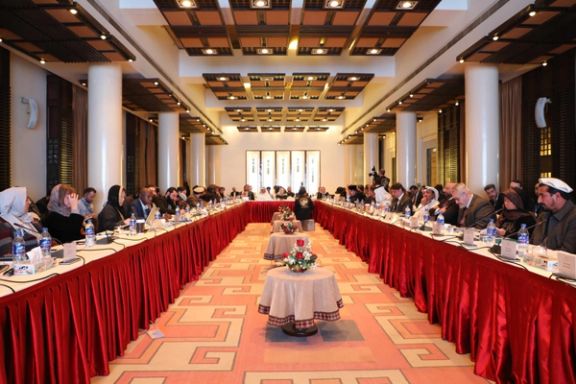
The United Nations Assistance Mission in Afghanistan (UNAMA) held the third meeting of the private sector working group under the Doha Process in Kabul.
The United Nations Assistance Mission in Afghanistan (UNAMA) held the third meeting of the private sector working group under the Doha Process in Kabul.
UNAMA said the meeting focused on supporting the private sector, creating employment opportunities, strengthening entrepreneurship, improving access to financial resources and reinforcing Afghanistan’s banking system.
Since the Taliban’s return to power, Afghanistan’s private sector has faced severe restrictions on access to banking services, money transfers and investment for more than four years, leading to a sharp decline in economic activity.
At the meeting, held on Tuesday, representatives of the Taliban presented information on what they described as “achievements and progress” since the group regained control of Afghanistan. UNAMA and several participants, however, emphasised ongoing challenges, the need for coordination and the importance of finding practical ways to support the private sector.
According to UNAMA, the Doha Process working groups were established after the third meeting of special envoys in Doha. Their purpose is to create a structured framework for engagement on specific issues, including the economy and the private sector.

Pakistan’s defence minister said the country’s involvement in the wars in Afghanistan was driven by political considerations rather than religion.
He added that the Soviet presence in Afghanistan should not be viewed solely as an “occupation”.
Speaking on Monday in Pakistan’s National Assembly, Defence Minister Khawaja Asif said Pakistan did not participate in the conflicts in Afghanistan out of religious commitment or in defence of Islam, but to secure political legitimacy and support from major global powers.
He said the Afghan government at the time had invited Soviet forces into the country and argued that describing their presence as an “occupation” reflected a narrative promoted by the United States.
Asif added that Pakistan even altered its national education curriculum during those years to align with wartime policies, saying the consequences of those changes remain unresolved. He said history had been rewritten to match the official narrative of the conflict.
“Pakistan Paid the Price and Was Abandoned”
According to Asif, Pakistan again entered conflict after 1999 in an effort to secure US support and was drawn into what he described as a rented war. He criticised the decisions of former Pakistani leaders General Zia-ul-Haq and General Pervez Musharraf to involve the country in Afghanistan’s wars.
He said that Pakistan paid the price and was ultimately abandoned, and was used like tissue paper and then discarded.
He said the decision turned Pakistan into a frontline state fighting wars on behalf of others.
During two decades of conflict against the Taliban and al-Qaeda in Afghanistan, Pakistan served as one of the main transit routes for international coalition forces and equipment. The use of Karachi port and land and air corridors for supplies to Afghanistan became a key strategic asset for Islamabad.
However, the United States repeatedly accused Pakistan both publicly and privately of sheltering insurgent networks, particularly the Haqqani network. Former US Joint Chiefs of Staff chairman Mike Mullen once described the Haqqani network as a veritable arm of Pakistan’s intelligence services.
Asif said Pakistan must acknowledge its past mistakes to overcome the consequences of those policies. He added that Pakistani society does not need to prove its religious identity and should instead focus on strengthening its ties to its own country and people.
Islamabad Mosque Attacker “Trained in Afghanistan”
At the same parliamentary session, Pakistan’s minister for parliamentary affairs, Tariq Fazal Chaudhry, said the attacker behind the recent suicide bombing in Islamabad was a resident of Peshawar who had received training in Afghanistan.
He alleged the training was carried out with Indian support and claimed New Delhi played a direct role in the operation.
Chaudhry said the attacker first opened fire on security guards before entering the imambargah, a Shia place of worship, and detonating explosives inside the mosque. According to him, 33 worshippers most of them young people were killed in the attack, and about 150 others were injured.
He identified the attacker as Yasir Khan and said four additional suspects had been arrested on suspicion of assisting him.
An Afghan man who previously served in Afghanistan’s former special forces was killed in a violent attack in Bergen, Norway, police and family members said.
Norwegian police said the incident occurred on Sunday evening, in the Arna district of Bergen, where the victim was assaulted outside his residence. He died from his injuries while being transported to hospital. His wife was also injured in the attack.
Two relatives of the victim told Afghanistan International that the man had served in Afghanistan’s former Unit 222 special forces and had sought refuge in Norway with his wife after the collapse of the previous Afghan government in 2021.
Police confirmed Monday that the killing appeared to be intentional and said a forensic examination of the body would be conducted. Authorities have launched a large-scale search operation using police dogs and drones and have set up checkpoints in several parts of the city to locate the suspect, who reportedly fled the scene before officers arrived.
No arrests have been made so far, and investigators have not released information about a possible motive.
The incident comes amid concerns among some Afghan residents in Norway following Oslo’s decision earlier this year to transfer control of Afghanistan’s embassy to Taliban representatives. Some members of the Afghan community have expressed worries about their safety and personal information.
A relative of the victim said the family had not yet received any details from police about the identity of the attacker or the motive behind the killing.
Tajikistan’s foreign minister, Sirojiddin Muhriddin, said the country’s security institutions are cooperating with the Taliban to prevent tensions along the Afghanistan–Tajikistan border.
Muhriddin said Tajikistan has resumed operations at border markets with Afghanistan and continues to supply electricity to the country.
Speaking about bilateral relations, he said Dushanbe engages with the Taliban in line with its national interests.
“Every independent country has the right to pursue policies based on its national interests,” Muhriddin said, adding that many countries particularly those bordering Afghanistan have also shaped their engagement with the country according to their own priorities.
He said trade between Tajikistan and Afghanistan has increased, with total economic exchanges exceeding $110 million last year.
Muhriddin called on the international community not to abandon Afghanistan as it faces complex social and economic challenges.
The foreign minister also addressed recent armed incidents along the border, saying security and law-enforcement agencies from both sides are working together to prevent similar events.
According to Muhriddin, the Taliban have assured Tajikistan they will take necessary measures to prevent future incidents and conduct thorough investigations into border-related violence.
Recently, Tajik security forces said they prevented five Afghan smugglers from illegally crossing into Tajikistan. Three were killed in an armed clash and two others fled back into Afghanistan, officials said.
Earlier, in two separate attacks launched from Afghan territory into Tajik border areas on November 26 and November 30 last year, five Chinese citizens were killed and five others were wounded.
Tajikistan condemned those attacks and called on the Taliban to arrest those responsible.
The Taliban’s minister for the propagation of virtue and prevention of vice has described the Taliban administration as the “father of the nation,” saying citizens are obliged to accept the group’s rule.
Khalid Hanafi made the remarks in a speech shared in an audio recording posted on X by Saif-ul-Islam Khyber, spokesperson for the vice and virtue ministry.
Hanafi compared the relationship between the public and the authorities to that of “father and child,” reiterating the group’s commitment to the unconditional implementation of what it calls Islamic sharia. He said the Taliban administration “ensures the rights of all people in accordance with the Quran, the Sunnah and Hanafi jurisprudence.”
His comments come as the Taliban continue to enforce sweeping restrictions, particularly on women and girls. Since returning to power in 2021, the group has closed secondary schools for girls and imposed extensive limitations on women’s employment and access to public spaces.
Hanafi has previously said the Taliban’s beliefs and policies would not change, adding that “even if the world turns upside down, our thinking and beliefs must not change.”
Three months after the Taliban ordered a halt to pharmaceutical trade with Pakistan, medicine prices in Kabul have risen by as much as 40 precent, according to pharmacy owners and market sources.
Formal medicine imports have largely stopped, and many drugs are now entering the market through smuggling routes.
Afghanistan International spoke with pharmacy staff in Kabul who said the prices of several essential medicines and syrups have increased sharply.
Amclav-DS syrup (60 ml), an antibiotic used to treat bacterial infections including respiratory and ear infections, has risen from 61 afghanis to 100 afghanis. Cefiget DS syrup (200 mg/5 ml), another antibiotic used for skin and respiratory infections, has increased from 72 afghanis to 100 afghanis.
Cosome-E syrup, used to relieve cough and cold symptoms and support the immune system, has risen from 27 afghanis to 65 afghanis. Ventolin Expectorant (Salbutamol/Guaifenesin), a bronchodilator used to treat asthma and respiratory conditions, has increased from 33 afghanis to 65 afghanis and is now difficult to find in many pharmacies.
Trimetabol syrup (150 ml) has risen from 53 afghanis to 85 afghanis, while Co-amoxiclav (625 mg), an antibiotic for moderate to severe infections, has increased from 50 afghanis to 75 afghanis.
A pharmacy manager in Kabul said shortages of many medicines have created serious difficulties for patients, families and healthcare workers. Another pharmacist said no country has been able to replace Pakistan as a fast and affordable source of medicines.
In October, Abdul Ghani Baradar, the Taliban’s deputy prime minister for economic affairs, instructed traders and industrialists to find alternative routes for importing medicines, warning that the continued closure of border crossings with Pakistan would affect markets and ordinary people.
He also asked medicine importers to settle their contracts with Pakistan within three months and shift to other supply routes. Since then, Taliban officials have travelled to India, Turkiye, Iran and Central Asian countries to address shortages, but no effective solution to reduce medicine prices has yet been found.