Taliban’s Anti-Pakistan Stance Is Populist, Says Pakistani Politician
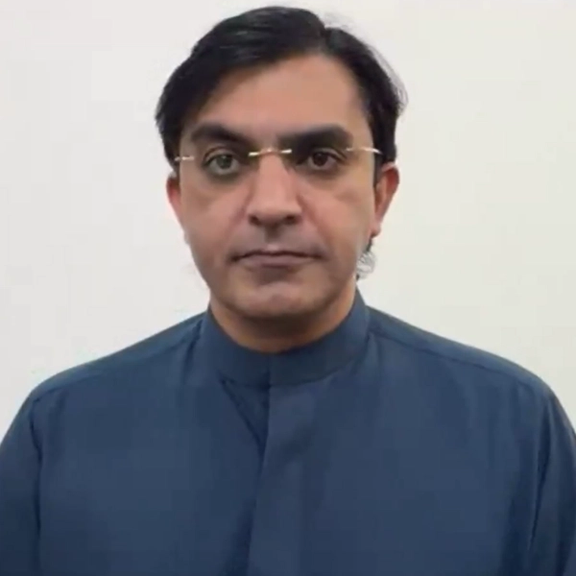
Mohsin Dawar, leader of Pakistan’s National Democratic Movement, said the Afghan Taliban are pretending to fight Pakistan’s military and described the approach as populist.
Mohsin Dawar, leader of Pakistan’s National Democratic Movement, said the Afghan Taliban are pretending to fight Pakistan’s military and described the approach as populist.
Dawar said the Taliban are seeking to create the impression that they oppose the Pakistani army, but argued that, in reality, no outcome would serve the army’s interests more.
He described the Taliban as a proxy force that, in his view, lacks independent thinking.
In an interview with Afghanistan International, Dawar said he believes the Taliban remain under the control of Islamabad.
He added that if Pakistan’s government wished, it could still exert control over the Afghan Taliban, who hold power in Kabul, as well as over the Pakistani Taliban.

Afghan refugees living in the Kakuma Refugee Camp in north-western Kenya say their situation is deteriorating and that they feel increasingly forgotten by the international community.
Several Afghan families told Afghanistan International that they fled human rights abuses after the Taliban takeover of Kabul in August 2021 but now face harsh conditions in one of the most remote refugee camps in East Africa.
Refugees say access to food, clean drinking water, healthcare and education is limited. Employment opportunities are scarce, and families depend largely on humanitarian assistance that they describe as insufficient. Many children are growing up without consistent schooling, while young people say they see little prospect of a stable future.
One refugee said unidentified groups have assaulted camp residents and stolen mobile phones. A former member of Afghanistan’s security forces, now in Kenya, said criminal gangs sometimes attack tents at night or intercept refugees during the day to steal their belongings. He criticised what he described as inadequate attention by UN agencies to refugees’ security and basic needs.
Refugees also described severe psychological strain. Having escaped violence in Afghanistan, they now face prolonged uncertainty, lengthy resettlement procedures and limited information about their future. Many fear they have been overlooked by the international community.
Kakuma, established in 1992 in Turkana County, is one of Africa’s largest refugee camps. It hosts tens of thousands of refugees from countries including Sudan, Somalia, Ethiopia and Afghanistan who have fled conflict and persecution.
Afghan refugees in the camp are calling on the United Nations, humanitarian organisations and donor countries to urgently review their situation. They are seeking increased humanitarian assistance, faster and fairer resettlement processes, improved access to education and livelihoods, and stronger protection measures.
As tensions rising between Pakistan and the Taliban, Pakistan’s special representative for Afghanistan said he had discussed regional security concerns with Uzbekistan’s envoy.
Mohammad Sadiq said he held talks with Ismatilla Irgashev on the security challenges facing neighbouring countries, citing what he described as the Taliban’s hosting of militant groups.
In a post on X, Sadiq said that, according to reports, more than 2,500 Uzbek militants are based in Afghanistan. He claimed they likely constitute the second-largest militant group in the country after Tehreek-e-Taliban Pakistan.
Relations between Islamabad and the Taliban have deteriorated further following Pakistan’s recent airstrikes in Nangarhar Province and Paktika Province. Pakistan said the strikes targeted fighters linked to the TTP and Islamic State-Khorasan and killed at least 70 militants.
The Taliban said the airstrikes hit civilian areas. The United Nations said at least 13 civilians were killed and seven wounded in a strike in Nangarhar and reported no civilian casualties in Paktika.
Although Uzbekistan maintains close political and economic ties with the Taliban authorities, Central Asian countries have repeatedly voiced concern about the presence of militant groups in Afghanistan. Reports by the United Nations Security Council have confirmed the presence of several armed groups in the country, including the Islamic Movement of Uzbekistan.
Annalena Baerbock, president of the 80th session of the United Nations General Assembly, opened her address to the United Nations Human Rights Council by focusing on the situation of women in Afghanistan, describing it as what some call gender apartheid.
Speaking at the council’s 61st session, the former German foreign minister described the condition of women under Taliban rule as the worst form of structural human rights violation. She said the term “gender apartheid” is increasingly used to characterise the treatment of Afghan women and girls.
Baerbock said she could not stop thinking about discussions within the UN and the wider international community over how to deliver humanitarian aid to Afghanistan while women and girls are barred from work and education.
She criticised efforts to distinguish between different factions of the Taliban, noting that some have suggested figures based in Kabul may be more moderate than those in Kandahar. She said that in some discussions in world capitals and even within UN circles, the fundamental principle of protecting human rights particularly the rights of Afghan women had been sidelined.
Baerbock warned that appeasement in the face of grave human rights violations would not produce results.
Elected in June 2025 to lead the 80th General Assembly session, she said the world must recognise that women’s rights are a benchmark of the condition of societies, noting that women make up half of the global population. If four billion people are not safe, she said, no one can be safe.
She also pointed to what she described as a broader rollback of women’s rights worldwide, saying norms once considered firmly established are now openly challenged or disregarded.
Baerbock called for decisive international action to safeguard human rights. She has previously urged the European Union to impose sanctions on the Taliban over what she described as systematic gender persecution in Afghanistan.
The United Nations said a Pakistani airstrike in the Barmal district of Afghanistan’s Paktika Province struck a religious school and partially damaged a nearby mosque.
The United Nations Assistance Mission in Afghanistan said a separate strike in the Argon district hit a private house, causing partial damage. It said the building was vacant at the time.
The UN said it had received no reports of civilian casualties from the strikes in Paktika.
The organisation called on all parties to cease hostilities to protect civilian lives and prevent further harm. It stressed that under international law, parties to a conflict are required to observe the principles of distinction, proportionality and precaution to minimise the risk of civilian casualties.
Afghanistan’s acting representative to the United Nations said a formal complaint has been lodged against Pakistan following its airstrikes on Afghan territory.
Naseer Ahmad Faiq said the complaint was submitted to the United Nations Security Council. In a post on X on Monday, 23 February, he said Afghanistan’s permanent mission had formally raised what he described as a serious violation.
Faiq said Afghanistan had called for an immediate investigation into the incident, an end to further violations, accountability for those responsible, respect for states’ territorial integrity, adherence to the UN Charter and full implementation of international law.
Pakistan carried out airstrikes late on Saturday in areas of Nangarhar Province and Paktika Province.
The Taliban said 18 people were killed in the attacks, including women and children. The group’s Defence Ministry said Pakistani forces targeted civilian homes and religious schools.
Pakistan said the strikes were retaliatory and targeted militant sanctuaries, claiming at least 70 militants were killed.