Militants Using Afghan Soil Will Be Eliminated, Says Pak President

Pakistan’s president said recent military operations against militant groups have produced significant results and warned that those supporting terrorism would be “eliminated”.

Pakistan’s president said recent military operations against militant groups have produced significant results and warned that those supporting terrorism would be “eliminated”.
Asif Ali Zardari made the remarks Monday in a statement marking Pakistan Day, saying the country faces security challenges both internally and along its borders.
Zardari said Pakistan’s message to what he described as illegal groups operating from Afghanistan was clear, adding that the Tehreek-e-Taliban Pakistan and other groups would not be allowed to use Afghan territory to carry out attacks against Pakistan.
He said Pakistan’s military operation, known as “Ghazab-il-Haq”, had so far achieved notable results and stressed that the country would act decisively to secure its borders and populated areas.
The remarks come as a temporary ceasefire between the Taliban and Pakistan, brokered over Eid al-Fitr with mediation by Saudi Arabia, Qatar and Turkiye, is due to expire.
Statements by Pakistani officials suggest that with the end of the ceasefire, the likelihood of renewed strikes inside Afghanistan may increase.
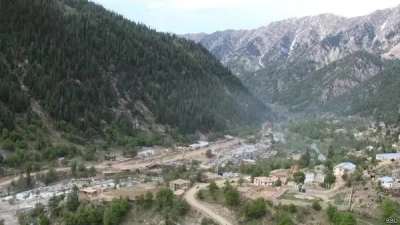
Meanwhile, the Taliban have accused Pakistan of violating the ceasefire even during the Eid period, with reports of Pakistani artillery shelling in the eastern provinces of Kunar and Nuristan.
A Chinese researcher said the Taliban are unwilling to fully meet Beijing’s demands regarding the East Turkestan Islamic Movement, highlighting ongoing security concerns in Afghanistan.
Liu Zongyi, director of the Centre of South Asian Studies at the Shanghai Institutes for International Studies, made the remarks in an interview with Guancha after a recent visit to Afghanistan.
Liu said the East Turkestan Islamic Movement had pledged allegiance to the Taliban and maintained ties with the group. He said the Taliban were reluctant to act against the group due to factors including shared history, religious beliefs, tribal traditions and social ties.
He described security concerns, particularly those related to the group, as one of the most sensitive issues in China’s engagement with the Taliban.
Liu said Taliban officials claim the group is under their control but have not fully addressed China’s concerns.
He warned that several militant organisations remain active in Afghanistan, including the Islamic State group’s regional affiliate, the East Turkestan Islamic Movement, Tehreek-e-Taliban Pakistan and the Baloch Liberation Army.
Liu said his visit to Kabul was at the invitation of Taliban Foreign Minister Amir Khan Muttaqi. During his four-day stay, he held multiple meetings with Taliban Foreign Ministry officials and others.
Taliban seek Chinese investment
Liu said Taliban officials repeatedly expressed hope for increased Chinese investment in Afghanistan.
He said the Taliban aim to use economic cooperation as a basis for normalising relations with China, Central Asia and other countries and regions.
He added that Taliban officials expressed willingness to establish normal diplomatic relations with any country willing to engage with them and said past grievances would not be pursued.
Drug cultivation continues
Liu said drug cultivation in Afghanistan continues despite Taliban claims to have curbed it.
He said Afghanistan’s economy currently relies mainly on agriculture, livestock and international aid.
While US and Western aid has declined significantly, support from the World Bank and the United Nations continues, with substantial funds reportedly reaching Kabul each month to sustain basic livelihoods.
Liu said Afghanistan’s economy has shown steady improvement since the Taliban returned to power but has not yet reached the levels seen before 2021.
Investment challenges
He said challenges including lack of funding, limited technology, international isolation and weak governance capacity continue to hinder Afghanistan’s economic stability.
Liu added that many countries remain reluctant to invest in Afghanistan, citing ongoing US financial sanctions as a key reason.
He said this makes foreign investment difficult and limits the ability to transfer profits, even when investment occurs.
He also said security concerns and the presence of militant groups remain major obstacles to improving the investment climate.
China’s limited financial support
Liu also recounted comments made by a Taliban Foreign Ministry official, who compared Chinese aid unfavourably with that provided by the United States and the European Union.
He said the Chinese side responded that Afghanistan’s current challenges were not caused by China and that its assistance is based on humanitarian considerations.
Liu did not name the official but said the remarks were not repeated after the response.
The report also cited Chinese observers familiar with the region as saying Afghan negotiators are highly skilled in persuasion and bargaining.
It added that despite nearly two decades of US involvement and about $2 trillion in spending, Afghanistan saw limited infrastructure development, including a lack of adequate roads.
Pakistan’s ambassador to Russia warned that militant groups operating from Afghanistan pose a growing threat not only to the region but also to Russia.
Faisal Niaz Tirmizi said groups such as the Islamic State affiliate in Afghanistan have found safe haven in the country and their activities threaten not only Afghanistan and Pakistan but also Iran, Tajikistan, Turkmenistan, Uzbekistan and Russia.
In an interview with Izvestia, Tirmizi said Afghanistan has seen little but war for decades. He noted that the conflict has persisted throughout his lifetime and warned that terrorism and instability affect not only Afghanistan and Pakistan but also neighbouring countries and Russia.
He said economic, educational and cultural cooperation should be expanded, arguing that terrorism is not a viable path.
The ambassador said that after even limited retaliatory actions by Pakistan, militant groups tend to pause their activities temporarily before resuming attacks.
He added that Pakistan has now formally signalled that it has reached its limit.
Speaking about the prospects for a permanent ceasefire following a temporary truce with the Taliban, Tirmizi said all safe havens used by militant groups, including the Islamic State group and Tehreek-e-Taliban Pakistan, must be eliminated and Afghanistan must not be allowed to become a training ground for militants.
He also said Pakistan recognises Afghanistan’s sovereignty and territorial integrity but would take military action if the lives of its citizens were threatened.
Pakistan’s foreign minister, Ishaq Dar, says Islamabad is taking a firm approach to combating what it calls terrorism, including operations linked to Afghanistan.
Speaking on Monday, 23 March, Pakistan’s national day, Dar described Tehreek-e-Taliban Pakistan (TTP) and the Balochistan Liberation Army as “Fitna al-Hindustan” and “Fitna al-Khawarij”.
He said these groups pose a serious threat to Pakistan’s security and stability.
The remarks come as Pakistan and the Taliban have agreed to a temporary ceasefire for Eid al-Fitr following mediation by Qatar, Turkiye and Saudi Arabia.
However, Pakistan’s military has said any lasting talks or ceasefire would depend on the handover of Tehreek-e-Taliban Pakistan members.
The Taliban have consistently denied Pakistan’s accusations of supporting militant groups and say they are ready for dialogue with Islamabad.
France’s ambassador for human rights said Afghan women must be included in all decision-making processes and that Paris rejects any dialogue with the Taliban.
Isabelle Rome said France condemns restrictions imposed by the Taliban that target women’s fundamental rights and access to public spaces.
In a post on X on Sunday, Rome thanked Belgian senator Viviane Teitelbaum for organising a meeting in the Belgian Senate in support of Afghan women.
The remarks come after Afghan activists and political figures gathered at a two-day meeting in the European Parliament and the Belgian Senate. Taliban opponents at the meeting sought to persuade European leaders that the group has not changed and is not a suitable government for Afghanistan.
Rome said Afghan women are not victims but survivors and fighters, adding that they must have a seat at the table in every decision affecting their future.
She also noted that France, along with five other countries, has supported efforts by the prosecutor of the International Criminal Court to seek arrest warrants for Taliban leaders and has backed the creation of investigative mechanisms to document alleged crimes.
Pakistan’s Defence Minister Khawaja Asif and Minister of State for Interior Talal Chaudhry said “Operation Ghazab lil Haq” has been temporarily suspended for Eid al-Fitr but will resume.
Speaking to Geo News on Saturday, Asif said Pakistan has made steady progress in its fight against terrorism and will continue the campaign until it is completely eradicated.
Chaudhry also said the operation has only been paused and is not over, urging the Taliban to honour their commitments under the Doha agreement.
Pakistan has named its military campaign against the Taliban “Ghazab lil Haq”, while the Taliban refer to their own operations as “Radd al-Zulm”.
Meanwhile, Prime Minister’s adviser Rana Sanaullah said Pakistan has a single demand from the Taliban administration: a guarantee that Afghan territory will not be used against Pakistan. He added that if such assurances are provided, Pakistan would have no dispute with the Taliban.
After more than two weeks of deadly clashes, Pakistan and the Taliban agreed to a temporary ceasefire for Eid al-Fitr, brokered by Saudi Arabia, Türkiye and Qatar.