• العربية
  • پښتو
  • فارسی
Brand
  • Afghanistan
  • Sport
  • Analysis
  • Markets
  • Afghanistan
  • Sport
  • Analysis
  • Markets
  • Theme
  • Language
    • العربية
    • پښتو
    • فارسی
  • Afghanistan
  • Sport
  • Analysis
  • Markets
All rights reserved for Volant Media UK Limited
volant media logo

Iran Invites NRF Representative To Islamic Awakening Conference

Aug 28, 2026, 17:10 GMT+1

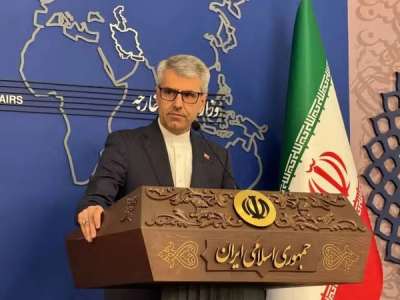
Iran has invited Mawlawi Habibullah Hessam, a senior National Resistance Front member, and Jawad Salehi, a member of Afghanistan’s Shia Ulema Council, to a meeting of the Supreme Council of the World Assembly of Islamic Awakening in Tehran.

The meeting was held on Friday, 28 August, under the title “The Palestinian Issue in the Thought of the Martyred Imam of the Ummah”. Fars News Agency said 27 foreign guests from Afghanistan and other countries attended.

Mawlawi Habibullah Hessam heads the Ulema Council of the National Resistance Front, led by Ahmad Massoud. Before the fall of the former republic, he headed the Afghanistan Ulema Assembly and now lives in Iran.

Jawad Salehi is a member of Afghanistan’s Shia Ulema Council and director of the Risalat religious seminary in Kabul.

Iranian media said the Palestinian issue, recent developments involving Iran-backed groups in the Middle East and ways to support Palestinians were among the main topics discussed at the meeting.

Representatives from more than 20 countries, including Afghanistan, Pakistan, India, Russia, Turkiye, Iraq, Lebanon, Egypt, Syria, Yemen, Bahrain and Indonesia, attended.

The invitation to a senior member of the National Resistance Front comes despite Iran maintaining political, economic and diplomatic relations with the Taliban.

Officials from both sides have also held numerous visits and meetings in recent years. Despite those ties, Iran has not formally recognised the Taliban.

In July, Iran also invited Ahmad Massoud, leader of the National Resistance Front, and Mohammad Mohaqiq, leader of the People’s Islamic Unity Party of Afghanistan, to the farewell and funeral ceremonies for Ali Khamenei, Iran’s former supreme leader.

A Taliban delegation led by Mullah Abdul Ghani Baradar and including Amir Khan Muttaqi also attended the same ceremonies.

The event’s host referred to Ahmad Massoud and his companions as the high-level delegation of the Afghan resistance. It was the first official and public appearance of Taliban opposition leaders at an Iranian government ceremony in five years.

The invitation of Taliban opponents prompted reactions from several Taliban officials and supporters.

Khairullah Shinwari, an official at the Taliban Foreign Ministry, said Iran had hosted people who challenged Afghanistan’s national sovereignty and independence. Some Taliban supporters also described Iran’s move as hostility and betrayal of the Taliban.

Most Viewed

Taliban Could Be Considered Indian Proxy, Says Pakistan
1

Taliban Could Be Considered Indian Proxy, Says Pakistan

2

Taliban Suspends Fiber-Optic Network Expansion In Afghanistan

3

Taliban Freed Thousands Of Terrorists & Criminals From Bagram Prison, Says Trump

4

180 Religious Scholars Issued Fatwa Supporting War Against Taliban, Says United Front

5

Pakistan Hosts Bases for Armed Opponents, Says Taliban Commander In Badakhshan

•
•
•

More Stories

UK Updates Sanctions Information On Haqqani Network Leaders

Aug 28, 2026, 15:47 GMT+1
100%

The UK government has updated information on Sirajuddin Haqqani, leader of the Haqqani Network, and his father, former network leader Jalaluddin Haqqani, in its Afghanistan sanctions list.

London says Sirajuddin and Jalaluddin Haqqani remain subject to sanctions, including asset freezes and travel bans.

The UK Foreign, Commonwealth and Development Office updated and republished the identifying details of the two men on Thursday, 27 August.

According to the information, the changes do not remove either Sirajuddin or Jalaluddin Haqqani from the sanctions list and were made only to update their identifying details. These include ethnicity, place and date of birth, height, passport number and records of their activities.

On 31 July 2026, the UN Security Council updated the identifying information of five senior Taliban officials on its sanctions list. They included Sirajuddin Haqqani, the Taliban interior minister, as well as the ministers of Hajj and Religious Affairs and Mines and Petroleum, the intelligence chief and the Taliban-appointed mayor of Herat.

Sirajuddin Haqqani has been subject to UN Security Council sanctions since 13 September 2007.

The UK Foreign Office says he has led the Haqqani Network and directed its armed activities since late 2012. In addition to the UK sanctions list, Sirajuddin Haqqani also remains on the United Nations sanctions list.

Jalaluddin Haqqani, founder of the Haqqani Network and father of Sirajuddin Haqqani, also remains on the sanctions list. The UK entry refers to reports of his death in September 2018 and describes him as a former Taliban leader who was mainly involved in armed activity in Afghanistan’s border areas.

Haqqani Network leaders are subject to asset freezes and travel bans under the UK’s Afghanistan sanctions regulations, introduced in 2020.

Britain says the sanctions are intended to restrict individuals involved in violence, the supply of weapons and recruitment, or those who support activities that threaten peace and stability in Afghanistan.

The Haqqani Network, regarded as an important part of the Taliban’s power structure, claimed responsibility for some of the deadliest attacks against Afghan and foreign forces during the past two decades.

Last year, the US State Department removed Sirajuddin Haqqani, Taliban interior minister, as well as Aziz Haqqani and Yahya Haqqani, other figures in the network and close associates of Sirajuddin, from its list of wanted individuals.

The FBI later removed the $10 million reward for information leading to Sirajuddin Haqqani’s arrest. However, the FBI continues to list Haqqani as a global terrorist among wanted individuals.

In early 2025, the US State Department told Afghanistan International that Sirajuddin Haqqani and the Haqqani Network had not been removed from US terrorist designations. It confirmed, however, that there was no longer a reward for the Taliban interior minister’s arrest.

After the Taliban returned to power in August 2021, the FBI had increased the reward for information leading to Sirajuddin Haqqani’s arrest from $5 million to $10 million.

The Haqqani Network was founded by Jalaluddin Haqqani in the late 1970s and has been blamed by the United States for some of the deadliest attacks of the 20-year war in Afghanistan.

The US State Department designated the Haqqani Network as a foreign terrorist organisation in September 2012.

Anas Haqqani, Sirajuddin Haqqani’s brother, described the removal of Haqqani figures from the US wanted list as a political achievement.

Colin Smith, an official with the UN Security Council sanctions monitoring team, told Afghanistan International last month that 135 Taliban members, including members of the Haqqani Network, remain on the Security Council sanctions list because of their records and previous links to terrorist activity. He added that the Haqqani Network remains active.

Hunger & Displacement Deepen Afghanistan’s Mental Health Crisis, Says UN

Aug 28, 2026, 11:19 GMT+1
100%

The United Nations and research organisation REACH warned in a new assessment published on Thursday, 27 August, that persistent hunger, displacement and drought are severely threatening the mental health of people in Afghanistan.

According to the report, 21.9 million people in Afghanistan are in need of urgent humanitarian assistance.

The analytical assessment, republished on the UN humanitarian website ReliefWeb, says 45 per cent of Afghanistan’s population is facing a severe humanitarian crisis in 2026.

Severe food insecurity is a major factor. An estimated 17.4 million people are expected to face acute hunger, including 4.7 million in emergency conditions, more than twice the number recorded last year.

At the same time, drought linked to the La Niña weather phenomenon has severely affected 12 provinces and directly impacted 3.4 million people.

La Niña is a climate phenomenon whose effects on Afghanistan include sharply reduced snowfall and rainfall and unusually high temperatures during winter and spring. The resulting depletion of groundwater and reduced river flows have intensified drought and directly harmed agriculture, livestock and access to drinking water.

Mental Health Risks for Vulnerable Groups

Mental health and psychosocial support analysts said repeated shocks caused by loss of income, displacement and severe restrictions on women and girls have placed unprecedented psychological pressure on Afghan society.

Children, women, people with disabilities, older people and displaced communities are experiencing the highest levels of psychological vulnerability under these conditions.

Pressure From Returnees and Unexploded Ordnance

Another factor increasing pressure is the unprecedented return of more than 2.61 million Afghan migrants from Iran and Pakistan during 2025 alone, placing additional strain on basic services and host communities.

The danger from unexploded ordnance also remains significant, with an average of 50 people killed or wounded every month in Afghanistan by explosive remnants.

According to the report, humanitarian organisations plan to assist 17.5 million of the most vulnerable people in 2026 with a budget of $1.71 billion.

The planned assistance includes food, shelter, healthcare, drinking water and mental health and psychosocial support.

Former Inmates Describe Poor Conditions, Torture Allegations In Taliban Detention

Aug 28, 2026, 09:50 GMT+1
100%

Two former prisoners from Herat Central Prison told Afghanistan International that severe overcrowding, delays in food distribution and difficulty accessing water and basic necessities are among the prison’s main problems.

They also said they met prisoners who claimed they had been tortured in Taliban detention facilities to extract confessions before being transferred to the central prison.

The accounts of the two sources are based on what they personally observed while imprisoned.

Overcrowded Rooms

The former prisoners said Herat Central Prison does not have the capacity to accommodate nearly 3,000 inmates, resulting in severe overcrowding. In some rooms, between 60 and 100 prisoners are held together.

One former prisoner said the prison mosque was the only area with more open space. They said sick prisoners, elderly people, people with disabilities and those who had recently undergone surgery were also kept in the same overcrowded conditions.

The Taliban said in September last year that more than 2,700 people, including 350 women and 100 children, were being held in Herat prison. According to the group, prisoners have access to educational programmes and health services supported by international organisations.

Delays in Food Distribution and Difficulty Accessing Water

One former prisoner said lunch was usually distributed between 2 pm and 3 pm, while the evening meal also sometimes arrived late.

According to him, many prisoners were forced to buy cake, biscuits and other food from the prison shop between meals. He said the situation was more difficult for sick and elderly prisoners and those who had no money.

The source also said that each room had a prisoner known as the “room chief” who was responsible for distributing rations, and that in some cases not all the bread allocated to prisoners was handed out. He said some of the leftover bread was later sold.

One of the former prisoners said access to water was also difficult. He said empty water bottles were collected, preventing prisoners from storing water in them. As a result, those who could afford it had to repeatedly buy bottled water.

Prisoners Forced to Buy Slippers Repeatedly

According to the two former prisoners, bringing shoes or slippers into the prison from outside is either prohibited or heavily restricted because footwear has repeatedly been used to smuggle and conceal drugs, both under the former government and during Taliban rule.

They said prisoners therefore had to buy prison-issued slippers from the prison shop for 80 afghanis a pair, while the same slippers cost around 30 to 50 afghanis in the market.

Allegations of Torture to Extract Confessions

One former prisoner said he encountered inmates who claimed they had been tortured at Taliban security facilities before being transferred to the central prison.

According to him, some said they had been hung upside down by their feet inside wells.

The source said complaints about mistreatment by Taliban officers were more common among people accused of theft. He added that one prisoner accused of theft told him officers had repeatedly pushed his head under water during interrogation.

The human rights organisation Rawadari interviewed 34 former prisoners, including seven women, in June 2025. All said they had experienced physical or psychological torture, while 32 reported physical torture. Denial of medical treatment, lack of access to lawyers and inadequate food were also among their complaints.

The European Union Agency for Asylum has also said human rights organisations do not have access to detention facilities in Afghanistan. It has cited overcrowding, prolonged pre-trial detention and lack of legal assistance for vulnerable prisoners.

The former prisoners called for an independent investigation into the allegations. They said access to water, food, medical treatment, human dignity and fair legal procedures should be protected for all prisoners regardless of the accusations or crimes against them.

One of the two former prisoners said vocational and technical training was one positive feature of Herat Central Prison, allowing inmates to learn professional skills.

He said prisoners could learn a wide range of trades if they wished.

Prisoners can reportedly receive training in 12 different professions.

Herat has Afghanistan’s third-largest prison after Pul-e Charkhi and Bagram in Kabul.

Abdul Salam Hanafi, the Taliban’s administrative deputy prime minister, visited Herat prison on 10 August.

A Taliban statement said he reviewed food distribution, health services, detention conditions and efforts to address prisoners’ problems, and instructed officials to respect prisoners’ rights. Prison authorities also promised to improve services.

A Chinese Prisoner

One former prisoner said a Chinese man is also being held at Herat prison. The inmates reportedly do not know his real name and call him “Johnson”.

According to the source, his case is a civil dispute in which an Afghan citizen claims the man owes him money.

Peng Jin Wei, a Chinese national, gemstone trader and mining businessman in Afghanistan, was tried and imprisoned in Herat last year following a complaint by his business partner.

His wife said in October 2025 that he remained in prison.

One of the former prisoners said the Chinese national lacked basic facilities and had access to only one book translated from Persian into Chinese.

Russia To Arm Tajikistan As Security Concerns Grow Along Afghan Border

Aug 28, 2026, 08:42 GMT+1
100%

Taalatbek Masadykov, secretary-general of the Collective Security Treaty Organization, has voiced concern over the Afghanistan-Tajikistan border, saying the first weapons and equipment will be delivered to Dushanbe this autumn.

He said Russia would play the leading role in supplying the equipment.

Masadykov said any security incident along the border would have consequences beyond Tajikistan, potentially affecting all CSTO members and other countries in the Commonwealth of Independent States.

He said CSTO members had agreed on a list of lethal and non-lethal weapons and equipment needed by Tajikistan. The supplies will be delivered under an interstate targeted programme aimed at strengthening the Tajikistan-Afghanistan border.

According to Masadykov, Russia is taking the leading role in supplying weapons and equipment to Tajikistan and, despite its own difficult circumstances, has shown readiness to assist Tajikistan and other CSTO members.

The CSTO secretary-general stressed that the border must be strengthened as quickly as possible because any security problem in the area could affect other member states.

He also said that during a recent visit to the region, at the invitation of Tajik President Emomali Rahmon, he travelled with the commander of Tajikistan’s border forces along more than 700 kilometres of the roughly 1,300-kilometre border with Afghanistan.

Masadykov said Tajik border forces were working to secure the area but lacked sufficient resources.

The CSTO Collective Security Council was close to approving a five-year programme to strengthen the Tajikistan-Afghanistan border in November 2024. Implementation of the programme began last year.

Since November 2025, several attacks have been carried out from Afghan territory into Tajikistan. Civilians, including Chinese nationals, as well as Tajik border guards have been killed or wounded in the incidents.

Tajik authorities have also said weapons and drugs were seized from attackers and that some of the assailants were killed.

Afghanistan’s Badakhshan province, along the Tajik border, has seen an increase in armed clashes in recent months.

In recent weeks, Taliban forces and the Afghanistan Freedom Front have clashed several times in Zebak district. In Yaftal, fighters from the Sepahiyan -e Mihan Front briefly took control of the district centre before withdrawing, after which the Taliban deployed additional forces to the area.

Nusay district has also seen tensions and fighting between Taliban forces and men affiliated with Juma Khan Fateh, a local Taliban commander.

Alongside the activities of armed Taliban opponents, the presence of regional extremist groups in Afghanistan remains a security concern for Central Asian countries.

Islamic State Khorasan Province is also active in Afghanistan, and regional governments have repeatedly expressed concern about threats posed by armed groups operating from Afghan territory.

However, in his interview with TASS, Masadykov did not directly link the planned delivery of weapons and equipment to Tajikistan with the recent fighting in Badakhshan.

Taliban Could Be Considered Indian Proxy, Says Pakistan

Aug 27, 2026, 16:04 GMT+1
100%

Pakistan’s Foreign Ministry spokesman says the Afghan Taliban could be considered an Indian proxy if it does not act in its own interests and instead serves what Islamabad describes as India’s efforts to destabilise Pakistan.

Tahir Andrabi, spokesman for Pakistan’s Foreign Ministry, said at a press briefing on Thursday, 27 August, that if Taliban activities were carried out at the direction of a neighbouring country to promote terrorism in Pakistan, Islamabad would be compelled to describe the Taliban administration as a proxy.

Responding to remarks by Asim Iftikhar, Pakistan’s representative to the United Nations, who had said that the Taliban government itself is a proxy, Andrabi said that when their activities are carried out at the direction of a particular neighbouring country to promote terrorism in Pakistan, unfortunately Pakistan is compelled to call them a proxy, because in doing so they are not acting in their own interests.

He claimed that Islamabad was aware of Indian involvement in terrorist activities against Pakistan originating from Afghan territory and said Pakistan had evidence to support the allegation.

The Pakistani Foreign Ministry spokesman added that the Taliban administration must prevent Tehreek-e-Taliban Pakistan and the Baloch Liberation Army from using Afghan territory against Pakistan.

Andrabi stressed that Islamabad remained ready for dialogue with Kabul but said any bilateral mechanism must lead to tangible and verifiable action on counter-terrorism and border management, and that verbal assurances were not enough.

According to him, Pakistan wants written and verifiable guarantees from the Taliban to ensure that Afghan territory is not used for terrorist activities against Pakistan.

Pakistan was previously one of the main supporters of the Afghan Taliban, and critics of the group had described it in the years before its return to power as a Pakistani proxy in Afghanistan. The Taliban has consistently rejected claims that it was dependent on Islamabad.

Since the Taliban returned to power in August 2021, relations between Kabul and Islamabad have become increasingly tense, particularly over the activities of Tehreek-e-Taliban Pakistan.

Pakistan accuses the Taliban of allowing the TTP to operate from Afghan territory. The Taliban rejects the allegation and, in turn, accuses Pakistan of supporting armed opponents of its rule.