Taliban, North Korea Hold Talks on Military Cooperation

A Taliban military delegation met a North Korean official during Russian military exercises, with South Korean media reporting talks on military training and the exchange of experience.
A Taliban military delegation met a North Korean official during Russian military exercises, with South Korean media reporting talks on military training and the exchange of experience.
South Korean media reported that the Taliban military delegation took part in the multinational “Centre 2026” exercises at Russia’s invitation. The drills were held from 28 September to 3 October across several locations in Russia, including Chelyabinsk.
According to South Korean media, the delegation was led by Mawlawi Nasibullah Madani, commander of the Taliban’s Abdullah bin Masoud Joint Combat Training Centre. NK News also reported that Madani met Ro Ki Chol, North Korea’s military attaché.
A photograph released by the Taliban’s defence ministry shows the two officials together at a weapons exhibition held during the exercises.
The Taliban’s defence ministry only confirmed that its delegation met military representatives from several countries during the exercises, including North Korea, China, India, Vietnam, Colombia, Uzbekistan and Tajikistan.
According to the ministry, the sides discussed bilateral relations, the exchange of military experience, specialised training and potential areas of cooperation.
Rare Contact Between the Taliban and North Korea
This is the first reported instance of direct contact between Taliban and North Korean military officials. The two sides do not have formal diplomatic relations, and Pyongyang has not recognised the Taliban government.
The meeting comes as Russia has expanded its relations with both the Taliban and North Korea. Moscow has recognised the Taliban government, while Russia’s relationship with North Korea has developed into extensive military cooperation since the start of the war in Ukraine.
Russian President Vladimir Putin and North Korean leader Kim Jong Un signed a “Comprehensive Strategic Partnership” treaty in June 2024, expanding security and military cooperation between the two countries.
The Taliban declared a neutral position at the beginning of Russia’s full-scale invasion of Ukraine. On 25 February 2022, a day after the invasion began, the Taliban’s foreign ministry called on Russia and Ukraine to exercise restraint and resolve their differences through dialogue.
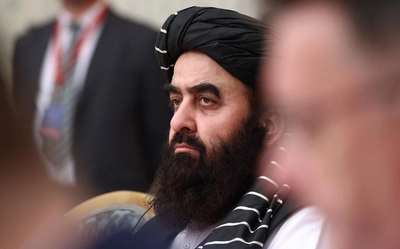
The UN Human Rights Council on Monday urged the Taliban to repeal all policies and measures violating the fundamental rights and freedoms of women and girls, saying systematic discrimination in Afghanistan should shock the conscience of humanity.
The 39th meeting of the council’s 63rd session was held in Geneva on Monday, 5 October, where the resolution on the human rights situation in Afghanistan was adopted without a vote.
Referring to the worsening human rights situation in Afghanistan, the council expressed deep concern over what it described as the Taliban’s severe, increasing, widespread and systematic repression of all women and girls in Afghanistan.
The council said the Taliban’s institutionalisation of a system of discrimination, segregation, domination, disregard for human dignity and exclusion of women and girls, and its consequences, were intolerable and unjustifiable and should shock the conscience of humanity.
Conformity, Fear and Exclusion
The UN Human Rights Council said that over the past five years, many rights in Afghanistan had been widely violated and restricted. It added that through new decrees and regulations, the Taliban had shaped society around fear, restrictions and the exclusion of opponents.
The council called on the Taliban to repeal all policies and measures that restrict women’s and girls’ enjoyment of human rights and fundamental freedoms. These restrictions include freedom of peaceful assembly, education, employment and the right to vote.
The Human Rights Council also urged the international community to consider the human rights and fundamental freedoms of all Afghans in its engagement with the Taliban in Afghanistan.
The resolution was sponsored by 37 European countries, Canada and Chile. The council also extended the mandate of Richard Bennett, the UN special rapporteur on human rights in Afghanistan, for another year.
The UN Human Rights Council has previously condemned the Taliban’s policies towards women in Afghanistan and called for them to be changed. UN experts have described the policies as part of an institutionalised system of discrimination against women and said they could be examined within the framework of “gender apartheid”.
The International Criminal Court on Monday also unsealed arrest warrants for two senior Taliban officials. ICC judges accused the Taliban’s education and higher education ministers of gender-based persecution over their alleged roles in depriving women and girls of education and other fundamental rights. The court considers the alleged conduct to amount to a crime against humanity.
In response, the Taliban said it did not recognise the International Criminal Court and did not consider its rulings valid.
The International Criminal Court said it had issued arrest warrants in September 2025 for Taliban ministers Habibullah Agha and Neda Mohammad Nadim. The warrants had remained sealed until Monday.
The court said the warrants were issued on 9 September 2025, at the request of the ICC prosecutor, for Habibullah Agha, the Taliban’s education minister, and Neda Mohammad Nadim, the group’s higher education minister.
The ICC had previously issued arrest warrants on 8 July 2025 for Taliban leader Hibatullah Akhundzada and Abdul Hakim Haqqani, the head of the Taliban’s Supreme Court. The existence of those warrants was announced at the time, although their details remained confidential.
The ICC has accused all four Taliban officials of involvement in the persecution and repression of women and girls, saying such actions may amount to crimes against humanity.
According to newly released court documents, judges found reasonable grounds to believe that the four officials had been involved in ordering, encouraging or implementing policies that targeted women and girls on the basis of gender.
The cases also include people who opposed the Taliban’s policies towards women. The court said those who defended the rights of women and girls, and were regarded by the Taliban as “supporters of women and girls” or political opponents, had also been subjected to repression and persecution.
Judges said the Taliban had committed widespread violations of fundamental rights and freedoms since returning to power. Court documents cite killings, imprisonment, torture, sexual violence and enforced disappearances among the alleged abuses.
According to the court, the Taliban’s restrictions have not been limited to women and girls, although they have been affected more severely than other groups. The Taliban have barred women and girls from education and many forms of employment and have imposed extensive restrictions on their movement, access to public places, freedom of expression and participation in social life.
The court also said people had been subjected to persecution and repression because of their sexual orientation or gender identity.
According to United Nations figures, half of Afghan women now leave their homes only once or twice a month. Afghanistan is also the only country in the world where girls are barred from attending school beyond the sixth grade and women are prohibited from university education.
Since returning to power in August 2021, the Taliban have excluded women from many jobs and large parts of public life. Hibatullah Akhundzada has also issued numerous decrees in recent years restricting women’s presence in public and their freedom of movement.
The ICC has no police force of its own to arrest suspects and relies on cooperation from its member states to enforce warrants. All four Taliban officials remain in Afghanistan, where the group controls the country, making enforcement of the warrants difficult under current circumstances.
Richard Bennett, the UN special rapporteur on Afghanistan, confirmed to Afghanistan International that his mandate has been extended for another year by consensus at the UN Human Rights Council.
The decision was made on Monday, 5 October, during the 39th meeting of the council’s 63rd session in Geneva. The resolution on the human rights situation in Afghanistan, including the extension of Bennett’s mandate, was adopted by consensus without a vote.
This marks the fifth consecutive extension of Bennett’s mandate since his appointment in 2022 as the UN special rapporteur tasked with monitoring alleged abuses and the human rights situation in Afghanistan under Taliban rule.
Before the resolution was adopted, Nasir Ahmad Andisha, Afghanistan’s permanent representative to the UN Office in Geneva, stressed the need for international accountability in an address to the council.
He specifically called for Bennett’s mandate to be extended as one of the key elements of the resolution and urged all members to adopt the monitoring measure by consensus without a vote.
Bennett’s mandate and the challenges of monitoring the Taliban
The UN Human Rights Council established the mandate of the special rapporteur on Afghanistan shortly after the Taliban returned to power.
Bennett, a New Zealand human rights expert with extensive experience working on rights crises, was tasked with monitoring conditions in Afghanistan, documenting violations and presenting regular reports on developments in the country.
During his tenure, Bennett has focused heavily on sweeping restrictions imposed by the Taliban on women and girls.
He has described the Taliban’s policies of gender segregation and the systematic exclusion of women from education, employment and public life as constituting “gender apartheid” and crimes against humanity, assessments that have drawn strong criticism from Taliban officials.
Taliban spokesman Zabihullah Mujahid said in an interview published in August 2024 that Bennett would no longer be granted a visa to enter Afghanistan.
The Taliban said the decision was based on allegations that Bennett had engaged in “propaganda” and negative campaigning against Afghanistan and had provided “false information” to international organisations.
Despite the ban preventing him from conducting field visits, the latest extension of his mandate in Geneva reflects the UN system’s continued emphasis on gathering evidence, documenting violations of fundamental rights and maintaining international accountability mechanisms concerning Afghanistan.
Taliban Foreign Minister Amir Khan Muttaqi accused Pakistan of using force and maximum pressure against the group, saying disputes between Kabul and Islamabad should be resolved through dialogue and diplomacy, not military action.
Speaking on Monday at the eighth Moscow Format Consultations on Afghanistan, Muttaqi said the Taliban sought normal relations with all countries in the region, particularly Pakistan. However, he said the system governing Pakistan’s policy had adopted a military approach towards Afghanistan instead of pursuing political understanding.
The Taliban foreign minister said that problems with Pakistan must be resolved through dialogue. He accused Pakistani officials of resorting to force and pressure rather than political and diplomatic solutions.
Meanwhile, Zamir Kabulov, the Russian president’s special representative for Afghanistan, said the eighth Moscow Format meeting ended without a joint statement because of disagreements between the Taliban and Pakistan.
Kabulov said on Monday, October 5, that Russia regretted the failure to finalise a joint statement at the meeting.
He said disagreements emerged between the “Afghan and Pakistani colleagues” while the final statement was being drafted, preventing the sides from reaching agreement on the text.
According to Kabulov, the Taliban objected to sections of the document referring to Afghanistan in the context of terrorism. He said the Taliban believed Afghanistan had been mentioned “too extensively in relation to terrorism” in this year’s text.
The Russian presidential envoy said Moscow found the Taliban’s position “surprising”, noting that similar language had also appeared in the final statement of the seventh Moscow Format meeting last year.
Muttaqi went on to accuse the Pakistani military of targeting civilians through cross-border attacks on Afghan territory. He said Pakistani forces had targeted universities, hospitals, schools and residential homes “in violation of all principles and international laws”.
He also claimed that Pakistan had carried out air strikes in Afghanistan’s border provinces, killing and wounding civilians.
In another part of his speech, the Taliban foreign minister criticised Pakistan’s treatment of Afghan migrants, saying pressure on Afghan refugees, migrants and students in the country was continuing.
Muttaqi also accused Islamabad of attempting to destabilise Afghanistan. He claimed Pakistan was seeking to create insecurity through some former Afghan military personnel as well as the ISIS.
He said recent security incidents in Badakhshan and Nuristan provinces were also linked to Pakistani support, but provided no further details to substantiate the allegation.
Taliban officials have repeatedly accused Pakistan in recent months of supporting armed opponents of the group. Islamabad has rejected the accusations and, in turn, has called on the Taliban to prevent Tehreek-e-Taliban Pakistan (TTP), from operating on Afghan soil.
In his speech, Muttaqi stressed that the Taliban reserved their “legitimate right to self-defence” and would not accept external pressure.
At the same time, he said the Taliban government remained committed to maintaining security in Afghanistan and assured regional countries and the wider international community that Afghan territory would not be used against any country.
The Taliban foreign minister said establishing stability in Afghanistan required cooperation from countries in the region and the wider world, arguing that security could not be achieved solely by strengthening military capabilities.
“Security is directly linked to the economy and stability,” he said, calling on regional countries and the international community to expand economic cooperation with Afghanistan rather than placing pressure on the Taliban.
Muttaqi also claimed that Islamic State had been contained in Afghanistan and that the Taliban government had succeeded in bringing the group’s threat under control. He added that drug cultivation and trafficking had also been brought under control and had declined compared with previous years.
Muttaqi’s remarks at the Moscow Format meeting come amid heightened tensions between Kabul and Islamabad in recent months. The two sides have repeatedly accused each other of supporting armed groups and contributing to instability across the border — allegations denied by both sides.
Russian Foreign Minister Sergei Lavrov said on Monday that the deployment of NATO military infrastructure in Afghanistan or neighbouring countries was unacceptable, speaking at the opening of the eighth Moscow Format meeting.
Lavrov said such deployment was unacceptable under any pretext, arguing that historical experience had shown foreign military presence in Afghanistan leads to instability and increased conflict.
He said foreign military presence in Afghanistan had repeatedly led to the same negative consequences in recent decades.
Lavrov also stressed the need to strengthen Kabul’s counter-terrorism capabilities, saying it was in the interests of all regional countries to support the Taliban’s fight against Islamic State Khorasan Province and other extremist groups through material, technical and intelligence assistance.
Speaking at the Moscow Format meeting on Monday, Lavrov said the Taliban government had performed relatively successfully over the past five years and had dealt significant blows to Islamic State Khorasan Province and other terrorist groups in the security sphere.
He said hundreds of fighters had been eliminated and several major attacks, including planned attacks against foreign nationals and diplomats, had been prevented.
Lavrov said that it is a common interest to help strengthen Kabul’s counter-terrorism potential. voicing support for continued contacts between regional security and intelligence agencies and the Taliban.
The Russian official’s comments on security cooperation with the Taliban come as Moscow has repeatedly expressed concern in recent years over the threat posed by IS-K in Afghanistan, describing it as one of the main security challenges for Central Asian countries and Russia.
Lavrov also said the Taliban government had taken significant measures to curb drug production. Citing an assessment by the United Nations Office on Drugs and Crime, he said opium production in Afghanistan had fallen by about 90% since 2022.
Despite this, the Russian foreign minister acknowledged that Afghanistan’s humanitarian crisis continued. Citing UN figures, he said more than 17 million Afghans would face food insecurity during the coming winter and about 28 million people would require humanitarian assistance.
In another part of his remarks, Lavrov again opposed any deployment of NATO military infrastructure in Afghanistan or neighbouring countries, warning that such a presence could lead to further instability and an escalation of conflict in the region.
The eighth Moscow Format meeting comes as Russia, China, Iran, Pakistan and Central Asian countries have in recent months stressed the need to address cross-border terrorist threats originating from Afghanistan.
Moscow has repeatedly called on the international community to expand security cooperation with the Taliban government to prevent the spread of IS-K and other extremist groups.