In an editorial published on Wednesday, 7 October, the newspaper strongly criticised Tehran’s policy towards the Taliban.
It wrote that since the Taliban returned to power in Afghanistan in 2021, some Iranian politicians and officials had sought to justify the group’s rule and had even praised it for ending the 20-year US presence in Afghanistan.
The editorial described that view as mistaken and alleged that the Taliban returned to power with US support and through an agreement with Washington.
It argued that developments including the rapid collapse of Ashraf Ghani’s government, the Taliban’s takeover of Kabul with little resistance, the withdrawal of US forces and the military equipment left behind at Afghan bases pointed to secret understandings between the United States and the Taliban.
Jomhouri-e Eslami also alleged that the Taliban had maintained relations with the United States since returning to power and benefited from monthly financial assistance from Washington.
The editorial claimed that the Taliban had not taken a critical stance towards US regional policies while also pursuing measures inside Afghanistan that, according to the writer, weakened Iran’s influence and position in the country.
The newspaper accused the Taliban of restricting institutions and groups close to Iran, targeting some ethnic and religious communities and reducing the presence of Shia groups in Afghanistan’s social and political structures in an effort to erode Iran’s traditional sources of influence.
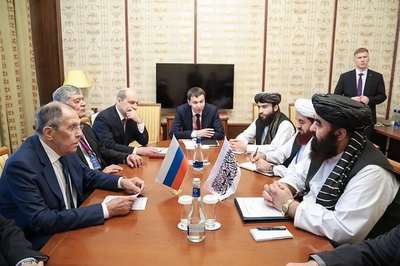
Iran maintains extensive relations with the Taliban. Tehran has handed control of the Afghan embassy to Taliban-appointed diplomats, and Taliban delegations have repeatedly visited Iran in recent years. However, Iran has not formally recognised the Taliban administration.
The editorial also accused the Taliban of adopting a confrontational approach over Iran’s share of water from the Helmand River.
Disputes over Helmand water rights have become one of the main sources of tension between Tehran and the Taliban over the past three years. In 2023, border tensions between Iranian and Taliban forces in Nimroz escalated into an armed clash that left several people dead and wounded.
The writer also accused the Taliban, without providing specific evidence, of infiltrating operatives into Iran, involvement in some attacks and explosions, and organising operations against the group’s opponents in Iranian cities.
Relations between Iran and the Taliban have undergone major shifts over the past three decades. The two sides came close to war in the late 1990s after Iranian diplomats were killed in Mazar-i-Sharif.
After the fall of the Taliban’s first government in 2001, however, channels of communication gradually developed between Tehran and the group.
Disputes over Helmand River water rights, border security, large-scale Afghan migration to Iran and Tehran’s concerns about militant groups operating in Afghanistan remain among the main challenges in relations between the two sides.