• العربية
  • پښتو
  • فارسی
BrandBrand
  • Afghanistan
  • Sport
  • Analysis
  • Markets
  • Afghanistan
  • Sport
  • Analysis
  • Markets
  • Theme
  • Language
    • العربية
    • پښتو
    • فارسی
  • Afghanistan
  • Sport
  • Analysis
  • Markets
All rights reserved for Volant Media UK Limited
volant media logo

Afghan Traders Sign $55 Million Worth Of Contracts With Kazakhstan

Oct 13, 2026, 16:24 GMT+1

The Afghanistan Chamber of Commerce and Investment has announced that five trade contracts worth $55 million were signed during a visit to Kazakhstan by a delegation representing 10 Afghan companies. The agreements cover the supply of flour, wheat and other agricultural products.

According to the Afghanistan Chamber of Commerce and Investment, the delegation travelled to Kazakhstan on 8 October to participate in the international event “Agricultural Season After Harvest 2026”.

An exhibition of agricultural machinery and products, along with direct business meetings between traders from the two countries, was also held on the sidelines of the event.

The chamber said that of the total contracts signed, agreements worth $40 million were for the supply of wheat and other agricultural products, while contracts worth $15 million were for flour.

According to a statement issued by the chamber, the delegation included importers and agricultural traders from Herat, Kabul, Kandahar and Balkh provinces.

The delegation was led by Wahidullah Azizi, a member of the board of directors of the Afghanistan Chamber of Commerce and Investment and head of its Food Committee.

The Taliban had previously announced the signing of trade contracts worth $20 million between traders from Herat and Kazakhstan.

According to international trade data from the World Bank and the United Nations, Kazakhstan and Uzbekistan are among Afghanistan’s main suppliers of wheat flour.

In 2024, Uzbekistan ranked first in terms of the value of flour exports to Afghanistan. However, Kazakhstan exported a greater quantity of flour to Afghanistan than Uzbekistan.

Kazakhstan’s exports to Afghanistan are 70 times greater than its imports from the country.

During the first five months of 2026, Kazakhstan exported approximately 589,000 tonnes of wheat flour to Afghanistan, worth $162.9 million.

Trade between Afghanistan and Kazakhstan reached $545.2 million in 2024 before declining slightly to $541.8 million in 2025.

According to figures released by Kazakhstan, the country exported approximately $519 million worth of goods to Afghanistan in 2025, while its imports from Afghanistan totalled $22.8 million.

During the first seven months of 2026, bilateral trade reached $581.1 million, comprising $572.9 million in Kazakh exports to Afghanistan and $8.2 million in imports from Afghanistan.

Flour, wheat and vegetable oil were among Kazakhstan’s main exports to Afghanistan during this period, with export values of $215.6 million, $122 million and $51.1 million respectively.

Most Viewed

No Territory Will Be Handed Over To Afghanistan, Says Iran
1

No Territory Will Be Handed Over To Afghanistan, Says Iran

2

Pakistan Warns Taliban Of Consequences Over Failure To Combat Terrorism

3

Pakistan Must Respect Its Politicians & People, Says Taliban Spokesperson

4

Conflict With Pakistan Serves Foreign Interests, Says Taliban Official

5

After Pakistani Strikes, Taliban Intelligence Chief Vows Firm Resolve Against ‘Aggression’

•
•
•

More Stories

Seven Taliban Governors Meet In Kabul As Armed Attacks Increase

Oct 13, 2026, 14:39 GMT+1
100%

Taliban governors from seven provinces including Kandahar, Balkh, Herat, Kunduz, Nangarhar, Paktia and Kabul have held a meeting in the Afghan capital city.

Participants discussed a range of issues, including the implementation of decrees issued by the Taliban leader, border affairs, efforts to combat drug trafficking and improvements to the security situation.

The Taliban’s Interior Ministry announced on Tuesday, 13 October, that a regular coordination meeting of governors from the country’s seven zones had been held in Kabul.

According to a ministry statement, participants reviewed reports from previous meetings of governors across the seven zones and discussed matters relating to the Taliban leader’s decrees, border management, combating drug trafficking, improving security management, mining operations and creating employment opportunities.

The meeting comes after Taliban governors in the country’s northern, southern, eastern and western zones held separate meetings in recent days to discuss various issues, particularly the security situation.

An increase in armed attacks against the Taliban in different parts of Afghanistan, from the north and east to the west and south, has become a major concern for the group in recent months.

Repeated meetings involving governors and senior security officials indicate that managing the security situation and countering the expanding activities of armed opposition groups have become central issues in the Taliban’s recent discussions.

Expansion Of Armed Resistance

Concerns about the growing activities of armed groups opposing the Taliban intensified after the Afghanistan Freedom Front launched a series of attacks against Taliban positions in Nuristan and Kunar provinces, claiming to have captured several Taliban outposts.

Several more explosions have occurred in Badakhshan over the past ten days. Attacks against the Taliban have also been reported in Panjshir and Ghor provinces over the past two days.

The Afghanistan Freedom Front, National Resistance Front of Afghanistan, United Front of Afghanistan, Republican Front, the Green Unit affiliated with Amrullah Saleh, and the Sepahi Mihan Front are among the known armed opposition groups currently carrying out attacks against the Taliban.

Reports of attacks against the Taliban have emerged from various parts of the country in recent days.

The continued attacks, together with concerns about the expansion of armed opposition activities, have increased security pressures on the Taliban.

Meanwhile, the Taliban have been holding public meetings and urging residents to cooperate with their authorities in an effort to strengthen local support for maintaining security.

Pakistan Must Respect Its Politicians & People, Says Taliban Spokesperson

Oct 12, 2026, 15:12 GMT+1
100%

Taliban spokesperson Zabihullah Mujahid says blaming Afghanistan is not a solution to Islamabad’s failures, urging Pakistan to address its internal crises instead of engaging in negative propaganda.

In a statement posted on X on Monday, 12 October, Mujahid said blaming Afghanistan for Pakistan’s failures would lead nowhere.

He said continued baseless accusations and senior Pakistani officials’ focus on negative propaganda against the Afghan Taliban amounted to a failed policy that was damaging diplomatic efforts and the path towards negotiations.

Expressing concern about the impact of Pakistan’s political, security, social and economic challenges on regional stability, Mujahid said Islamabad should take practical steps to address these crises rather than shift blame elsewhere.

He also called on the Pakistani government to respect the rights, freedoms and views of its politicians and citizens.

Mujahid’s remarks came as Pakistan’s Information and Broadcasting Minister Attaullah Tarar took a strongly critical stance towards Kabul on Monday, claiming that more than 20,000 terrorists, including 6,000 members of the Tehreek-e-Taliban Pakistan (TTP), were currently in Afghanistan.

Tarar accused the Taliban of allowing these militants to operate from safe havens and receive military training on Afghan soil. He said Pakistan wanted extremism and militancy to be eliminated from Afghanistan.

He added that counter-terrorism operations along the border and in Khyber Pakhtunkhwa would continue with full force.

Pakistan Prime Minister Shehbaz Sharif had earlier called for practical action against armed groups in Afghanistan during a meeting with UN Secretary-General António Guterres, saying that stopping cross-border attacks was one of Islamabad’s main demands.

State of emergency in Khyber Pakhtunkhwa amid political crisis

The remarks by Taliban and Pakistani officials come amid an escalating security and political crisis in Khyber Pakhtunkhwa, which borders Afghanistan.

On Sunday, Pakistan’s federal government, following approval by President Asif Ali Zardari, declared a state of emergency in Khyber Pakhtunkhwa, imposed direct governor’s rule and removed the powers of the provincial government led by Pakistan Tehreek-e-Insaf (PTI). A governor aligned with Islamabad was appointed.

In a statement, Tarar described the removal of the provincial government as a positive change. Shehbaz Sharif’s government, citing reports from security agencies, accused the provincial administration led by Sohail Afridi of failing to contain insecurity and of accommodating armed groups.

PTI, however, described the move as an attempt to suppress demonstrations by supporters of Imran Khan and as a violation of people’s constitutional rights. The party also reported the detention of Sohail Afridi, the province’s chief minister, and Junaid Akbar, its provincial president.

Authority over the province has been transferred for at least six months to the governor and an 11-member council, a development that comes amid the continuing dispute between Kabul and Islamabad over the TTP and has further heightened tensions.

Pakistan Warns Taliban Of Consequences Over Failure To Combat Terrorism

Oct 12, 2026, 12:23 GMT+1
100%

Pakistan Foreign Minister Ishaq Dar has warned the Afghan Taliban of consequences if it fails to act against terrorism originating from Afghanistan, calling terrorism the biggest challenge facing the region and the world.

Speaking at the Islamabad Strategic Studies Institute’s international conference on Monday, 12 October, Dar called on the Afghan Taliban to immediately stop providing weapons and other assistance to terrorists.

Pakistan’s foreign minister said the Afghan Taliban had failed to fulfil its commitments on counter-terrorism. He said the presence of the Tehreek-e-Taliban Pakistan (TTP) and other militant groups in Afghanistan posed a threat to regional peace.

Dar said that Pakistan has only one demand from Afghanistan: that it does not allow its territory to be used for terrorism.

Referring to a trilateral meeting between Pakistan, China and Afghanistan held in Kabul in August last year, he said Pakistan had discussed the issue with the Taliban and that visits had been made to Afghanistan to discuss counter-terrorism efforts.

His remarks come after Taliban spokesperson Zabihullah Mujahid responded to Pakistani officials’ concerns about terrorism originating from Afghanistan by saying that blaming Afghanistan was not a solution to Islamabad’s failures.

Mujahid urged the Pakistani government to address its internal crises and respect the rights of Pakistani citizens and politicians rather than engage in what he described as negative propaganda.

Meanwhile, Pakistan’s Information and Broadcasting Minister Attaullah Tarar has said more than 20,000 terrorists are currently present in Afghanistan, including 6,000 members of the TTP.

He claimed that militants were based in safe havens on Afghan soil and were receiving training in the country.

Officials from several regional countries and members of the Collective Security Treaty Organisation have previously warned about the presence of terrorist groups in Taliban-controlled Afghanistan.

Russian President Vladimir Putin said on 29 September that terrorist groups in Afghanistan posed a threat to countries of the Commonwealth of Independent States.

No Territory Will Be Handed Over To Afghanistan, Says Iran

Oct 12, 2026, 11:32 GMT+1
100%

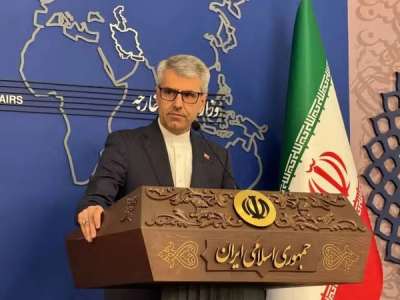
Iran’s Foreign Ministry says no part of Iranian territory can be transferred to another country, calling recent claims about allocating land in Chabahar to Afghanistan a misunderstanding.

Foreign Ministry spokesman Esmaeil Baghaei said at his weekly press briefing on Monday that reports suggesting part of Iranian territory would be handed to Afghanistan had no factual basis and stemmed from a misinterpretation of remarks by an Iranian MP.

He said the issue under discussion was helping landlocked countries gain access to ports and international waters as part of regional cooperation, adding that similar arrangements exist in many parts of the world.

According to Baghaei, no formal proposal has been made regarding Afghanistan, and the matter was only mentioned on the sidelines of a meeting.

The Iranian Foreign Ministry spokesman stressed that Tehran had merely said it would examine the issue and that all claims about transferring Iranian territory or sovereignty to Afghanistan were unfounded.

Baghaei’s remarks came after Iranian MP Mohsen Zangeneh said during a visit by an Iranian delegation to Kabul that around 10 hectares of land at Chabahar port and more than 100 hectares in its free zone could be allocated for Afghan investment.

The comments drew widespread reaction on social media, with some critics interpreting them as a transfer of part of Iranian territory to Afghanistan.

Zangeneh later walked back his initial remarks, saying no Iranian territory had been handed over to Afghanistan.

He explained that the proposal was intended to create opportunities for Afghan investment in Chabahar and the development of facilities such as a dry port to facilitate Afghanistan’s access to international waters, rather than transferring ownership or territorial sovereignty.

Local officials in Chabahar also rejected reports that land had been transferred to foreign nationals or a foreign government.

Chabahar port has in recent years become one of Afghanistan’s most important trade routes to international waters, with its significance increasing amid rising border and trade tensions between the Taliban and Pakistan.

Iran Executes At Least 233 Afghans Since Taliban’s Return To Power, Says Rights Group

Oct 10, 2026, 17:24 GMT+1
100%

At least 233 Afghan nationals have been executed in Iran since the Taliban returned to power in 2021 through September 2026, with the number of executions rising sharply in recent years.

Iran Human Rights, a Norway-based organisation, said five Afghan nationals were executed in the months following the Taliban’s return to power in 2021.

The figure rose to 16 in 2022, 25 in 2023, 80 in 2024 and at least 84 in 2025.

The organisation also documented the execution of 23 Afghan nationals during the first nine months of this year.

This means the number of recorded executions of Afghans increased from 16 in 2022 to 84 in 2025, a rise of 425 per cent over three years. The 2025 figure was also about five per cent higher than the 80 executions recorded in 2024.

Iran Human Rights warned that its documented figures might not include all cases because Iranian authorities do not officially announce many executions. The organisation said only a portion of executions of Afghan nationals in 2024 were reported by official Iranian sources.

Afghan nationals executed in Iran have mainly been convicted of murder and drug-related offences.

In September this year, Iran Human Rights reported the execution of Afghan national Tourat Mohammadi on espionage charges. The organisation said he was executed in secret and that Iranian authorities did not inform his family beforehand.

Taliban response

Taliban officials in January 2025 asked Iran to provide a list of Afghan prisoners, particularly those facing execution, and to replace death sentences with alternative punishments.

The request was made during a visit to Tehran by a delegation led by Abdul Malik Haqqani, administrative deputy of the Taliban’s Supreme Court.

According to the Taliban’s Supreme Court, the delegation raised the issue with Kazem Gharibabadi, Iran’s deputy judiciary chief for international affairs and human rights.

Haqqani asked Iranian officials to show leniency towards Afghan prisoners sentenced to death, citing Islamic principles and what was described as Islamic brotherhood.

Taliban officials also asked for a list of Afghan prisoners sentenced to qisas, or retributive punishment.

During the same meeting, according to the Taliban, Iranian officials said 1,500 Afghan prisoners were expected to be transferred to Afghanistan.

However, the report on the meeting did not provide a clear Iranian response to the Taliban’s request to replace death sentences with other punishments.

Families seek answers from Taliban and Tehran

The account of Ruhullah Hamidi, brother of Abdullah Tajik, an Afghan prisoner executed in Iran, illustrates the difficulties Afghan families face in following the cases of detained relatives.

Hamidi told Afghanistan International that his brother had been arrested about four and a half years earlier on drug-trafficking charges, which he denied.

According to Hamidi, Iranian authorities set bail worth 100 billion tomans for his brother’s release, an amount the family could not afford.

Hamidi also said his brother did not have access to a lawyer of his choice. After the family approached the Taliban embassy in Tehran, they were told that a request had been submitted for his transfer to Afghanistan.

Despite this, Abdullah Tajik was executed in Iran.

In another case, the family of Afghan national Mohammad Yousuf says he died in Iran, raising further concerns about the treatment of detained Afghans in the country.

Yousuf’s relatives told Afghanistan International that he worked at a factory in Iran and was arrested after a confrontation with people who had attacked the factory. According to the family, he was detained alongside another Afghan worker.

His family said they had not received a clear explanation of how he died and called for clarification of the circumstances surrounding his detention and death.

Iranian authorities had not responded to these allegations in the report.

Concerns over fair trials

Human rights organisations have repeatedly raised concerns about failures to meet fair-trial standards in cases resulting in executions in Iran.

Concerns include limited access to independent lawyers; the possibility of confessions obtained under torture and the lack of effective family or consular support for some foreign prisoners.

Iran Human Rights has also said in its reports that many Afghans sentenced to death lack strong family support networks and adequate access to legal representation.

Meanwhile, the Human Rights Activists News Agency, or HRANA, said in a report published on 9 October that at least 2,003 people were executed in Iran between 10 October 2025 and 8 October 2026, an increase of about 29 per cent compared with the previous reporting period.

HRANA said around 95 per cent of the executions it recorded during that period were not announced by official sources.

World Day Against the Death Penalty is observed annually on 10 October.

The figures on executions of Afghan nationals in Iran come as many prisoners’ families continue to face limited access to case information and little notice about when executions will be carried out.