• العربية
  • پښتو
  • فارسی
BrandBrand
  • Afghanistan
  • Sport
  • Analysis
  • Markets
  • Afghanistan
  • Sport
  • Analysis
  • Markets
  • Theme
  • Language
    • العربية
    • پښتو
    • فارسی
  • Afghanistan
  • Sport
  • Analysis
  • Markets
All rights reserved for Volant Media UK Limited
volant media logo

US-Iran War Has Cost EU Over €100 Billion, Says Spanish PM

Oct 17, 2026, 17:11 GMT+1

Spain’s prime minister says the energy crisis caused by the US-Iran conflict has cost the EU more than €100 billion, warning of major consequences for public finances and household budgets.

Pedro Sánchez urged parliamentary groups to vote in favour of validating a royal decree containing aid measures aimed at reducing the impact of the energy crisis caused by the Iran war.

Sánchez has previously described the war as illegal, unjust and unjustifiable.

The Spanish prime minister said the conflict, which he said was initiated by the United States and Israel, resulted from an unjustifiable, mistaken and illegal decision.

He said the amount already spent was equivalent to Europe’s annual expenditure on the Common Agricultural Policy.

Speaking to reporters on Thursday as he arrived at a European Council meeting in Brussels, Sánchez said the war had had major consequences for public finances and for citizens’ pockets.

He said Spain had allocated more resources than any other country to support businesses, households and sectors particularly affected by the crisis.

Sánchez said Spain had allocated €12 billion since the start of this year, much of it in response to rising fuel prices.

He said he was confident that once the crisis ended, growth capacity would increase again, and economic activity would quickly return to levels seen before the energy shock.

The Spanish prime minister also urged parliamentary groups to put ideological issues aside and vote in favour of approving the decree in the Congress of Deputies’ Permanent Deputation.

The decree includes measures such as extending tax reductions on petrol and diesel until 31 December, as well as limiting the regulated gas tariff and the price of butane gas cylinders.

The package also retains a support mechanism allowing electricity taxes to be reduced if inflation rises above a specified level.

Other measures include increasing natural gas reserves for the winter and continuing assistance for the agricultural sector and road transport.
Most Viewed

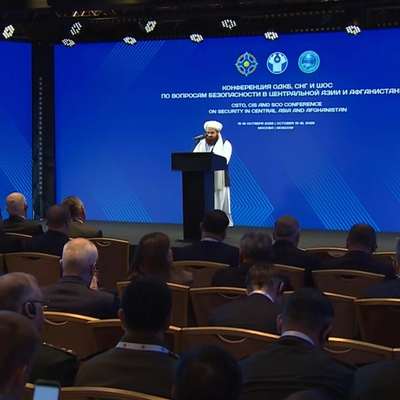
Regional Security Threats Come From Pakistan, Says Taliban
1

Regional Security Threats Come From Pakistan, Says Taliban

2

Taliban Isolation Could Trigger New Conflict In Afghanistan, Says CIS Secretary-General

3

Inclusive Government Is Key To Lasting Peace In Afghanistan, Says SCO

4

Nearly 10,000 Former Afghan Security Personnel Granted Residency, Says Iran

5

China Urges Taliban To Take Concrete Action Against Terror Groups In Afghanistan

•
•
•

More Stories

Azad Kashmir: Protest Movement Stalls as Dispute Over Refugee Seats Deepens

Aug 7, 2026, 15:05 GMT+1
100%

Four years after the Joint Awami Action Committee (JAAC) launched widespread protests in Pakistan-administered Kashmir over rising electricity tariffs and wheat flour subsidies, authorities say they have accepted almost all economic grievances.

However, they accuse the group of escalating its political demands.

According to official figures, the government of Azad Jammu and Kashmir (AJK)—the Pakistani-administered portion of the disputed region—has accepted 37 of JAAC’s 38 demands. Twenty-four have been implemented, while 13 remain in progress, including energy pricing and subsidy reforms. Officials maintain this demonstrates the state's responsiveness to public concerns.

However, a major constitutional impasse remains over JAAC’s demand to abolish the 12 legislative assembly seats reserved for refugees from Indian-administered Kashmir who reside in Pakistan. Authorities argue that this issue falls entirely outside the regional government's jurisdiction.

On 7 June 2026, the AJK Supreme Court ruled that these refugee seats are constitutionally protected and cannot be dissolved without a full constitutional amendment. A conference of major political parties also rejected the proposal, while the Kashmir Refugees Council called for doubling the reserved seats from 12 to 24.

Government officials state that refugee representation has been integral to the region’s legal framework since 1947. The arrangement reflects Islamabad’s official stance that the entire former princely state remains disputed until a final decision is reached through a UN-backed plebiscite. Authorities maintain that eliminating these seats would dismantle this constitutional structure rather than resolve an administrative issue.

Officials further argue that while the region has an elected parliament, JAAC has bypassed formal political channels in favor of street demonstrations and strikes.

Government circles also assert that elements within the protest group are pursuing broader geopolitical objectives that challenge Pakistan’s constitutional position on Kashmir. Official sources confided to Afghanistan International that JAAC’s leadership is heavily influenced by members of the Jammu Kashmir Liberation Front (JKLF)—a group historically advocating for full independence for Kashmir from both India and Pakistan. Authorities allege these figures are using popular economic grievances to revive the weakened political movement.

With economic and subsidy agreements largely secured since 2022, government officials maintain that the remaining standoff is no longer about public services, but about core constitutional principles that cannot be altered through street pressure.