• العربية
  • پښتو
  • فارسی
BrandBrand
  • Afghanistan
  • Sport
  • Analysis
  • Markets
  • Afghanistan
  • Sport
  • Analysis
  • Markets
  • Theme
  • Language
    • العربية
    • پښتو
    • فارسی
  • Afghanistan
  • Sport
  • Analysis
  • Markets
All rights reserved for Volant Media UK Limited
volant media logo

Taliban Member Killed In Takhar, Says AFF

Oct 22, 2026, 14:19 GMT+1

The Afghanistan Freedom Front has claimed responsibility for Wednesday evening’s blast in Taloqan, saying one Taliban member was killed and three others wounded in an attack on the group’s city intelligence unit.

In a statement on Thursday, 22 October, the front said a vehicle carrying Taliban members was also destroyed in the evening attack.

According to the group’s statement on X, the attack took place at around 7 pm on Wednesday, 21 October, and targeted the Taliban’s city intelligence unit in Taloqan. It said one of those wounded was an officer in the unit.

The Afghanistan Freedom Front also released a video it said showed the attack, in which an explosion can be seen near a vehicle.

Local sources had earlier told Afghanistan International that a mine planted on a motorcycle exploded in Pul-e-Kalan, Taloqan.

An eyewitness said Taliban vehicles were the target of the attack and that at least two vehicles were damaged at the scene.

A Taloqan resident also told Afghanistan International that the explosion was very powerful and could be heard from a considerable distance across the city.

Local Taliban officials have not yet commented on the incident.

Most Viewed

Russia, Uzbekistan Hold Military Drills Near Afghanistan
1

Russia, Uzbekistan Hold Military Drills Near Afghanistan

2

Three Taliban Fighters Killed In Attack Near Kabul-North Highway, Says AFF

3

US Lawmaker Pushes To Restore Deportation Protections For 8,000 Afghans

4

France Confirms Taliban Talks On Return Of ‘Dangerous’ Afghans

5

Six New Polio Cases Detected In Afghanistan

•
•
•

More Stories

Male University Enrolment In Afghanistan Has Fallen By One-Third, Says UN

Oct 22, 2026, 12:10 GMT+1
100%

A joint UNESCO-UNICEF report says Afghanistan’s education crisis extends beyond girls, with male university enrolment falling from about 306,000 in 2019 to 208,000 in 2026.

The report describes declining participation in higher education as one sign of a worsening education crisis in Afghanistan. It also points to the complete exclusion of women from universities, falling participation among boys in secondary schools and a sharp drop in university entrance exam applicants.

The report, titled “The Afghanistan Education Situation Report 2026” and published on 20 October, shows that the number of university entrance exams applicants fell from 210,000 in 2020 to about 84,000 in 2023.

Although the figure rose to around 118,000 in 2026, it remains well below the level recorded before the Taliban returned to power.

According to the report, the number of students admitted to universities also fell, from about 81,000 in 2020 to 74,500 in 2026.

However, the university admission rate increased from around 39 per cent in 2020 to 63 per cent in 2026, which the report says indicates that competition for university places has declined.

The report also highlights a fall in the number of male university students, from about 306,000 in 2019 to around 208,000 in 2026.

The decline comes as Afghan universities have faced financial difficulties and falling numbers of applicants following the exclusion of female students.

The report also says girls have been completely excluded from the university entrance exam process.

Around 80,000 girls took the university entrance exam in 2020, while more than 81,000 female candidates participated in 2021.

UNESCO and UNICEF also say more than 2.6 million Afghan girls have been denied secondary education since secondary and high schools were closed to girls in 2021.

The two UN agencies warned that the continued restrictions have not only eliminated girls’ pathways to university but also show that, contrary to common perceptions, the education crisis is not affecting girls alone.

The report says boys’ participation is also declining, with enrolment rates falling at both lower and upper secondary levels.

According to UNESCO and UNICEF, the trend shows that the pathway from school to university and then to the labour market is becoming increasingly restricted for a large share of Afghanistan’s young people.

The report also points to a weakening of university academic staff.

The number of university professors and lecturers fell from around 18,900 in 2019 to about 12,700 in 2025. The number of female academics dropped from around 2,600 to just over 100.

UNESCO and UNICEF concluded that Afghanistan’s education system is facing several overlapping crises, including the exclusion of millions of girls from education, the removal of women from universities, declining participation among boys, fewer Kankor applicants, falling student numbers and a shrinking academic workforce.

The agencies warned that without sustained investment and the removal of education restrictions, the capacity of Afghanistan’s education system will continue to weaken.

US Lawmaker Pushes To Restore Deportation Protections For 8,000 Afghans

Oct 21, 2026, 11:08 GMT+1
100%

US Democrat Sam Liccardo says he will use a parliamentary procedure to force a House vote on a bill aimed at preventing the deportation of more than 8,000 Afghans who lost temporary protected status.

According to a statement from Liccardo’s office, the move is intended to bring the bill to a vote. If approved, it could restore Temporary Protected Status and prevent the affected Afghans from being deported.

The bill was referred to the House Judiciary Committee this summer and has remained there without a hearing or further progress.

Republican House leaders have so far not allowed the bill to leave committee and come to a vote.

Liccardo plans to file a discharge petition in an effort to bypass the Republican leadership.

Under normal procedures, House leaders, including the Speaker and committee chairs, decide which bills are brought to the floor for a vote.

If the leadership opposes a bill, it can keep it in committee and prevent the full House from voting on it.

Under US House rules, a discharge petition can force a bill to the floor without leadership approval if it secures at least 218 signatures.

More than 8,000 Afghans living in the United States had been allowed to remain legally under Temporary Protected Status, but the Trump administration ended that protection in 2025, leaving them at risk of deportation.

The bill to restore temporary protection for Afghans was introduced by Liccardo together with Democrats Jason Crow and Republicans Don Bacon and María Elvira Salazar.

Liccardo said in his statement: “Regardless of political differences, we ought to be able to agree on the critical importance of keeping our promises as a country”. He added: “America promised thousands of Afghans who risked their lives as interpreters, as informants, as other support roles to our military; they risked their lives with the expectation that we would not betray them and put them in harm’s way for doing so”.

Liccardo described the support of five Republican lawmakers as a positive sign and said he hoped more Republicans, particularly military veterans who served in Afghanistan, would back the bill after the midterm elections.

Russia, Uzbekistan Hold Military Drills Near Afghanistan

Oct 21, 2026, 09:08 GMT+1
100%

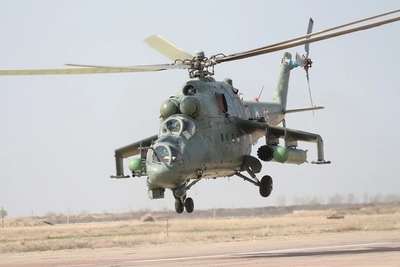
Russian and Uzbek forces have begun a joint military exercise, Cooperation-2026, at the Termez training ground near Afghanistan’s border, focusing on detecting and destroying armed groups.

During the seven-day exercise, mountain troops, reconnaissance and combat drones, and military helicopters from the two countries will practise scenarios involving the detection and destruction of illegal armed groups in border areas.

Russian troops, together with military and specialised equipment, travelled more than 300 kilometres through mountainous areas of Tajikistan and Uzbekistan before deploying to the Termez training ground.

After arriving at the exercise site, Russian forces began technical preparations, equipment maintenance and preparations for the active phase of the drills.

According to the announced schedule, the joint exercise will run from 20 to 27 October at the Termez military training ground near the Afghan border.

The main aim of the drills is to improve coordination between the two countries’ forces in detecting and destroying small illegal armed groups in border regions.

The Termez military training ground is considered one of Central Asia’s most important border locations and has drawn increased attention from the two countries’ security forces in recent years because of its proximity to unstable areas in northern Afghanistan.

Russian officials have repeatedly warned of potential threats from terrorist groups operating in Afghanistan and the risk that they could infiltrate neighbouring countries.

Russian Foreign Minister Sergei Lavrov warned only days ago that terrorist groups maintain a significant number of training camps in areas of Afghanistan bordering Tajikistan and Uzbekistan.

Security analysts say such exercises are particularly significant amid continuing regional concerns over Afghanistan’s security situation and the activities of terrorist groups.

Training for armed infiltration scenarios and the use of modern equipment reflects efforts by Moscow and Tashkent to strengthen operational preparedness against cross-border threats.

The exercises will involve reconnaissance and combat drones, ground-based robotic systems and Mi-24 attack helicopters.

The equipment will allow participating forces to practise reconnaissance and target-destruction operations more precisely in conditions resembling the mountainous and border areas of Afghanistan.

Tajik President Urges Joint Action Against Terrorism & Drug Trafficking

Oct 20, 2026, 12:35 GMT+1
100%

Tajik President Emomali Rahmon has called for stronger joint action against terrorism and drug trafficking during a meeting with delegation heads from Shanghai Cooperation Organisation member states.

The 25th meeting of heads of government of Shanghai Cooperation Organisation member states is being held on Tuesday in Tajikistan’s capital, Dushanbe. The Taliban is not attending the meeting.

Member states are represented by prime ministers, vice-presidents and senior ministers.

During his meeting with the heads of delegations, Rahmon stressed the need to maintain peace and stability in the region and resolve disputes peacefully, saying Tajikistan supported strengthening the central role of the United Nations in these efforts.

Rahmon also called for greater cooperation among member states in combating terrorism, extremism, cyber threats, drug trafficking and transnational organised crime.

Economic and trade cooperation, investment, energy and food security, artificial intelligence and environmental issues were also discussed.

Images released from the meeting show representatives from member states including Pakistan, Kyrgyzstan, Belarus, Kazakhstan, China, Russia, Iran and Uzbekistan alongside the Tajik president.

No Taliban representative appears in the images, and no Taliban official is listed among the official participants in the SCO meeting.

The Shanghai Cooperation Organisation was established in 2001, and Afghanistan has held observer status since 2012.

At previous meetings, SCO member states have repeatedly stressed the need for an inclusive government in Afghanistan.

Since the Taliban returned to power, SCO meetings have been held in Dushanbe, Samarkand, New Delhi, Astana and Bishkek without Taliban representatives being invited.

Taliban officials have repeatedly called for participation in the meetings, arguing that SCO decisions concerning the region are incomplete without their involvement.

Tuesday’s meeting in Dushanbe includes delegations from member states and participating countries including Belarus, China, Iran, Russia, Kazakhstan, Kyrgyzstan, Pakistan, Uzbekistan, Turkmenistan and Mongolia.

Final documents are expected to be signed at the end of the meeting.

Tajik Prime Minister Qohir Rasulzoda and SCO Secretary-General Nurlan Yermekbayev are also expected to hold a joint press conference on the meeting’s outcomes.

Taliban Leader Restricts Ministers’ Powers, Requires Approval For Cabinet Meet

Oct 20, 2026, 11:04 GMT+1
100%

Sources in Kabul say Taliban leader Hibatullah Akhundzada has restricted cabinet meetings chaired by Prime Minister Mohammad Hassan Akhund, requiring his approval before they can be held.

The sources told Afghanistan International that cabinet meetings can now take place only with Hibatullah’s permission, while deputy prime ministers are also required to send their decisions to his office for approval.

The sources said on Monday, 19 October, that the Taliban Prime Minister Mohammad Hassan Akhund can no longer hold cabinet meetings at the presidential palace without prior approval from Hibatullah.

One Taliban source familiar with the matter said the group’s leader had verbally instructed Mohammad Hassan Akhund not to convene ministers in Kabul without his permission.

Afghanistan International’s review shows that the last cabinet meeting chaired by Mohammad Hassan Akhund at the presidential palace was held on 18 May this year, around five months ago.

According to information published on the Taliban-controlled presidential palace website, the last meeting of the Council of Ministers chaired by Hibatullah Akhundzada was held on 13 June.

Since then, the Taliban has not issued any official statement announcing another meeting of the Council of Ministers.

Sources said Hibatullah’s office has instructed all ministers and Kabul-based departments to send reports of their meetings to his office and obtain the Taliban leader’s approval before making major decisions.

The restrictions on the authority of Taliban officials are not limited to cabinet ministers.

Several officials close to Taliban governors told Afghanistan International that governors also require Hibatullah’s approval for major decisions at the provincial level and cannot act independently on significant matters.

Sources in the Taliban Interior Ministry also confirmed that reports from all meetings held by Interior Minister Sirajuddin Haqqani and his deputies are sent to Hibatullah’s office.

According to the sources, decisions made at those meetings can only be implemented after receiving approval from the Taliban leader’s office.

Meanwhile, a Taliban security official told Afghanistan International that all departments under the General Directorate of Intelligence have been instructed to send official correspondence directly to Hibatullah’s office in Kandahar rather than to intelligence chief Abdul Haq Wasiq and his deputy, Tajmir Jawad.

The changes indicate that the Taliban leader has increased his direct oversight of government decision-making in Kabul and the provinces while further limiting the authority of ministers, governors and senior security officials.

Sources say the growing concentration of power in Hibatullah’s hands has caused dissatisfaction among some senior Taliban officials, including Sirajuddin Haqqani.

Afghanistan International had previously reported in an investigative report on 9 September 2025 that the authority of Taliban ministers in Kabul had been restricted.

Sources at the time said many Taliban cabinet members lacked independent decision-making powers and played little effective role even in financial matters, staff recruitment and policymaking.

In another report on 15 May this year, Afghanistan International said Hibatullah Akhundzada had taken control of appointments to senior civilian and military positions, leaving the prime minister and other Taliban officials in Kabul with little role in key appointments.

The UN Security Council also said in its 2024 report that major political, economic and security decisions within the Taliban are made by the circle around Hibatullah in Kandahar, while the Kabul-based cabinet largely handles administrative and executive matters.