UN Remains Committed To Supporting Afghans, Says New UNAMA Chief

New UNAMA chief Rabab Fatima says that despite the many challenges facing Afghans, their talent, aspirations and potential are greater than the difficulties they face.
New UNAMA chief Rabab Fatima says that despite the many challenges facing Afghans, their talent, aspirations and potential are greater than the difficulties they face.
In a message on Saturday, 24 October, marking the 81st anniversary of the United Nations, Fatima said Afghanistan’s future belongs to its people and that the UN remains committed to supporting them in shaping that future.
In her first message since taking up her role in Afghanistan, she said she was beginning her work with respect for the country’s people, culture and rich heritage, and with a commitment to listening, dialogue and cooperation.
The UNAMA chief said the United Nations had stood alongside the Afghan people for nearly eight decades through periods of war, hardship and humanitarian crisis.
She said the UN and its partners had been present to support people during natural disasters, droughts, displacement and conflict.
Fatima stressed that throughout those years, the determination and resilience of the Afghan people had remained constant.
She added that the United Nations would continue supporting the people of Afghanistan and defending the dignity, opportunities and well-being of all Afghans.
Afghanistan joined the United Nations in 1946. In the decades since, the country has faced war, political and economic crises, and extensive humanitarian needs.
UN Secretary-General António Guterres appointed Rabab Fatima, a senior Bangladeshi diplomat, as his special representative for Afghanistan and head of UNAMA on 16 July.
She succeeded Kyrgyz diplomat Roza Otunbayeva, while Georgette Gagnon served as acting head of the mission during the transition.
Fatima has more than three decades of experience in bilateral and multilateral diplomacy and international policymaking.
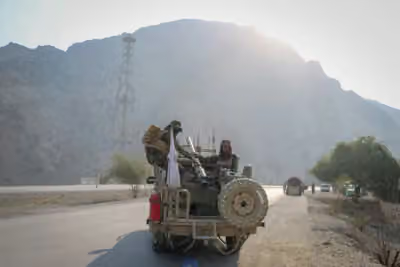
Pakistan says it is ready to continue talks with the Taliban but insists further dialogue depends on concrete action to curb terrorist threats originating from Afghanistan.
Pakistan Foreign Ministry spokesman Sajjad Haider Khan told a press conference on Friday, 23 October, that further talks would be pointless unless the Taliban acknowledged the presence of terrorist groups in Afghanistan and established a credible mechanism to prevent security threats against neighbouring countries.
Khan said reports by the UN monitoring team and the US Special Inspector General for Afghanistan Reconstruction indicated that more than 20 terrorist groups were currently based in Afghanistan and operating without effective control.
He said these groups threatened not only Pakistan but also other regional countries, including China, Uzbekistan and Iran.
Referring to casualties from cross-border attacks, the spokesman said more than 1,300 Pakistani citizens had been killed over the past year amid an increase in terrorist attacks.
He said Islamabad had continuously engaged with the Taliban since 2021 through bilateral meetings and international forums, including talks in the Moscow Format and meetings involving Qatar, Türkiye, Saudi Arabia and China.
However, Khan said those efforts had failed to produce results because of what he described as the Taliban’s lack of flexibility.
Asked about possible Russian mediation between Islamabad and Kabul, Khan said Pakistan valued Moscow’s role in regional security but that no new proposal or initiative was currently on the table.
He also criticised the Taliban’s position at the recent Moscow Format meeting, saying the group had refused to acknowledge the presence of terrorist organisations in Afghanistan or endorse the joint declaration.
Khan said this reflected a new level of non-cooperation and argued that continued talks would have little value unless the Taliban accepted responsibility for containing such threats.
Zamir Kabulov, Russia’s special presidential representative for Afghanistan, previously confirmed that the eighth Moscow Format meeting ended without a joint declaration because of disagreements between the Taliban and Pakistan.
Pakistan’s Foreign Ministry has previously said the country is prepared to reopen border crossings and resume trade with Afghanistan if the Taliban cooperates in preventing armed groups that Islamabad says cross from Afghan territory into Pakistan.
The Taliban has repeatedly denied the presence of foreign armed groups in Afghanistan and rejected claims that Afghan territory is being used against neighbouring countries.
The Taliban has again strongly rejected Islamabad’s claims that it is involved in Pakistan’s insecurity, saying it lacks the means to create or finance instability in other countries.
Taliban spokesperson Zabihullah Mujahid wrote on X that insecurity in Pakistan was not in Afghanistan’s interests and that the group did not support it.
“Instability in Pakistan is detrimental to Afghanistan economic, social, and in humanitarian terms,” he said.
In a statement on Friday, 23 October, Mujahid said that whenever Pakistan’s military establishment and other security institutions fail to provide security, they blame Afghanistan for attacks.
He claimed Pakistani security agencies attribute deadly attacks to the Afghan Taliban to mislead the public.
Mujahid also accused Islamabad of spending money on what he described as projects aimed at destabilising Afghanistan.
He warned that such an approach amounted to “evading their primary and fundamental responsibilities, undermining regional stability, and wasting economic resources on futile endeavors”.
“It is by no means in Afghanistan’s interest to create insecurity in Pakistan or to support any acts of instability there,” Mujahid wrote.
Pakistan’s Prime Minister Shehbaz Sharif said on Thursday that militants were entering the country from Afghanistan around the clock and targeting civilians and security forces.
Speaking at a National Action Plan committee meeting in Peshawar, he said the bloodshed had to stop completely.
Sharif sharply criticised insecurity along the border, saying attackers entering from Afghanistan were killing soldiers, police officers and innocent civilians.
Warning about the consequences of failing to act against armed groups, he said that if terrorists roam freely across Khyber Pakhtunkhwa, take control of areas in the evenings and extort money while we simply watch, neither the people nor God will forgive us.
Pakistan accuses the Afghan Taliban of sheltering Tehreek-e-Taliban Pakistan fighters and Baloch militants. The Afghan Taliban has repeatedly denied the allegations.
However, UN Security Council reports have confirmed the presence of TTP members and other terrorist groups in Afghanistan.
Since the Taliban returned to power, insecurity in Pakistan has risen sharply, particularly in Khyber Pakhtunkhwa province along the Afghan border.
A Pakistani research centre reported on 3 October that casualties linked to militant activity rose by an unprecedented 83 per cent in the third quarter of 2026, with at least 1,415 people killed across the country.
According to the report, Balochistan and Khyber Pakhtunkhwa were the most insecure provinces, accounting for 98 per cent of all casualties recorded nationwide during the period.
UN Special Rapporteur Richard Bennett has urged European countries not to deport Afghans to places where they may face danger, stressing that states must uphold their international human rights obligations.
Bennett said in a statement that countries must respect the principle of non-refoulement, which prohibits returning people to places where they face persecution or human rights abuses.
He also expressed concern over meetings between Taliban delegations and European Union officials, including talks in Brussels, warning that such contacts, even when described as technical, could contribute to normalising widespread human rights abuses by the Taliban, particularly the gender-based persecution and repression of women and girls.
Bennett stressed that relations with the Taliban should not be normalised and the group should not be granted legitimacy until there is tangible improvement in Afghanistan’s human rights situation.
He added that he was still awaiting responses to formal correspondence he had sent to the European Union and several countries on the issue.
Writing on X, Bennett said: “I join other UN mandate holders warning EU and other states that they must not send Afghans back to danger and must uphold their international human rights obligations, including the principle of non-refoulement.”
UN experts on Thursday, 22 October, also expressed concern over the deportation of Afghan nationals from European countries.
They stressed that EU member states are required under international human rights and refugee law to respect the principle of non-refoulement and not return people to unsafe countries.
The experts described Afghanistan’s human rights situation as grave and said women and girls face widespread and systematic gender-based persecution.
They said such actions could amount to crimes against humanity.
European Countries Expand Engagement With Taliban
Bennett’s warning and the statement by UN experts come as several European countries have expanded technical contacts with the Taliban to facilitate the deportation of Afghans.
On 23 June this year, a Taliban delegation met representatives of the European Commission and 15 EU member states in Brussels to discuss the return of Afghan nationals.
The European Commission described the meeting as technical and stressed that holding the talks did not amount to recognition of the Taliban.
Germany has resumed deportations of Afghans, while Austria has also established contact with the Taliban to facilitate returns.
Norway has engaged with the group on consular matters, and France announced in October that it had begun technical talks over the return of some Afghans without legal residency.
Despite this cooperation, the countries involved have not recognised the Taliban government. Critics, however, warn that such engagement could strengthen the group’s de facto legitimacy in Europe.
Pakistan says stockpiles of advanced weapons and ammunition in Afghanistan pose a direct threat to neighbouring countries, including Pakistan.
Syed Atif Raza, Permanent Representative of Pakistan to the UN, told the 81st session of the UN General Assembly on Thursday, 22 October, that the international community should step up efforts to prevent armed and terrorist groups in Afghanistan from gaining access to weapons.
He said Pakistan’s concerns about the presence of such weapons in Afghanistan had also been reflected in reports by the UN secretary-general.
The remarks come as Pakistan has carried out strikes on targets inside Afghanistan in recent years, saying they were aimed at hideouts used by armed groups to launch attacks against Pakistan.
The Taliban administration has described the strikes as violations of Afghanistan’s sovereignty and has reported civilian casualties.
Weapons left behind following the withdrawal of US and NATO forces from Afghanistan have also been cited as a regional security concern.
According to a US Department of Defense report, about $7.1 billion worth of military equipment previously supplied to the security forces of the former Afghan government remained in Afghanistan after US troops withdrew in 2021.
The equipment included weapons, ammunition, military vehicles, aircraft and communications equipment. However, the total value of the equipment left behind does not mean that all of it remains operational or usable.
In another part of his remarks, the Pakistani representative criticised the uncontrolled transfer of advanced weapons to conflict zones, saying it prolonged fighting and, in some cases, contributed to serious violations of international humanitarian law by occupying powers.
Referring to South Asia, Raza said the transfer of advanced weapons to one country had deepened the region’s military imbalance and created conditions for the adoption of offensive doctrines. He did not name the country.
Raza stressed that Pakistan did not seek an arms race and said Islamabad’s proposals for maintaining a balance in conventional forces and establishing arms control at regional and subregional levels remained on the table.
Keith Kellogg, a former Trump national security adviser and US envoy for Ukraine, has urged Washington to engage Afghan political figures seeking to build a legitimate alternative to Taliban rule.
He also warned about China’s growing influence and Beijing’s efforts to gain access to Afghanistan’s mineral resources.
In an article published in The Washington Post on Thursday, 22 October, Kellogg wrote that the United States should not treat Afghanistan as a closed chapter following the withdrawal of its forces in 2021.
He said the Taliban had failed since returning to power to establish effective institutions, economic stability and the international relations needed for Afghanistan’s sustainable growth.
According to Kellogg, Afghanistan remains largely disconnected from the global financial system, while concerns over security, enforcement of contracts and political interference have discouraged investors from operating in the country.
Kellogg wrote that Washington should engage credible Afghan political figures who are working to create a legitimate alternative to Taliban rule. The United States should assess their leadership ability and their capacity to build public support.
He also called for continued diplomatic, economic and financial pressure on the Taliban.
Kellogg said such an approach would not mean redeploying US troops to Afghanistan, launching another state-building programme or imposing new costs on American taxpayers.
He wrote that the experience of two decades of US military involvement in Afghanistan showed that military power alone could not bring lasting change without a political system enjoying domestic legitimacy.
He stressed that Afghanistan’s political future should be shaped by Afghans themselves.
The former US official said Afghanistan has experienced business leaders, former government officials and a younger generation living both inside and outside the country who understand the importance of economic development, effective institutions and constructive relations with the international community.
According to Kellogg, investment by the United States and its allies over the past two decades helped develop this generation, and some of these figures are now working to create a political alternative to the Taliban.
He argued that the United States could assess these figures’ capabilities and level of public support and explore cooperation with them without becoming involved again in war or a large-scale state-building effort in Afghanistan.
Warning Over China’s Growing Influence in Afghanistan
Kellogg warned that as the US presence in Afghanistan has declined, China has been seeking greater access to the country’s mineral reserves while expanding its political and economic influence.
He wrote that Afghanistan holds significant deposits of copper, lithium, iron ore and other minerals needed for defence and technology industries.
According to Kellogg, Chinese companies are seeking mining concessions and broader commercial ties with the Taliban.
He said Beijing’s access to Afghan resources was significant for Washington’s strategic interests at a time when the United States is trying to reduce its dependence on China for critical minerals.
Kellogg noted that investment by Chinese companies did not necessarily amount to Chinese control over Afghanistan, but said economic dependence could give Beijing greater influence over the country’s political decisions.
In his view, China is building relationships and influence in a strategically important country, and that influence could continue even after the current Taliban leadership is no longer in power.
Kellogg warned that Washington’s lack of attention to developments in Afghanistan could create space for China to build long-term influence in a country important to regional and global powers because of both its geography and natural resources.
Keith Kellogg, a retired US Army general, was appointed chief of staff and executive secretary of the US National Security Council in 2017 and briefly served as acting national security adviser after Michael Flynn resigned.
In 2018, he became national security adviser to then Vice-President Mike Pence.
During Donald Trump’s second presidential term, Kellogg was also appointed in 2025 as the US president’s special envoy for Ukraine and Russia.