• العربية
  • پښتو
  • فارسی
BrandBrand
  • Afghanistan
  • Sport
  • Analysis
  • Markets
  • Afghanistan
  • Sport
  • Analysis
  • Markets
  • Theme
  • Language
    • العربية
    • پښتو
    • فارسی
  • Afghanistan
  • Sport
  • Analysis
  • Markets
All rights reserved for Volant Media UK Limited
volant media logo

ICC Decision Risks Limiting Access To Justice In Afghanistan, Says Human Rights Watch

Nov 18, 2026, 08:04 GMT+0

Human Rights Watch has warned that the International Criminal Court's (ICC) decision to close part of its investigation into Afghanistan risks limiting access to justice for victims of war crimes and crimes against humanity.

In a statement on Tuesday, 17 November, the rights organisation said the ruling could further undermine efforts to hold US forces, former Afghan government forces and other parties to the conflict accountable for alleged atrocities.

On 12 November, the ICC's Pre-Trial Chamber closed part of its Afghanistan investigation, citing a lack of investigative activity and significant obstacles to gathering evidence.

The decision affects investigations into alleged crimes committed by US military and intelligence personnel, former Afghan government forces, the Islamic State's Khorasan Province (ISKP) and Taliban forces before the group's return to power in August 2021. It also affects the line of inquiry into alleged ISKP crimes since 2016.

However, a separate investigation into alleged crimes committed by the Taliban since August 2021 remains active. Arrest warrants issued against four senior Taliban officials over alleged gender persecution also remain in force.

On 13 November, the ICC's Office of the Prosecutor sought to appeal the decision and suspend its implementation.

Human Rights Watch said years of research by the organisation and others had documented war crimes and crimes against humanity committed by the Taliban, ISKP, former Afghan government forces, US military personnel and the Central Intelligence Agency (CIA).

Liz Evenson, international justice director at Human Rights Watch, said victims of serious international crimes committed during Afghanistan's prolonged conflict had long faced significant obstacles to obtaining justice.

She warned that the ICC judges' decision could create further barriers to holding US and former Afghan government forces accountable.

In its 2017 request to open an investigation into Afghanistan, the ICC prosecution cited allegations of torture, cruel treatment, violations of personal dignity, rape and other forms of sexual violence by US military and CIA personnel.

The prosecution alleged that these acts had been carried out under a policy authorised by US officials.

Former Afghan government forces also faced allegations of torture, sexual violence against detainees and civilians, enforced disappearances and extrajudicial executions.

Allegations against the Taliban have included attacks on civilians and civilian infrastructure, killings, persecution on political and gender grounds, and the recruitment and use of children in armed conflict.

The ICC formally authorised an investigation into Afghanistan in March 2020.

Most Viewed

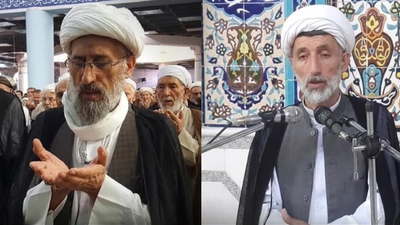
Taliban Force Two Shia Clerics To Abandon Mourning Ceremonies In Exchange For Release
1

Taliban Force Two Shia Clerics To Abandon Mourning Ceremonies In Exchange For Release

2

Clerics Oppose Mandatory Face Coverings For Women, Says Taliban Justice Minister

3

Taliban Leader Defends His Authority & Warns Against Internal Divisions

4

Many People Disagree With Akhundzada's Policies, Says Taliban Interior Minister

5

Taliban Leader Offers Government Posts To Opponents For First Time

•
•
•

More Stories

Taliban Leader Seeks To Contain Internal Dissent During Kabul Visit, Say Sources

Nov 18, 2026, 06:48 GMT+0
•
Abdulhaq Omeri
100%

Taliban sources told Afghanistan International on Tuesday that the group's leader, Hibatullah Akhundzada, had travelled to Kabul to address internal divisions and was expected to meet Taliban Interior Minister Sirajuddin Haqqani.

According to the sources, the primary purpose of Akhundzada's visit is to contain internal disputes and narrow differences between the Taliban leadership and officials who oppose some of his decrees and decisions.

Well-informed Taliban sources in Kabul told Afghanistan International on Tuesday, 17 November, that Akhundzada had held talks with Deputy Defence Minister Qayyum Zakir and several other Taliban officials.

The discussions focused on easing internal tensions and addressing opposition to the Taliban leader's decisions.

Akhundzada Voices Concern Over Internal Divisions

Speaking at Kabul University on Tuesday, Akhundzada expressed concern over potential divisions and rifts within the Taliban.

Throughout his speech, he repeatedly referred to “discord” and “division”, praying that no “mujahid” would become a source of discord. He also told Taliban officials and members that obedience to the emir was “mandatory”. The Taliban refer to their members as mujahideen.

Akhundzada warned that defying or opposing the leadership's decisions would weaken the administration, stressing that Taliban members must obey his decrees.

His remarks come against a backdrop of persistent disagreements within the Taliban over the implementation of his decrees and the group's approach to governance.

Akhundzada formulates key policies and makes major decisions in Kandahar through his inner circle. As a result, the authority of Kabul-based ministers and officials largely depends on decisions made by the Taliban leadership in Kandahar.

A previous United Nations report also highlighted divisions between the Taliban's Kandahar and Kabul factions. According to the report, the Kandahar faction consists largely of Akhundzada's close religious allies and supporters of his policies, while the Haqqani network and several other influential Taliban officials wield considerable influence in Kabul.

Akhundzada's policies on girls' education and women's employment have also been a source of internal disagreement.

Akhundzada Appears To Respond To Haqqani's Criticism

Speaking at Kabul University on Monday, Sirajuddin Haqqani criticised the Taliban's restrictive approach to governance, saying many people disagreed with Akhundzada's policies.

Haqqani also warned that insisting on personal views when addressing governance challenges would make the entire administration dependent on a single individual.

The Taliban interior minister urged members of the group to focus on fulfilling their responsibilities rather than praising and glorifying Akhundzada.

In an apparent response to Haqqani's criticism, Akhundzada defended his decrees, insisting that the laws enforced under his leadership were derived from Islamic jurisprudence rather than his personal views.

Taliban Interference & Restrictions On Women Disrupt Aid Delivery, Says UN

Nov 17, 2026, 15:31 GMT+0
100%

The United Nations recorded 29 incidents of humanitarian access restrictions and interference with aid operations in Afghanistan in October, 11 of which had gender-related implications.

The UN said Taliban interference and restrictions on women's participation in humanitarian activities had disrupted aid delivery and access to essential services.

In a report published on Tuesday, 17 November, the UN Office for the Coordination of Humanitarian Affairs (OCHA) said most of the reported restrictions and interference involved the implementation of humanitarian programmes.

Of the 29 incidents documented, 21 involved interference with humanitarian activities, four involved violence against humanitarian personnel, assets and facilities, three were related to military operations and ongoing hostilities, and one involved the denial of humanitarian needs or rights.

Western Afghanistan recorded the highest number of incidents, with 15, followed by the southern region with six and the southeastern region with three. The eastern region and central highlands each recorded two incidents, while the northern region recorded one.

Of the 21 incidents involving interference with humanitarian activities, four concerned restrictions on female aid workers' participation, three involved delays or difficulties in signing memorandum of understanding, four involved interference with programme implementation, and three concerned requests for sensitive information about humanitarian personnel or aid recipients.

Two incidents also affected women's access to humanitarian assistance and services.

OCHA warned that gender-related restrictions remained a serious concern and continued to disrupt the humanitarian response, affecting both female aid workers' participation in humanitarian operations and women and girls' access to essential services and assistance.

These restrictions included curbs on the activities of female teachers and healthcare workers, women's participation in livelihood programmes, and their access to hygiene and dignity supplies.

In some instances, the restrictions also disrupted education, healthcare and other humanitarian programmes.

Taliban Leader Offers Government Posts To Opponents For First Time

Nov 17, 2026, 14:44 GMT+0
100%

Taliban leader Hibatullah Akhundzada has for the first time offered opponents of the group positions within his administration, provided they possess the necessary qualifications and abilities.

Akhundzada said he did not regard Taliban opponents as his enemies, declaring that his only enemies were those he described as “disbelievers”.

Speaking on Tuesday on the second day of a conference at Kabul University examining the implications of his decrees, Akhundzada urged opponents to return to Afghanistan and live in their own country.

“Do you want a role in government? Do you want government posts? Whatever you want, these will be granted on the basis of competence and ability. If you are qualified, we will give them to you. If someone else is qualified, we will give them to that person,” he said.

Akhundzada said appointing unqualified individuals to government positions would constitute an injustice to the entire population, stressing that appointments would be based on merit and competence.

The Taliban leader also claimed that no one in Afghanistan wanted war and urged opponents preparing for armed conflict not to resort to violence to secure government positions.

However, he said opponents should refrain from seeking government posts, arguing that requesting positions of authority was a sin.

Addressing Taliban members, Akhundzada also warned against disputes over government positions and responsibilities, urging them to preserve the group's unity.

He recalled that during negotiations between the Taliban and the United States, he had been confident that US forces would withdraw from Afghanistan. His concern, however, was that Afghans who had worked with the Americans would remain in the country, forcing the Taliban to continue fighting.

“My fear was that the Americans would leave, but those who had worked with them would remain and we would fight them. My concern was that we might end up killing Muslims with our own hands,” he said.

Akhundzada said those who had worked with the Americans during the 20 years of their presence in Afghanistan were covered by an amnesty and could take up government positions if they had the necessary qualifications and abilities.

Taliban's Record On General Amnesty

Akhundzada has previously called on Taliban opponents and former government employees to return to Afghanistan.

During a visit to Afghanistan's northern provinces in August and September 2024, he urged former government employees to return, saying: “Return to Afghanistan and live with dignity, because the dignity you have in your own home cannot be found anywhere else.”

The Taliban declared a general amnesty after returning to power in August 2021. However, the United Nations has repeatedly documented human rights violations against former government officials and members of the former Afghan security forces.

In a report published on 22 August 2023, the United Nations Assistance Mission in Afghanistan (UNAMA) said it had documented at least 800 human rights violations against former government officials and security personnel between the Taliban's return to power and 30 June 2023.

These included 218 extrajudicial killings, 424 cases of arbitrary arrest and detention, 144 cases of torture and ill-treatment, and 14 cases of enforced disappearance.

UNAMA said the violations had occurred despite the Taliban's declaration of a general amnesty.

In its report covering the period from late March to late June 2026, UNAMA documented further violations against former government officials and security personnel, including at least eight killings, 29 cases of arbitrary arrest or detention, and five cases of torture or ill-treatment.

Saudi Company Explores $30 Billion Energy Investment In Pakistan

Nov 17, 2026, 13:03 GMT+0
100%

Saudi Arabia's Delta Energy has announced the signing of an agreement with a Pakistani company to explore potential investment of around $30 billion in Pakistan's energy infrastructure.

Afghanistan's Kushk gas field and other natural gas resources have been identified as potential sources of supply for the proposed project.

Under the agreement, the feasibility of constructing a natural gas pipeline entering Pakistan through its western border and extending to the port of Gwadar will be assessed. The agreement was signed with Pakistan's Inter State Gas Systems.

The agreement will also explore the possibility of extending the pipeline to Pakistan's eastern border and developing liquefied natural gas (LNG) import and processing facilities, gas storage facilities and export terminals.

The proposal also includes the construction of a separate pipeline stretching from Chaman, on the Pakistan-Afghanistan border, across Pakistani territory to an area near Fazilka on the Indian border.

Delta Energy described this route as one of the programme's key strategic components, saying its implementation would require formal agreement between Pakistani and Indian authorities.

The company also identified Afghanistan's natural gas resources, including the Kushk gas field development concession, as potential sources of gas supplies for Pakistan.

In September this year, the Taliban signed a $50 billion contract with Saudi company Delta International for the Kushk-Tirpul oil and gas basin in Herat province. The agreement was signed in Kabul in the presence of Zalmay Khalilzad, the former US special representative for Afghanistan.

Delta Energy stressed that the proposed programme was independent of the Turkmenistan-Afghanistan-Pakistan-India (TAPI) gas pipeline project and would not depend on Turkmenistan's gas resources for its supplies.

Previous plans to supply Pakistan with natural gas through pipelines have also faced years of delays.

The new agreement merely establishes a framework for examining and assessing the proposed projects and does not constitute a final investment decision or a commitment to finance or construct the infrastructure.

Taliban Leader Defends His Authority & Warns Against Internal Divisions

Nov 17, 2026, 10:55 GMT+0
100%

Taliban leader Hibatullah Akhundzada pledged in a speech at Kabul University that he would not turn Muslims against one another to maintain his grip on power. He stressed that if religious scholars united, no one would be able to challenge them.

Taliban media outlets broadcast Akhundzada's speech live on Tuesday. He said he had accepted the leadership of what the Taliban call the Islamic Emirate to prevent discord.

The Taliban-controlled national broadcaster quoted Akhundzada as saying: “Let my body burn, but let Muslims be saved from discord.”

Speaking at a conference at Kabul University examining the impact of his decrees, the Taliban leader said that retributive and prescribed Islamic punishments, known as qisas and hudud, could not be carried out without his orders. He also claimed that implementing Sharia was impossible without the Taliban administration.

Akhundzada claimed that the Taliban's policies were based on the Quran and that the group accepted all of God's laws.

He said believers should be united as one body, strengthening and supporting one another. He added that if religious scholars united, no one would be able to challenge them.

“I promise you that I will not turn Muslims against one another to remain in power,” Akhundzada said.

The Taliban leader said God had commanded unity and solidarity and that such unity could be achieved through an “Emir”. He also urged people to familiarise themselves with the meaning and nature of what the Taliban call the Islamic Emirate.

All Afghans Follow Hanafi Islam

Hibatullah Akhundzada claimed that everyone in Afghanistan followed the Hanafi school of Islamic jurisprudence and that his decrees were based on the opinions of Islamic legal scholars qualified to exercise independent legal reasoning.

According to an audio recording attributed to Akhundzada and broadcast by Taliban media, he stressed that his decrees were neither democratic nor a reflection of public opinion.

Akhundzada said the “Emir” selected one of the opinions put forward by Islamic jurists and issued it as a decree. He said these decrees were based on the views of qualified Islamic legal scholars and that people were required to follow the path determined by the emir. Otherwise, he argued, differing interpretations of scholarly opinions would create divisions among Muslims.

The Taliban leader also said he was approaching his 11th year as emir, adding that he had never expected an Islamic system to be established or what he called “disbelief” to be defeated.

He claimed that God had established the system and described the Taliban's rule as a wonder.

Taliban media outlets had previously reported that several religious scholars attending the conference had bestowed on Akhundzada the title of “Sheikh al-Islam”.

Feared Continued Warfare After US Withdrawal

Elsewhere in his speech, Akhundzada said that during the Taliban's negotiations with the United States, he had been confident that US forces would withdraw from Afghanistan. However, he said he had feared that Afghans who had worked with the Americans would remain in the country and that the war would continue.

He said his concern was that Taliban members would end up killing fellow Muslims in such a conflict.

“When we were negotiating with the Americans, we knew they would leave Afghanistan. While the Americans were present, we were fighting them, and we knew who our adversary was. However, my concern was that after their withdrawal, those who had worked with the Americans would remain in Afghanistan and we would be forced to fight them. This worried me because I did not want Muslims to be killed at our hands or for fighting and bloodshed among Muslims to continue,” he said.

The Taliban leader added that an amnesty decree was in place for those who had worked with the Americans over the previous 20 years. He said they could return to Afghanistan and, if they had the necessary skills and abilities, assume positions within the Taliban administration.

“If they have the skills and abilities and wish to hold positions of responsibility, they should come and assume responsibilities within the system,” Akhundzada said.

Addressing Taliban members, he urged them not to become embroiled in disputes over government positions and responsibilities. He stressed that their priority should be preserving unity rather than competing for power and positions.

The conference, which began on Monday, 16 November, at Kabul University, is dedicated to examining the implications of the Taliban leader's decrees.

Sources had previously told Afghanistan International that Akhundzada had travelled to Kabul to attend the gathering.

According to local sources, the Taliban imposed tight security measures around Kabul University. The group also closed the university for a week and forced students to vacate its dormitories.