• العربية
  • پښتو
  • فارسی
Brand
  • Afghanistan
  • Sport
  • Markets
  • Afghanistan
  • Sport
  • Markets
  • Theme
  • Language
    • العربية
    • پښتو
    • فارسی
  • Afghanistan
  • Sport
  • Markets
All rights reserved for Volant Media UK Limited
volant media logo

Pakistan's Grand Mufti Asks Taliban Leader to Reverse Decision on Education of Girls

Dec 27, 2022, 14:43 GMT+0

Pakistan’s grand mufti, Muhammad Taqi Usmani, has asked Taliban leadership to lift the ban on girls' education. Usmani in a letter to Taliban leader, Hebatullah Akhundzada said that to address women’s issues in health, education, and welfare services, literate women are needed.
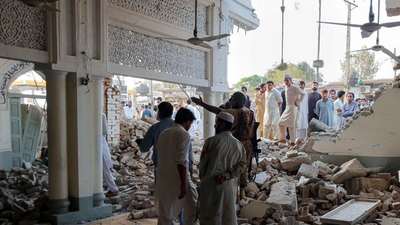
The Grand Mufti of Pakistan said that the Taliban can erase the propaganda of their opponents which states that the group is against girls' education, by providing women an opportunity to educate themselves.

He said that the Taliban has suspended girls’ education on the pretext that they can’t allow co-education, so he urged them to teach male and female students during different shifts and classrooms.

Earlier Usmani, who is also the vice-president of Darul Uloom Karachi in Pakistan, had asked the Taliban leader to reopen girls' secondary and high schools.

Most Viewed

Afghan Families Selling Children As Poverty Deepens, Reports BBC
1

Afghan Families Selling Children As Poverty Deepens, Reports BBC

2

UK Envoy Discusses Women’s Participation In Afghanistan With Taliban Ambassador

3

Pakistani Defence Minister Warns Taliban Against Ties With Pakistan’s Enemies

4

Explosion Hits Taliban Recruitment Centre In Ghor, Says Anti-Taliban Group

5

India Tightens Citizenship Rules For Afghan Migrants

•
•
•

More Stories

Bahrain Urges Taliban to Reverse Ban on Afghan Women Working for NGOs

Dec 27, 2022, 10:05 GMT+0

The Ministry of Foreign Affairs of Bahrain has condemned the Taliban’s ban on women working with non-governmental organisations (NGOs) and urged the group to immediately reverse what it called an “unjustified decision”.

The ministry stressed that the Taliban’s decision violates the United Nations Security Council’s resolution 2615 and prevents the flow of humanitarian aid to Afghans.

The ban order came in a letter on December 24 from Taliban’s Economy Minister Qari Din Mohammed Hanif. Abdel Rahman Habib, spokesman for the Taliban's ministry of economy, accused female workers at the foreign aid groups of breaking dress codes by not wearing hijabs. It said any organization found not complying with the order will have their license revoked in Afghanistan. The Economy Ministry’s order comes days after the Taliban banned female students from attending universities across the country, triggering backlash overseas and demonstrations in major Afghan cities.

In fact, four international aid groups have announced suspension of their programmes in the country. The aid groups include the International Rescue Committee (IRC), Save the Children, the Norwegian Refugee Council and CARE.

They all mentioned that their ability to deliver humanitarian services rely on female staff at all levels.

United Nations Urges Taliban To Reverse Ban on Women Working for NGOs in Afghanistan

Dec 26, 2022, 14:49 GMT+0

Acting head of the United Nations Assistance Mission for Afghanistan (UNAMA), Ramiz Alakbarov, has met with Mohammad Hanif, the Taliban’s minister of economy, and urged the group to reverse its decision of banning women who work for non-governmental organisations (NGOs).

UNAMA announced that millions of Afghans need humanitarian assistance and removing barriers is vital.

The Taliban’s order on banning women to work in non-governmental organisations comes days after the group banned Afghan girls from pursuing higher education in Afghanistan.

International organisations have reacted to the Taliban’s decision and stressed that the group will deepen the humanitarian crisis in Afghanistan by banning women employees from work.

Taliban’s Ministry of Interior Confirms Killing of Group’s Chief of Police For Badakhshan

Dec 26, 2022, 12:25 GMT+0

Taliban confirmed that the group’s police chief for Badakhshan province has died in an explosion in Faizabad city. Abdul Nafe Takor, the spokesman for Taliban’s ministry of interior, added that two other people died in the explosion and two more were injured.

According to Takor, the explosion took place close to the Taliban Police Chief commander's house in Faizabad city of Badakhshan province on Monday.

He added that four people have been arrested in connection with the explosion.

Earlier, local sources had reported that on Monday morning, Mawlawi Abdul Haq Omar, the Taliban police commander for Badakhshan province, had been targeted in an explosion near his residence in the province.

Sources told Afghanistan International that the death toll has been higher than what the Taliban has announced.

IRC Suspends Programmes in Afghanistan After Taliban Ban on Women Working For NGOs

Dec 26, 2022, 10:02 GMT+0

In a big blow to the field of humanitarian assistance in Afghanistan, the International Rescue Committee (IRC) has announced suspension of its programmes in the country. The suspension comes following the latest Taliban edict to ban women from working for NGOs in Afghanistan.

Emphasising that the IRC’s ability to deliver services rely on female staff at all levels, the organisation stressed that if they are not allowed to employ women, they will not able to deliver to those in need.

The IRC, while stating that it is dismayed and disheartened by the Taliban ban said that the exclusion of women from humanitarian service delivery will have catastrophic consequences for the Afghan people because its services depend on women workers. The IRC has urged Taliban to take into consideration the grave humanitarian implications of the ban as over 97% of the population is at risk of poverty.

The IRC said in a statement that over the past three decades it has never had to cease delivering support in the country. The organisation added that it is committed to working with national and international NGOs, civil society organizations, the UN, and all relevant stakeholders to ensure that the situation is resolved.

Currently, the IRC had been operating in twelve provinces across Afghanistan in the areas of emergency response, health, education, livelihoods and other life-saving interventions.

“IRC in Afghanistan employs over 8000 people - over 3,000 of whom are women. Our male and female staff work closely with rural and urban communities to identify needs, design and implement programming in line with cultural sensitivities and social norms,” it added.

With Afghanistan in the midst of a worsening humanitarian crisis and economic collapse, humanitarian actors have been essential in saving lives in the country over the course of the past year.

As Afghanistan struggles to recover from ongoing conflict and natural disasters, the IRC: works with local communities to identify, plan and manage their own development projects, provides safe learning spaces in rural areas, community-based education, cash distribution provides uprooted families with tents, clean water, sanitation and other basic necessities, and helps people find livelihood opportunities as well as extensive resilience programming.

Don’t Ignore Afghan Women's Challenges, Says Women Rights Group

Dec 24, 2022, 15:11 GMT+0

The Afghan Women Coalition for Change condemned the Taliban's decision to ban higher education for girls and asked the international community not to ignore the problems of Afghan women under the "brutal regime of the Taliban".

The coalition added that Afghan women have been systemically removed from social life under the Taliban regime.

The women activists called on the international community to hold the Taliban accountable regarding women’s issues in Afghanistan.

According to the statement, since the group's return to power in 2021, the Taliban leadership has issued more than 33 decrees "to restrict and punish women".

The coalition has emphasised that human rights and stability are undeniably linked in Afghanistan and the world cannot and should not, ignore the problems of Afghan women.

The coalition has asked the International Criminal Court to use its jurisdiction and bring the Taliban to justice for their "heinous crimes against women".