Japan Announces Granting Asylum To 114 Afghan Citizens

Hirokazu Matsuno, the Chief Cabinet Secretary of Japan, announced that this year, 114 Afghans have been granted asylum in the country.

Hirokazu Matsuno, the Chief Cabinet Secretary of Japan, announced that this year, 114 Afghans have been granted asylum in the country.
It has been reported that after the Taliban’s takeover of Afghanistan in August 2021, about 800 Afghan citizens had applied for asylum in Japan.
The Immigration Services Agency of Japan said that of 800 Afghan asylum seekers, 114 have been granted asylum so far. The status of other Afghan refugees is not clear yet.
These asylum seekers are Afghans who had worked for the office of the Japan International Cooperation Agency (JICA) in Afghanistan.
It has been said that these Afghans who have received Japanese residency can live permanently in this country if they meet certain conditions.
Meanwhile, human rights groups stressed that compared to Western countries, Japan's criteria for granting asylum is "highly strict”.
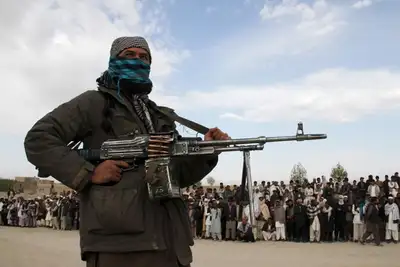

Mumtaz Zahra Baloch, the spokesperson of the Ministry of Foreign Affairs of Pakistan, said that the Taliban has a responsibility of ensuring that Afghanistan’s soil is not used for terrorism against Pakistan.
On Thursday, Baloch said, "It is their [Taliban’s] responsibility and they have accepted this responsibility on various occasions.”
She mentioned in the recent trilateral statement which was issued when the Chinese and the Taliban Foreign Ministers visited Islamabad in May, the Taliban also accepted their responsibility that Afghanistan’s soil will not be used against other countries.
Baloch stressed that Pakistan expects the Taliban to fulfil their promises.
Islamabad considers Tehreek-e-Taliban Pakistan (TTP) as a terrorist group and reports indicated that the Afghan Taliban has been relocating the TTP members to northern Afghanistan.
Pakistan has welcomed the Taliban’s decision of relocation of TTP members from the border areas of the two countries to northern Afghanistan.
Earlier, Asif Durrani, Pakistan's special envoy for Afghanistan, said that the Taliban have taken initial steps to address Islamabad's security concerns, but they are still not sure about the effectiveness of the group’s plans.
Durrani added that Pakistan and China expect the Taliban to cooperate in curbing the TTP and the Uyghur militias, just as it cooperated with the United States in the case of Al-Qaeda.

After the Taliban imposed new restrictions on the Muharram ceremony of Shia community members, Mawlawi Abdul Kabir, the Taliban’s acting Prime Minister met with several Shia clerics.
In the meeting, Abdul Kabir said that like other Afghans, Shias will be given equal rights under the Sharia law.
The Taliban’s acting prime minister’s press office added that Shia clerics and influential community members presented their suggestions during the meeting with Abdul Kabir.
The press office didn’t provide more details about the suggestions provided by the Shia clerics.
On the eve of the Muharram and Ashura ceremony, sources told Afghanistan International that the Taliban ordered Shias to refrain from raising Shia religious flags and providing water and food on the streets and roads during the month of Muharram.
The sources emphasised that the Taliban has not officially issued any order regarding these restrictions and has raised the issue verbally with the relevant figures in the community to address issues faced by the Shia population of Afghanistan.
After taking power in Afghanistan, the Taliban have not appointed Shia representatives to senior cabinet positions of the group’s government. During the past two years, Shia representatives have repeatedly met with senior Taliban officials to address the demands of the Shia population.
However, last year, the US State Department published a report on religious freedom in the world and said that Afghanistan under the rule of the Taliban is witnessing severe violations of religious freedom.
Referring to the forced displacement of religious minorities in Afghanistan, the US State Department said that the Taliban expelled members of the Shia communities from their homes in several provinces and divided their lands among the supporters of the group.
Human Rights Watch also stated ISIS has repeatedly attacked Hazaras who are mainly followers of the Shia sect of Islam and other religious minorities in their mosques, schools, and workplaces, but the Taliban has not taken measures to protect them.

Javanmard Ghassab, the adviser to the Iranian envoy for Afghanistan, said that in the first four months of the year, Afghans have invested about 150 million dollars in Iran.
At the same time, Ghassab announced the formation of a committee to facilitate Afghan investors in Iran.
In an interview with Bazar Media, he said that although the investment of Afghans in Iran is small, it is significant in terms of numbers.
Ghassab explained that investments have been made in various sectors, including agriculture, industry, and construction.
Bazaar media on Friday reported that Afghans were the biggest foreign investors in Iran last year. In this report, it has been stated that the process of cash injection by Afghans to Iran's economy has increased significantly in terms of number and value.
It was said on the same basis, due to the increase in the amount of investment by Afghans in Iran, on Wednesday, the first meeting of the "Committee to Facilitate Afghan Investors in Iran" was held in the Office of the Special Representative of the President of Iran for Afghanistan Affairs, with the presence of all relevant government agencies of Iran.
Ghassab said that the goal is to facilitate the attraction of Afghan investors to Iran along with removing their obstacles, as well as supporting Iranian investors who are working in Afghanistan in commercial, security, and judicial aspects.

Taliban have ordered the Shia community members to refrain from celebrating the month of Muharram and Ashura ceremony outside mosques and religious centers.
The ban is also imposed on raising flags on Muharram and opening cabins for volunteer distribution of food and water.
In the past twenty years, Afghanistan witnessed the celebration of Muharram and Ashura openly by the Shia community members.
Meanwhile, Zabihullah Mujahid, the Taliban spokesperson, stressed that the Taliban will ensure the security during the Muharram ceremony in the coming weeks.
Mujahid said that last year there was no security incident during Muharram and the group will make sure that security remains tight during the Shia religious ceremony.
After the Taliban’s takeover of Afghanistan in August 2021, and despite the group’s emphasis on respect of the rights of Shia citizens of Afghanistan, the leaders of the Shia sect of Islam have complained of discrimination against members of the community.
Last year, the Ministry of Labor and Social Affairs of the Taliban removed the holiday of Ashura from the Afghan calendar. This decision of the Taliban faced harsh criticism from Afghan citizens, especially Shia citizens.
Afghan Shia leaders have repeatedly asked the Taliban to recognise Jafari's jurisprudence, however, the group has not yet officially expressed its opinion on this issue.
In one case, the Ministry of Higher Education of the Taliban rejected the request of the Council of Shiite Scholars to include Jafari jurisprudence in the university curriculum.

Iranian reformist newspaper, “Jomhouri Eslami”, on its front page wrote that the south of Tehran is under the "occupation of Afghans" and that this is a "full-fledged security" issue.
The Daily reported that "in addition to the security problem, the presence of Afghans has also caused a food security challenge in the area”.
Jomhouri Eslami newspaper is affiliated with the reformist political movement of Iran. The Daily published its report on Monday, July 10.
Some Iranian media have called the daily report’s title "strange".
Jomhouri Eslami quoted an Iranian journalist’s interview with Ensaf News and wrote that after the Taliban’s takeover of Afghanistan in August 2021, the presence of Afghans in Iran has increased dramatically.
The newspaper, quoting a source, discussed the life of Afghans in Iran, especially in the south of Tehran, and claimed that around eight million Afghans currently reside in Iran.
The newspaper claimed that Afghans live in a collective lifestyle and said that around 13-15 Afghans live in rented homes.
The report also discussed the possibility of a "rebellion by Afghans living in Iran" and it has been stated that "if the Afghans who are living in Iran decide to revolt, we [Iranians] are done".
Justifying this claim, Jomhouri Eslami has raised the issue of the recent tensions between the Taliban and the Iranian government regarding the water rights issue from the Helmand River.
The daily’s source claimed that when something happens in Iran, maybe a percentage of Iranians abroad chant slogans against Iran or the regime, but recently on the water rights issue that has been disputed between the Taliban and Iran, "the same nationals who were in Kahrizak [south of Tehran] chanted slogans in favour of the Taliban".
The report also stated that "Afghans can get a driving license or have a bank account and this will affect Iran’s economy”.
The journalist claimed that Afghans "come with empty pockets and return with full pockets".
However, it has been said that Afghans "deposit 50 to 60 billion Iranian Toman annually into the pockets of Tehran's governorate. According to the law, every Afghan citizen must pay three to four million Iranian Toman to the government every two to three months to renew their visa”.
The source of the newspaper called the exact number of Afghans in Iran a "mystery" and explained that there are no specific statistics because they enter Iran illegally.
According to the daily’s source, "If an Afghan kills someone and goes to Afghanistan, we cannot do anything."
In this report, it had been emphasised to the authorities of the Iranian government that "employing foreign nationals is a crime. The government inspectors must inspect all workshops and livestock farms south of Tehran where they [Afghans] have been employed”.
The reporter of Jomhouri Eslami believes that the issue of Afghans in Iran is currently a security dilemma for the Iranian government.