Drug Smuggling From Afghanistan To Tajikistan Continues, Says Taliban
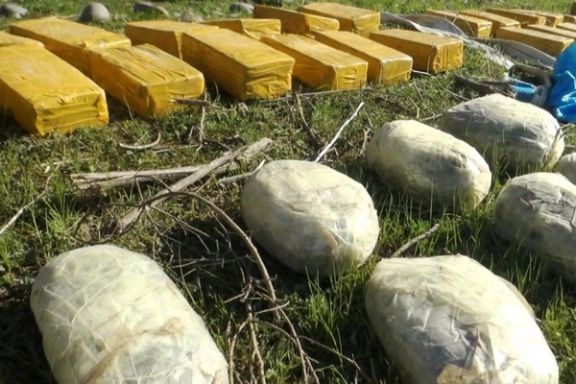
Taliban spokesperson Zabihullah Mujahid said that despite efforts to curb narcotics trafficking, drugs are still being smuggled from Afghanistan into Tajikistan.

Taliban spokesperson Zabihullah Mujahid said that despite efforts to curb narcotics trafficking, drugs are still being smuggled from Afghanistan into Tajikistan.
He said the long shared border between the two countries allows traffickers to “sometimes take advantage”.
Tajik border authorities said on January 30 that they had clashed with a group of armed individuals along the border with Afghanistan. Tajik officials said the men were smugglers and that three of them were killed in the confrontation.
Speaking to Afghanistan’s state-run Radio and Television, which is under Taliban control, Mujahid said the Taliban is trying to address border issues and prevent drug trafficking.
He added that the Taliban authorities and Tajikistan are “coordinated” and that smuggling would be prevented in the future.
Tajikistan’s State Committee for National Security said several weapons were seized from the smugglers in the recent clash, along with four bags containing 73 packages of hashish and opium.

Afghanistan’s embassy in Tokyo formally ceased operations on Saturday, according to the mission’s outgoing ambassador.
Shida Mohammad Abdali, who was appointed by Afghanistan’s former government, said he was leaving Tokyo “with deep sadness” and was proud to have kept the national flag flying over the embassy until the final moment.
The embassy had continued to operate under diplomats appointed by the previous Afghan administration. It recently announced it would suspend activities following consultations with Japan’s foreign ministry.
According to the embassy, all political, economic, cultural and consular activities of the Afghan mission in Tokyo will be halted from January 31 until further notice.
Abdali expressed hope that the national flag would continue to fly at the embassy until a legitimate Afghan representative is appointed.
Some ambassadors and diplomats from Afghanistan’s former government have refused to cooperate with the Taliban or hand over diplomatic missions to the current authorities.
Japan is among countries that maintain engagement with the Taliban while continuing to provide humanitarian assistance to Afghanistan. Japan’s embassy in Kabul remains operational, but Tokyo has not recognised the Taliban administration or transferred control of Afghanistan’s embassy to the group.

Human Rights Watch is urging Western governments to follow through on commitments to pursue legal action against the Taliban at the world’s top court over rights violations.
Heather Barr, the group’s associate women’s rights director, said nearly a year and a half had passed since Canada, Germany, the Netherlands and Australia pledged to take action, adding that the time had come for concrete steps.
Australia, Canada, Germany and the Netherlands announced last year that they would bring a case against the Taliban at the International Court of Justice in The Hague over widespread human rights violations, particularly alleged breaches of the Convention on the Elimination of All Forms of Discrimination Against Women. The United Nations and more than 20 countries have supported the move.
On Thursday, Australia’s foreign minister, Penny Wong, said Canberra, together with international partners, would continue legal efforts over what she described as ongoing violations of the convention in Taliban-controlled Afghanistan.
She also condemned what she called the Taliban’s repressive treatment of women and girls and said Afghans were enduring one of the world’s worst protracted humanitarian crises.

At least 60 people have been flogged across Afghanistan over the past week on various charges, according to a statement from the Taliban Supreme Court. Courts in several provinces also handed down prison sentences alongside public floggings.
The court said those punished were accused of theft and what it described as moral offences.
Despite repeated calls from international and human rights organisations to abolish corporal punishment and uphold human dignity, the Taliban have continued to carry out public floggings.
Taliban authorities say flogging is part of their interpretation of Islamic law within the judicial system.
The development comes as the Taliban’s new penal code outlines different punishments based on an individual’s social status. Under the code, if a religious scholar commits an offence, the response is limited to advice.
By contrast, the same offence committed by someone described as middle class is punishable by imprisonment, while those from lower social classes may face prison sentences as well as corporal punishment.

Officials in Pakistan’s Khyber Pakhtunkhwa province have warned the federal government that the continued suspension of border trade with Afghanistan is causing significant economic losses.
They said it also cuts government revenues and costs jobs, and have urged that cross-border trade be resumed.
In a letter to Pakistan’s Commerce Minister, Mazammil Aslam, financial adviser to the provincial government, said cross-border trade had been severely disrupted and had effectively come to a standstill.
He said the provincial authorities had been informed that revenue from infrastructure development levies directly tied to border trade had fallen by 80 percent.
Aslam also attached a letter from the province’s revenue department highlighting broader fiscal challenges and called for a meeting to address the problems facing exporters and traders.
Pakistan’s border crossings with Afghanistan were closed to trade and transit following clashes along the frontier and Pakistani airstrikes in late 2025.
Despite talks hosted by Qatar and Turkiye aimed at reaching a ceasefire, trade has not resumed. Negotiations have stalled amid ongoing accusations between Taliban authorities and Pakistani officials.
Islamabad has urged the Taliban to act against militants who it says use Afghan territory to launch attacks in Pakistan. The Taliban deny the allegation.
Residents of border areas, particularly on the Pakistani side, have previously protested the prolonged closure, saying livelihoods on both sides of the frontier depend on cross-border movement and trade.

Tajik border guards clashed with a group of armed men along the border with Afghanistan, leaving three of the suspects dead, the state-run Khovar news agency reported.
Khovar, which operates under the Tajik presidency, said the men were smugglers who had crossed illegally from Afghanistan into Tajikistan.
Sources told Afghanistan International that the clash occurred Thursday evening and lasted for an extended period.
According to Khovar, the incident took place at about 7:30 p.m. local time in the Shamsiddin Shohin area, where Tajik border forces encountered five Afghan smugglers who had crossed the border unlawfully.
During the confrontation, three of the alleged smugglers were killed, while two others fled back toward Afghanistan.
Tajikistan’s State Committee for National Security said several weapons were seized from the group, along with four bags containing 73 packages of hashish and opium.
Tajik authorities said they are taking “all necessary measures to ensure border security” and are combating border violators and smugglers.
Officials said the situation along the border is currently under control and that further investigations into the clash are ongoing.
