Taliban Fuels Sectarian Conflict in Afghanistan, Says NRF
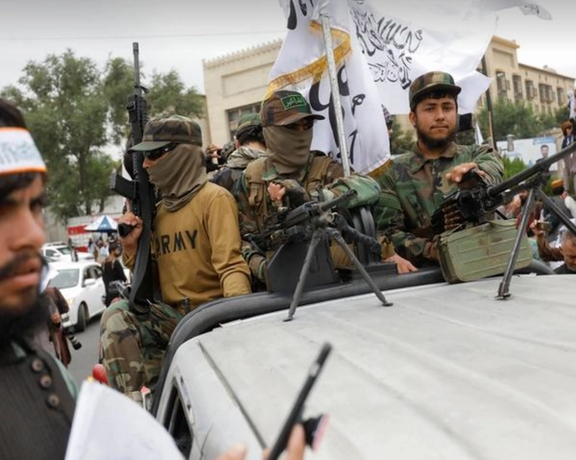
The National Resistance Front (NRF) condemned the Taliban’s restrictions imposed on the Muharram ceremony and considered it as an attempt to fuel sectarian conflict in Afghanistan.

The National Resistance Front (NRF) condemned the Taliban’s restrictions imposed on the Muharram ceremony and considered it as an attempt to fuel sectarian conflict in Afghanistan.
In a statement, NRF added that Shias have held the Ashura ceremony without any restrictions over the past years.
On Sunday the front stressed on the "peaceful coexistence of followers of different sects and religions" in Afghanistan and said that the Muharram ceremony has always been organised with the "cooperation and sympathy of Sunnis".
Along with the NRF, other Sunni Afghan figures and political groups have also reacted to the Taliban’s restrictions imposed on Shia ceremonies in Afghanistan.
On Monday, Marshal Abdul Rashid Dostum also condemned these restrictions on his Twitter handle. He stressed that the Taliban are anti-Shia and stressed that the group is the enemy of a diverse Afghanistan.
According to Afghanistan International’s sources, the Taliban has prevented Shias from mourning the month of Muharram in public spaces across Afghanistan.

Mumtaz Zahra Baloch, the spokesperson of Pakistan's Foreign Ministry, said that Islamabad discussed all issues of concern, including the terrorist threat and terrorist acts that emanate from Afghanistan with the Taliban.
Baloch added that the Taliban should assure Pakistan and the international community that Afghanistan's soil will not be used against this country.
In a press conference in Islamabad on Friday, Baloch urged the Taliban to act upon their commitments to prevent the activities of terrorist groups in Afghanistan.
In recent days, a wave of attacks has increased in various cities in Pakistan, which has caused concerns for Pakistani authorities.
In the past week, Pakistan's Defence Minister Khawaja Muhammad Asif has repeatedly criticised the Taliban for providing safe haven to terror groups in Afghanistan.
Khawaja Asif has also questioned the Taliban's claims that foreign terrorists are not present in Afghanistan.
Addressing the Taliban in Afghanistan, Khawaja Asif said that Pakistani Taliban members have been killed on a daily basis in Afghanistan. “Then, how can one say that TTP members are not present there,” he asked.
Following Pakistan's defence minister's harsh criticism of the Taliban, Asif Durrani, the country's special representative for Afghanistan affairs, travelled to Kabul for a three-day trip and met with several Taliban officials.
Pakistani media reported that the Taliban suggested Pakistan to resolve its problems with the Pakistani Taliban through dialogue. Some sources said that Pakistan has rejected the offer of the Afghan Taliban.
Meanwhile, Mawlawi Abdul Kabir, the Taliban's Deputy Prime Minister in a meeting with Pakistan's special representative for Afghanistan said that the group will not allow use of Afghanistan's soil against neighbouring countries, especially Pakistan.

Ali Akbar Mehrabian, Iran's Minister of Energy, said that Tehran will pursue the water rights issue from Helmand River until the country receives water from Afghanistan.
He stressed that the water rights issue is part of the agenda of the Ministry of Foreign Affairs of Iran.
In an interview with Mehr News Agency on Saturday, Mehrabian said that he hopes the Taliban will act upon the Helmand Water Treaty.
In response to the question of whether the Iranian government had held a new round of negotiations with the Taliban on the water rights issue, the Iranian minister said that Helmand water rights is based on an international treaty between Iran and Afghanistan which can’t be changed and the Taliban can’t ignore the treaty.
Iran’s water rights issue from Helmand River has been one of the most controversial issues in the relations between the Islamic Republic and the Taliban in the past two years.
The issue has restrained Iran’s relations with the Taliban and has escalated verbal tensions between the two sides.

The National Resistance Front (NRF) announced the release of four Taliban members who had been arrested by the front’s forces in Badakhshan on Friday.
In a statement, the front, led by Ahmad Massoud, added that the weapons and ammunition of these four Taliban members had been seized and they were released after the mediation of local elders.
NRF added that its forces were able to capture four members of the "Taliban” in Farghamanj area of the Jurm district of Badakhshan province.
NRF stressed that its forces “treated the prisoners well and with consideration of the laws of war, the teachings of the holy religion of Islam and following the behaviour of the national hero Ahmad Shah Massoud”.
Meanwhile, Ahmad Massoud had emphasised on Thursday in a virtual conference at the three-day Aspen security meeting that he believes in a political solution to end the conflict in Afghanistan.
At the same time, he added that the resistance against the Taliban has expanded from Panjshir to Takhar and Badakhshan.

Two days after Iran’s foreign minister claimed that ISIS leaders had transferred to Afghanistan from Syria, Libya, and Iraq, the Taliban’s foreign ministry rejected the statement and said that the reports about such transfers are not true.
The Taliban’s foreign ministry added that Iran should focus on constructive relations with the group and stressed that Tehran should avoid releasing alarming statements.
In a statement on Saturday, the Taliban's Foreign Ministry stressed, "If Iran has information about the transfer of ISIS members to Afghanistan, we hope that they provide us with that information so the Afghan security forces can act upon them."
The Taliban’s foreign ministry stressed that countries should fulfil their international obligations regarding the security of their borders.
The Taliban said that it will not allow anyone to threaten Afghanistan's security or use its territory "against others”.
In the statement, the Taliban’s foreign ministry emphasised that the group has fought ISIS before and after taking control of Afghanistan.
Earlier, Iranian Foreign Minister Hossein Amir Abdollahian said that ISIS leaders have been transferred to Afghanistan from Iraq, Syria, and Libya in recent months. This Iranian official called the transfer of ISIS leaders to Afghanistan one of the challenges of the Taliban.
Taliban officials have repeatedly denied the presence and ability of terrorist groups, including the ISIS, in Afghanistan.
However, a number of countries, especially in Central Asia, have continuously expressed concern about the presence of terrorist groups in Afghanistan.

Bakhtiyor Saidov, Uzbekistan’s foreign minister and Feridun Sinirlioğlu, the UN Secretary General's Special Coordinator for Afghanistan met in Tashkent.
Saidov said that the two sides discussed the plans regarding Afghanistan. However, the Uzbek foreign minister didn’t provide more details about the presented plans.
Saidov stressed that like other countries, Uzbekistan is undoubtedly interested in stability in Afghanistan.
Before his trip to Uzbekistan, the UN special coordinator for Afghanistan visited Iran and exchanged views on Afghanistan with the Iranian foreign minister.
On Monday, the Ministry of Foreign Affairs of the Islamic Republic in a statement announced that Hossein Amir Abdollahian said that the formation of an inclusive government and the fight against terrorism in Afghanistan are of major importance to Iran. He also emphasised on the need to support regional initiatives to help address Afghanistan's challenges.
Before his regional visits, the UN special coordinator also visited Afghanistan and held talks with the Taliban foreign minister Amir Khan Muttaqi, and the group’s interior minister Sirajuddin Haqqani.
In his meeting with Haqqani, Sinirlioğlu emphasised on "the fundamental rights of the Afghan people" and convoyed to the Taliban that "the concerns of the United Nations should be taken seriously”.
