Turkish Police Arrests 34 Illegal Afghan Immigrants In Ankara
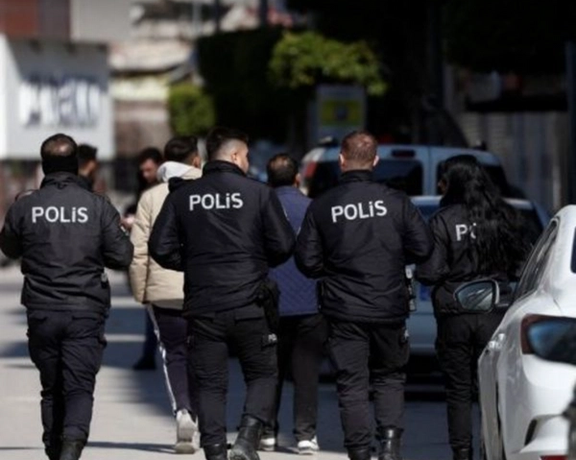
Police in Türkiye announced that 34 illegal Afghan refugees and four people associated with smuggling these Afghans have been arrested.

Police in Türkiye announced that 34 illegal Afghan refugees and four people associated with smuggling these Afghans have been arrested.
These refugees have been transferred to Ankara and await deportation to Afghanistan.
The Ankara police arrested these refugees after they received information about the arrival of a group of "illegal" immigrants from the borders with Iran. The Ankara police announced that these asylum seekers entered Türkiye without passports and identity documents.
The arrest and deportation of Afghan immigrants in Türkiye has increased in recent months.
In the latest case on Monday, 38 "illegal Afghan immigrants" has been arrested from a boat off the coast of Ayvacik in the Turkish city of Çanakkale.
Following the announcement of the new immigration policy of Turkish President Recep Tayyip Erdogan, the arrest and deportation of Afghan immigrants in the country has increased significantly.
It has been reported that more than three thousand Afghan refugees have been arrested and forcibly deported from Turkiye this year.
Turkiye confirmed that more than three hundred thousand Afghan immigrants live in the country.

Taliban officials, including Defence Minister Mawlawi Yaqoob; Interior Minister Sirajuddin Haqqani; Intelligence Chief Abdul Haq Wasiq, and the group’s chief justice met with the group’s officials in the western region in Herat province.
The Taliban has not revealed details of the discussions or visit of the group’s senior officials to Herat province.
According to reports, the senior Taliban officials arrived at Herat province on Monday.
Media sources reported that senior military and intelligence officials of the Taliban have visited Herat province due to concerns arising from the Islamic Republic of Iran.

Asif Durrani, Pakistan's special representative for Afghanistan, met with Feridun Sinirlioğlu, the UN Special Coordinator for Afghanistan, on Monday and discussed issues related to the recognition of the Taliban.
According to Durrani, the two also discussed the rights of Afghan women and the presence of Tehreek-e-Taliban Pakistan (TTP) in Afghanistan.
The senior Pakistani official did not provide further details about the discussion regarding the recognition of the Taliban. Earlier, the United Nations had said that only the member states of the United Nations would decide whether to recognise the Taliban government or not.
Earlier, the Taliban had also announced that the United Nations will invite the representative of the group to participate in the next UN conference on Afghanistan at the end of 2023.
Durrani and Sinirlioglu also talked about the humanitarian crisis in Afghanistan, an issue that the United Nations had warned about many times. United Nations relief agencies have said that millions of Afghans are at risk of starvation and famine.
The Taliban has called concerns of the United Nations about the humanitarian situation in Afghanistan as "negative propaganda". Despite the warning of the United Nations, this group has stopped or limited the activities of non-governmental organisations such as the Swedish Committee for Afghanistan.

The Taliban's Ministry of Mines and Petroleum announced that six "large-scale" mines are ready for the extraction process in Afghanistan.
Shahabuddin Delawar, Minister of Mines and Petroleum of the Taliban, said that these six mines can lead Afghanistan towards a self-sustaining economy.
According to Delawar, these oil, gas and gold mines are located in Herat, Ghor, Kandahar, Logar, Jawzjan, and Samangan provinces, however, no extraction contract for these mining sites have been signed.
The Taliban’s minister added that companies from China, Qatar, UAE, Turkey, Iran and some European and American countries are ready to invest in these mines.
Delawar added that the Amu Darya oilfield contract has been signed with a Chinese company and there will be 540 million dollars investment on this major mining site in the next three years.
According to Delawar, currently 150 to 200 tonnes of oil is being extracted daily in the Qashgari oilfield, and the group expects that the daily extraction from this site will increase to 1000 tonnes per day.
He mentioned Afghanistan's lithium mines as the main wealth of Afghanistan and said that some Chinese companies have expressed willingness to invest in lithium mining sites of the country.
The Taliban’s Ministry of Mines and Petroleum has talked about the importance and development of Afghanistan’s mining sites to the country’s economy, while millions of Afghans seek refuge in other countries for security and lack of employment issues.
The Taliban officials have started appearing in a programme called "Government Accountability to the Nation" at the government media and information center since Sunday.
The "Government Accountability to the Nation" programme had started during the previous government of Afghanistan.

On the first day of the "Government Accountability to the Nation" programme, Taliban's Ministry of Economy announced registration of 376 new non-governmental organisations (NGOs), including 355 domestic and 21 foreign NGOs in Afghanistan.
Earlier, the United Nations had reported that 94% of non-governmental organisations in Afghanistan had stopped their operations after the Taliban seized power in the country.
Taliban’s Ministry of Economy also claimed that currently 273 foreign non-governmental organisations and 2,121 domestic NGOs are registered with the ministry.
This ministry has also announced the dissolution of more than 216 non-governmental organisations.
Meanwhile on July 21, the United Nations Development Programme (UNDP) in a report announced that the activities of nearly 94% of non-government organisations in Afghanistan have stopped or they continue activities with limited operations.
In a new UNDP report, it has also been stated that in the past year, it has helped more than ten million people in need in Afghanistan.
Meanwhile, Sayed Masoud, a former professor of economics at Kabul University, told Afghanistan International that limited operations of NGOs in Afghanistan will increase poverty across the country.
Referring to 97 percent of the poor people in Afghanistan, he said that the UN humanitarian aid to the needy people is actually a kind of "compensation for the lack of economic policy” of the Taliban.
He considered the suspension and reduction of these humanitarian aid organisations as the reason behind the increase in severe poverty.

Ismatullah Irgashev, Uzbekistan's special envoy for Afghanistan, and Barmak Pazhwak from the United States Institute of Peace (USIP) discussed the situation in Afghanistan.
Tashkent announced that the meeting was more focused on Uzbekistan's initiative to form an UN-led international negotiating group for Afghanistan.
The Ministry of Foreign Affairs of Uzbekistan said that the senior coordinator of the United States Institute of Peace had appreciated Tashkent's efforts on issues related to Afghanistan.
The idea of forming an international group to negotiate with the Taliban under the auspices of the United Nations had been announced last year by the President of Uzbekistan, Shavkat Mirziyoyev.
Mirziyoyev and Uzbek diplomats have followed up on the idea of the formation of this group in most regional and international forums on Afghanistan.
Earlier, the Uzbek president in a meeting with the President of the European Council said that Afghanistan should not become a source of threat to the region and the world. He suggested that an international group should be formed to negotiate with the Taliban.
Uzbekistan said that the representatives of various countries have welcomed this idea. However, so far, no more details have been provided about the progress of the formation of this group.
