NRF Reports Killing Of 3 Taliban Fighters In Kapisa Province
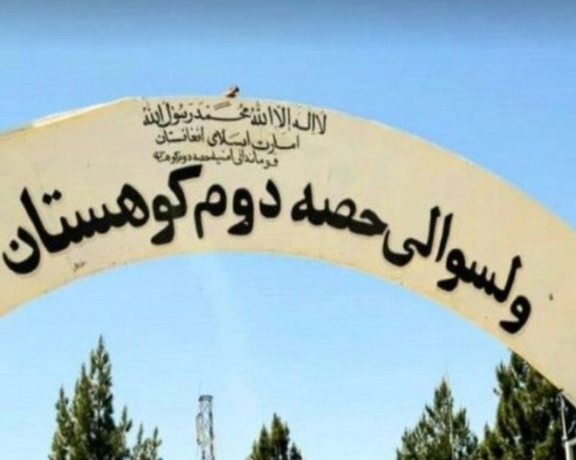
The National Resistance Front of Afghanistan (NRF) announced that’s it’s forces had killed three Taliban members in Hesa Duwum district of Kapisa province.
The National Resistance Front of Afghanistan (NRF) announced that’s it’s forces had killed three Taliban members in Hesa Duwum district of Kapisa province.
The front said that its forces attacked the Taliban outpost on Friday morning, in the "Pule Mirwais " area, and fired four Rocket-Propelled Grenade (RPG) towards the target.
Taliban officials have not reacted to the NRF claims.
In a statement, NRF wrote that three Taliban members had been killed using sniper weapons. The front emphasised that they do not have details of the RPG attack casualties.
Earlier, Abdul Hafiz Mansour, a member of the NRF told Afghanistan International, that their attacks on Taliban will intensify this summer.
The NRF had also reported killing a number of Taliban members in Hesa Duwum district of Kapisa province, Nuristan, Laghman and Nangarhar provinces.

Pictures received by Afghanistan International from Kabul show that Taliban members firing aerial shots to disperse the mourners on Ashura Day in Dasht-e-Barchi area of Kabul.
These pictures show that a large crowd of Muharram mourners had come to the streets on the Day of Ashura.
Meanwhile, multiple sources told Afghanistan International that even telecommunication networks have been severed in Kabul on Friday.
The Taliban officials have not revealed details about the aerial shooting and snapping of telecommunication networks yet.
With the beginning of the month of Muharram, the Taliban imposed extensive restrictions on the Muharram ceremony under the guise of providing security. Taliban has limited the number of mosques and places for holding Muharram ceremonies and has banned installation of religious flags and mourning caravans in the streets.
Over the past few days, videos have been circulating which show Taliban members beating up Muharram mourners in Kabul.
Earlier, Khalid Zadran, the Taliban’s police spokesperson in Kabul, confirmed that the group had prevented the convoys of Muharram mourners in Kabul.
Khalid Zadran said, "Some caused disorder in public areas and roads in a disorganised manner and contrary to the sayings of the elders, which caused the security forces to stop them out of their responsibility and security."
Criticising the Taliban's restrictions on Muharram, the Shia Ulema Council of Afghanistan asked the group to lift the restrictions.
Zahra Nehbandani, head of the Department of Combating Infectious Diseases at Mashhad University of Medical Sciences, said that infectious diseases such as measles, rubella, and polio are still prevalent in Afghanistan.
She said that because of this reason, border controls are being intensified and the entry of sick people is being prevented.
In March, she had said that due to the legal and illegal traffic from Pakistan and Afghanistan, at least 20% of tuberculosis patients in Razavi Khorasan province had been foreign citizens.
On Thursday, Quds Online media reported that Zahra Nehbandani said that a large number of people from Afghanistan enter Iran during the Muharram days, and border controls have been intensified to prevent the spread of infectious diseases.
She stressed that all necessary precautions should be taken to prevent the entry of people suffering from infectious diseases into Iran.
The head of prevention and treatment of infectious diseases of health department of Mashhad Medical Sciences University said that health care centers have been activated at Khorasan Razavi International Airport in addition to the Dougharon border.
Earlier, the World Health Organisation (WHO) had announced that in the last six months, 47 people in Afghanistan had died due to Crimean Congo fever.
WHO’s report stated that during this period, the number of people suffering from this disease in 32 provinces of Afghanistan has reached 494 people.
Human rights group, Freedom Now, announced that the Taliban's restrictions on Muharram ceremonies and their violent dispersal of Shia mourners in Kabul is indicative of the group’s lack of tolerance towards Afghanistan’s diversity.
The rights group asked the Taliban to stop their targeted attacks against the Shia community members across the country.
During the past week, Afghanistan International revealed several video clips and reports that showed the Taliban preventing Shias from performing the rituals during the month of Muharram and how they used violence and repression against the Shia mourners.
In one of the video clips, the Taliban violently disrupt a ceremony of Shia members in district one of Kabul city and attack the mourner’s distribution of food and water.
Another video clip shows that the Taliban stopped the caravans of Muharram mourners in at least two districts of Muradkhani and Wazir Akbar Khan area in the center of Kabul city and beat up members of the Shia community.
Similarly, Afghanistan International received other video clips from different provinces of Afghanistan which showcase the Taliban officials removing the flags of the mourners from streets and shops.
After repeated reports of violence against groups of mourners in Kabul, the Taliban confirmed using violence against the Shia mourners. The Taliban police command in Kabul said that "due to the disobedience" of the Shia mourners from what they called an “understanding reached with the Shia elders” about the locations where they were allowed to hold the Muharram rituals and ceremonies, the "security forces" of the group had to intervene.
The Taliban’s violence has been met with wide-ranging reactions inside and abroad Afghanistan.
Prominent Shia cleric, Ayatollah Sayed Mohsen Hojjat, asked Shias not to obey the restrictive orders of the Taliban.
On the other hand, the Shia Ulema Council said that due to security reasons, people should refrain from mourning on the streets and public places.
A UN report has stated that the Al-Qaeda maintains close association with the Afghan Taliban and even has infiltrated the group’s government institutions.
The report on global operations of al-Qaeda and Islamic State by the Analytical Support and Sanctions Monitoring Team of the UN Security Council added that al-Qaeda operates secretly in the country to promote the Taliban's narrative that Afghan soil is not being used for terrorist purposes.
The report stressed that the infiltration by the Al-Qaeda is backed by high-ranking Taliban officials and the reason behind the secrecy of their close relationship is because of the Taliban's pledge to cut ties with terrorist groups.
According to the UN report, Afghanistan “remained a place of global significance for terrorism, with approximately 20 terrorist groups operating in the country.” The goal of these terror groups is to “spread their respective influence across the regions and to build theocratic quasi-state entities”, the report said.
The UN report also added that Al-Qaeda uses Afghanistan as an ideological and logistical hub to recruit new fighters while “covertly rebuilding its external operations capability”, and the group has set up new training centres in Kunar and Nuristan provinces.
According to a new report by the UN Security Council, Al-Qaeda’s capability to conduct large-scale terror attacks “remains reduced while its intent remains firm”.
In June this year, even the Long War Journal, an American media outlet, reported that a number of Al-Qaeda members were working as key managers in the Taliban's administration.
It specified names of the deputy director of the Taliban's intelligence department, the training director of the Defence Ministry, the governor of Kapisa and Nuristan as al-Qaeda operatives in the Taliban's administration.
According to the survey, member states assessed that Al-Qaeda is likely to remain inactive in the short term while developing its operational capability.
In its report, the UN Security Council noted that Al-Qaeda leaders are seeking to strengthen cooperation with regional terrorist groups in Afghanistan. Al-Qaeda is also working to strengthen cooperation with non-Afghan terror groups such as the Islamic Movement of Uzbekistan (IMU), Turkistan Islamic Party (TIP) and Jamaat Ansarullah.
One member state in the report assessed that Al-Qaeda's medium-to-long-term prospects depend on the overall situation in Afghanistan. Accordingly, if stability is achieved in Afghanistan, Al-Qaeda is likely to seek to transfer its core to other countries, such as Yemen or North Africa.
Based on the assessment of one member state, the report pointed to the possibility of a merger between Al-Qaeda and the TTP too. According to these observations, Al-Qaeda members are cooperating with the TTP to carry out further attacks inside Pakistan.
Mojtaba Zuljodi, the deputy of Iran's Department of Environment, warned that an environmental and human disaster will take place in Sistan region.
Zuljodi asked for the Taliban’s cooperation in releasing the country’s water rights from the Helmand River along with the revival of the "Hamun" lake.
He told Tasnim news agency that Hamun's wetlands have "completely dried up".
According to Tasnim, the Iranian official added that the life of Hamun Lake depends on the water levels of the upstream rivers, including Farah and Helmand of Afghanistan.
Zuljodi said, "Unfortunately, with the diversion of the water of the Hirmand (Helmand) River from its natural path and the creation of numerous structures on the Farah River upstream and the lack of respect for the historical and natural rights of this ecosystem, the wetlands of Hamun have completely dried and the lake has become a center of dust".
He warned that the range of dust storms arising from the dry bed of the wetland will also reach Afghanistan. According to the Deputy Director of Iran's Department of Environment, thousands of people in Sistan and Baluchistan province have been infected and hospitalised as a result of these storms.
Zuljodi called for good neighbourliness and the implementation of the water treaty between Afghanistan and Iran, the correction of the natural stream of the rivers, and the release of the water needs from the downstream environment by Afghanistan.
He called on the Taliban and international organisations to "leave aside political debates and help revive this ecosystem with international value, which is the duty of all members of the Convention on Global Biological Diversity, including Afghanistan, and to prevent environmental and human catastrophe in the Sistan desert and the region”.
This Iranian official emphasised that paying attention to these international obligations and the need to achieve the environmental water right of the Hamun wetland is one of the serious plans of the Iranian government through the Ministry of Foreign Affairs and the Ministry of Energy of the country.
In the past months, tensions increased between the Taliban and the Islamic Republic of Iran over the water rights of Tehran from Helmand River.
In May, Ebrahim Raisi, Iran's President issued a warning to the Taliban during a visit to Sistan and Baluchistan province over the release of Tehran’s water rights.
During his visit, Raisi warned the Taliban, "Take my words seriously so that you don't complain later."
The Taliban, on the other hand, had said that it is committed to releasing Iran's water right according to the 1973 water treaty.