After Taliban’s Takeover, Terrorist Attacks Increased In Pakistan, Says Pak FM
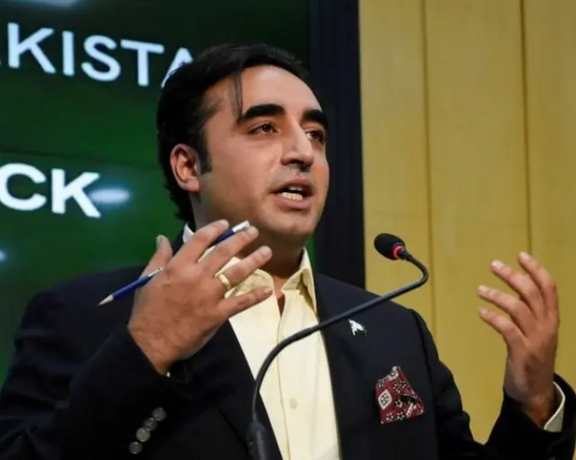
Bilawal Bhutto Zardari, Pakistan’s foreign minister, announced that after the fall of Kabul to the Taliban, terrorist incidents have increased in Pakistan.

Bilawal Bhutto Zardari, Pakistan’s foreign minister, announced that after the fall of Kabul to the Taliban, terrorist incidents have increased in Pakistan.
He also stressed that cooperation and engagement between Pakistan and the Taliban is necessary and asked the group to fulfil their commitments.
On Thursday, Pakistani media quoted Pakistan's foreign minister as saying that if the Taliban want diplomatic recognition, they should pay attention to international concerns.
After the Taliban took control of Afghanistan, Tehreek-e-Taliban Pakistan (TTP) increased its attacks in Pakistan.
Pakistan’s army has repeatedly emphasised that TTP has a safe haven in Afghanistan and organises its attacks against the Pakistani government from there.
Afghan and Pakistani Taliban have enjoyed close relations. In the past months, the Afghan Taliban hosted peace talks between the Pakistan army and the TTP. However, these talks have not yielded any results.
However, reliable sources confirmed to Afghanistan International recently that a decree was issued by Mullah Hibatullah Akhundzada, Taliban’s leader, that war in Pakistan is prohibited and "haram".
Mufti Abdul Rauf, a member of the Supreme Court of the Taliban, also announced that "Afghanistan’s people jihad against other countries is absolutely not permissible".


Mufti Abdul Rauf, a member of the Taliban's Supreme Court and head of the group’s Dar Al-Ifta, issued a fatwa against the war in Pakistan and said that the Taliban had pledged in the Doha Agreement not to wage jihad outside of Afghanistan.
Afghanistan International's sources said that Mufti Abdul Rauf's fatwa had been issued under pressure from Pakistan.
It had been previously reported that Mullah Hibatullah Akhundzada, the leader of the Taliban, called the war in Pakistan illegitimate in a fatwa that high-ranking officials of the group do not want to make public.
Pakistani authorities asked Akhundzada to issue a public fatwa and declare war in Pakistan as haram (forbidden).
Reliable sources have told Afghanistan International that the video clip of Mufti Abdul Rauf, a member of the Taliban Supreme Court, has been published in line with Islamabad's demands.
In this video clip, this member of the Taliban’s Supreme Court, implicitly confirms that Mullah Hibatullah has issued a fatwa against the war in Pakistan.
Mufti Abdul Rauf said that he has received messages from many members of the Taliban who have declared their readiness for jihad in Pakistan.
In the video, he said, “We don't care whether Jihad is ongoing somewhere or not. Our people are not responsible for Jihad abroad [Afghanistan].”
Earlier, Pakistani media reports had also stated that at the request of Islamabad, the leader of the Taliban has declared war and attacks abroad, including in Pakistan, as "forbidden".
According to these reports, Pakistan's special representative for Afghanistan, during his recent trip to Kabul, asked the Taliban that Mullah Hibatullah Akhundzada declare war in their country as forbidden.

Zalmay Khalilzad, former US special envoy for reconciliation in Afghanistan, said that it is still too early to draw conclusions about the performance of the Taliban.
Khalilzad told Afghanistan International that from his point of view, the current situation in Afghanistan under the rule of the Taliban has both positive and negative aspects.
According to Khalilzad, one of the positive aspects is that "fewer Afghans are killed now as compared to the past, people were tired of war and the US was also tired of killing Afghans”.
Khalilzad said that the situation of Afghanistan's economy is not good under the rule of the Taliban, but he immediately emphasised that the economy of Afghanistan was not good during the American-backed government either.
He rejected the opinion that the people inside Afghanistan are not witnessing improvement in the situation. Khalilzad said, “I do not agree that the opinion of the Afghan people is like this. There are different opinions -if all Afghans had the same opinion, these controversies would not have happened.”
In this interview, which will be published by Afghanistan International on August 15, the second anniversary of the fall of Kabul, Khalilzad stressed that depriving Afghan women and girls of the right to education and work is one of the negative points of the Taliban's government and said that if the group goes ahead with such approaches, it can not win the international community’s support.

The National Resistance Front (NRF), in a statement, announced that its forces launched an operation in Farkhar district of Takhar province on Wednesday, as a result of which two members of the "terrorist Taliban" had been killed.
NRF stated that the killed Taliban members included an intelligence officer of the Taliban’s 217 Corps for Farkhar district.
In a statement, NRF stressed that none of its forces had been harmed in the operation.
This anti-Taliban front added that it also carried out an operation on the Taliban outpost in Nuristan province on Wednesday and said that the number of casualties in this attack is not yet clear.
The National Resistance Front has intensified its attacks against the Taliban in recent days.

In response to a journalist's question about the role of the US in the fight against terrorism in the region after leaving Afghanistan, Matthew Miller, US State Department spokesperson, said that his country will continue to support Pakistan's counterterrorism operations.
In a press conference on Wednesday, Miller also said that the United States deeply values its relations with Pakistan, including on the issue of counterterrorism.
"We have supported Pakistan with assistance to help with counterterrorism, with other law enforcement activities, and we’ll continue to do so", said Matthew Miller.
In recent months, Pakistan has seen an increase in attacks against the country's security forces and the political parties.
The responsibility of these attacks has been mainly taken by ISIS and Tehreek-e-Taliban Pakistan (TTP).
Recently, a suicide bombing targeted a political gathering of Jamiat Ulema-e-Islam in the Bajaur district of Khyber Pakhtunkhwa and left 63 killed.
ISIS-K took responsibility for the attack.
After this attack, some Pakistani officials, including Asim Munir, the Chief of Army Staff, accused Afghan citizens of participating in terrorist attacks in Pakistan.
Taliban has denied these statements of Pakistani officials.

Hassan Kazemi Qomi, Iran’s Special Representative for Afghanistan accused Washington of trying to turn Afghanistan into a geographical region critical for its neighbours.
In an interview with the IRNA news agency, Qomi claimed that the United States has been trying to send back Afghan special forces to Afghanistan for certain situations.
He said, "They [US] organised terrorist groups, like the ISIS, as a replacement for their military forces in Afghanistan or they try to call back the special forces which they trained during their presence, to send them to Afghanistan under certain conditions."
This Iranian official stressed that the US is trying to use Afghanistan as a leverage against "rival and hostile" countries.
Iranian officials have frequently attributed the unrest, and protests in the countries of the region to the "US conspiracy". Together with the Russian officials, they have repeatedly accused the US of establishing and supporting ISIS.
This Iranian diplomat claimed that the US does not want to improve Afghanistan's economic and security situation because they feel that stability in this country will lead to investment by rival countries like China.
According to him, the US is trying to hinder Afghanistan's engagement with other countries.
He said that by blacklisting Taliban officials, engagement between Kabul and other countries will be affected.
Taliban leaders are on the UN Security Council sanctions list due to their participation in terrorist activities and cooperation with Al-Qaeda in the 1990s. Members of the Security Council, including Russia, consider the Taliban as a terrorist group. Although Russia has a good relationship with the Taliban, it has not yet supported the lifting of sanctions on the Taliban in the Security Council.
Qomi also claimed that "the Americans use the frozen funds of Afghanistan as a pressure tool, or they take measures to manage Afghanistan under the cover of the United Nations”.
Qomi also accused the US of increasing the pressure on the people of Afghanistan with the "gesture of human rights" and "supporting women".
The US has said that the Taliban is far from gaining international recognition due to the suppression of Afghan women. In a meeting with Taliban officials, Iran also asked the group to respect the rights of Afghan women and agree to the formation of an inclusive government.
Western and regional countries are worried that the Taliban's policy to exclude other ethnic and political groups will lead to tensions and instability in Afghanistan.
Despite the criticism of US sanctions policies against the Taliban, Qomi did not mention human rights violations and the group's restrictive laws against women as the main cause of international sanctions.