Taliban Forms Ulema Councils In Seven Provinces Of Afghanistan
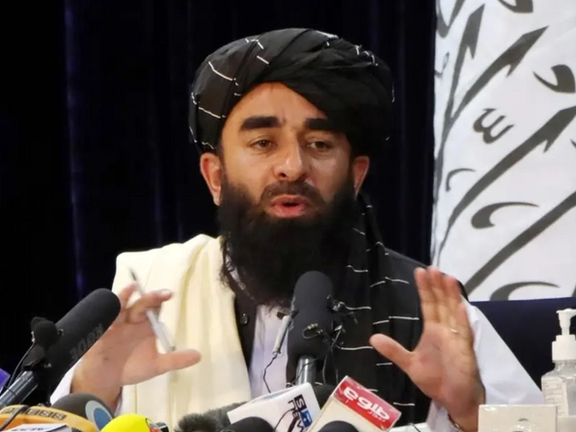
Zabihullah Mujahid, Taliban’s spokesperson, announced that based on a decree of Hibatullah Akhundzada, the group’s leader, Ulema Councils have been formed in seven provinces.

Zabihullah Mujahid, Taliban’s spokesperson, announced that based on a decree of Hibatullah Akhundzada, the group’s leader, Ulema Councils have been formed in seven provinces.
According to the statement, these councils have been formed in Nuristan, Bamiyan, Maidan Wardak, Ghor, Sar-e-pol, Laghman and Daikundi provinces.
Mujahid announced the formation of these councils on Sunday on social media platform X.
These councils have seven to 17 members, and it appears that all members are individuals associated with religious schools and those who are aligned with the Taliban.
It seems that the Taliban leader has chosen most of the members of the council from Sunni scholars in the three Shia-dominated provinces of Bamiyan, Daikundi and Sar-e-Pol provinces.
According to the statement, Mullah Hibatullah emphasised that the councils have been tasked with giving advice to the local Taliban administrations in the provinces.
The Taliban had previously announced the establishment of such councils in several other provinces as well.
These councils are primarily composed of clerics aligned with the Taliban and are instrumental in implementing the group's strict policies at the local level.
In addition to the Ulema councils, the Taliban has established the Ministry of Propagation of Virtues and Prevention of Vice with offices in every province and district of Afghanistan.
The agents of this ministry control the appearance of Afghans in public spaces.


Hayatullah Mohajer, Taliban’s Deputy Minister of Information and Culture, announced codification of a procedure to regulate the activities of Afghan YouTubers.
According to the Taliban-controlled Bakhtar News Agency, Mohajer said that this procedure was prepared due to the increase in the number of YouTubers in Afghanistan.
Since taking power in 2021, the group has significantly restricted the operations of independent media. As a result, a large number of young people have turned to social media networks like, YouTube, to disseminate content.
Mohajer explained that the primary motivation for young people to use YouTube is the platform's "monetisation" opportunities.
This Taliban official did not give more details about the new regulation of Afghan YouTubers.
In the last two years, the Taliban regime has arrested and imprisoned several YouTubers on various charges. Some of them are still in prison.
Earlier, there were concerns that the Taliban might restrict the activities of YouTubers by imposing new regulations.
On Sunday, Bakhtar News Agency, quoting Mohajer reported that the Ministry of Information and Culture of the Taliban support media outlets which work in accordance with Islamic values.
Mohajer did not explain what he meant by the term "Islamic values". However, the group has a strict interpretation of "Islamic values" which has led to the prohibition of numerous media programmes, such as music broadcasts and soap operas.
In the past two years, the group officials have repeatedly emphasised that the activities of Afghan media organisations should be in accordance with the policies of the Taliban.

The Taliban's Ministry of Interior on Sunday announced that Zhao Xing, the new Chinese ambassador to Afghanistan, met Sirajuddin Haqqani, the Interior Minister of the group’s government.
According to the Taliban, Xing said that China fully respects the "independence, beliefs and culture of Afghanistan."
Many countries have urged the Taliban to change their policies towards women and girls in Afghanistan.
However, the Taliban have stated that the ban on women's work and education is "a part of Afghan culture". The group has asked the international community and the United Nations to respect cultural differences and not to interfere in the internal affairs of the Taliban.
China is one of the few countries which has not criticised the violation of women’s and girls’ rights under the Taliban rule.
The Taliban’s Ministry of Interior stated that the Chinese Ambassador has emphasised on non-interference in the internal affairs of Afghanistan.
According to the group’s statement, Haqqani has also praised China's position towards Afghanistan.
Following the appointment of a new Chinese ambassador for Afghanistan, Mullah Hassan Akhund, the Taliban’s Prime Minister accepted his credentials on September 13, and welcomed him in a special ceremony held at the Arg (Presidential Palace).
During his meeting with the Taliban officials, Xing stressed on maintaining the territorial integrity and independence of Afghanistan.
According to the Taliban, Xing stressed that China does not follow the policy of interference in the Afghanistan affairs and will work to strengthen relations and cooperation between the two countries.
China is one of the few countries which has established close relations with the Taliban since their takeover of power and has signed several contracts in the mining sector of Afghanistan.
The new Chinese ambassador to Afghanistan is the first foreign ambassador who has been sent to Afghanistan under the Taliban control with official credentials.
China is looking at its economic interests in Afghanistan, and in the last two years, Chinese companies have signed several mining contracts in Afghanistan.

Zabihullah Mujahid, Taliban’s spokesperson, said that the group attaches immense importance to the territorial integrity of Azerbaijan and supports it.
Azerbaijan and Armenia have been engaged in a long-standing conflict over the Nagorno-Karabakh region. The most recent exchange of gunfire between the two sides occurred last Saturday.
In an interview with CBC Azerbaijan TV, Mujahid stressed that the group supports Azerbaijan in the issue of territorial integrity.
In this interview, a part of which was aired on Friday, he said that the issue of territorial integrity is extremely important for the Taliban, "I think it is as important as it is for Azerbaijan”.
Forces of Azerbaijan and Armenia had been involved in a six-week armed conflict in 2020 that left 6,500 dead. The tension between both countries has caused Russia to mediate between the two sides often.
Three years ago, both countries agreed on a ceasefire with the meditation of Moscow. However, tensions between both the countries continue.
In an interview with Politico, Nikol Pashinyan, the Armenian Prime Minister on September 13, said that there is a possibility of escalation of tensions with Azerbaijan, and so, their forces should return to the bases.
The Taliban spokesperson told CBC Azerbaijan that the group is ready to cooperate with Azerbaijan. He added that they want the embassy of Azerbaijan in Kabul to begin operations and have Taliban representatives accepted in Baku.
Mujahid promised to ensure the security of the Azerbaijani embassy in Afghanistan and said, "We are prepared to create the necessary conditions and carry out appropriate measures."

The Tehreek-e-Taliban Pakistan (TTP) condemned the detention of Afghan refugees in Karachi city of Pakistan.
In a statement, TTP said that Pakistani forces desire to take "millions" of rupees from refugees in the form of bribe. At the same time, TTP also denied the involvement of Afghans in the recent attacks in Pakistan.
In the statement, it said that the government of Pakistan has double standard towards Afghans. It added that the Pakistani government "calls the Afghan government a brother" and on the other hand they "commit crimes against Afghan refugees”.
TTP stressed that Afghan citizens were not involved in the group's attacks in Pakistan, and said that "it is unreasonable to launch large-scale and coordinated attacks that were carried out in Chitral from outside Pakistan”.
Recently, Pakistani Taliban launched an attack in Chitral district of Khyber Pakhtunkhwa state of Pakistan, which killed several Pakistani security forces.
TTP claimed that the Pakistani police arrested "Afghan refugees and daily wage laborers" under the pretext of alleged Afghan involvement in the Karachi violences.
The group urged the people of Pakistan to demonstrate their goodwill towards the Afghan population in order to alleviate the escalating oppression.
Since the Taliban’s takeover of power in Afghanistan, TTP has increased its attacks against the Pakistani security forces.
Pakistani officials, including the country's Army Chief of Staff, said that Afghan citizens have been involved in attacks against Pakistani forces.
At the same time, the Pakistani police has intensified the detention of Afghan refugees inside Pakistan. Human rights organisations have expressed concern over the detention and situation of Afghan refugees in Pakistan.
On the other hand, in a letter, TTP ordered the military commissions of their group in the north and south of Pakistan not to recruit Afghans into their ranks.

The Taliban's Ministry of Information and Culture announced that the number of historical monuments in Afghanistan will increase to 15,000-20,000 if they are registered and carefully examined.
Atiqullah Azizi, Taliban's deputy minister of information and culture, told Bakhtar news agency that currently five thousand historical works had been registered in Afghanistan.
Azizi said that Herat, Balkh, Bamiyan, Ghazni, Kabul and Kandahar have the most historical monuments.
While the Taliban is talking about the existence of new historical monuments in Afghanistan, organisations dedicated to preserving cultural heritage have warned that hundreds of historical sites and monuments are at risk of destruction in Afghanistan.
The destruction and collapse of Afghanistan's historical sites and monuments is one of the concerns of the United Nations Educational, Scientific and Cultural Organisation (UNESCO).
Among others, Jam Minaret in Ghor Province, one of the oldest historical monuments of Afghanistan, which has been registered by UNESCO, is in an alarming condition and faces the risk of collapse.