Uzbekistan, Pakistan, Taliban Sign Railway Study Agreement In Kabul

The Taliban’s Foreign Ministry has announced the signing of a feasibility study agreement for the Trans-Afghan railway project.

The Taliban’s Foreign Ministry has announced the signing of a feasibility study agreement for the Trans-Afghan railway project.
The agreement was signed between the Taliban’s Ministry of Public Works, Uzbekistan’s Ministry of Transport, and Pakistan’s Ministry of Railways during a ceremony held in Kabul. The event was attended by the foreign ministers of all three parties.
On Thursday, the foreign ministers of Uzbekistan and Pakistan arrived in Kabul to finalise and formalise the agreement.
Amir Khan Muttaqi, the Taliban’s acting foreign minister, said the project represents more than a mere transit route, describing it as a foundational move toward a broader strategic partnership.
Pakistan’s Foreign Minister Ishaq Dar noted that the agreement, reached after extensive negotiations, is intended to connect Central Asia to Pakistani ports via Afghanistan. He emphasised that the railway would establish a new corridor for the transit of goods between Central and South Asia, fostering regional trade and promoting economic development.
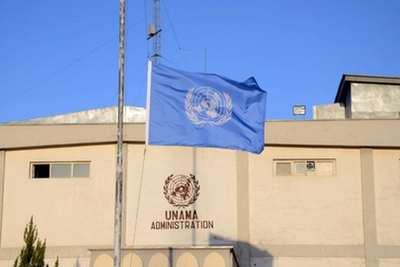
A Taliban court in Afghanistan’s Paktika province has sentenced a man to death on charges of blasphemy, according to a spokesperson for the group.
Saif-ul-Islam Khyber, spokesperson for the Taliban’s Ministry for the Propagation of Virtue and Prevention of Vice, announced on Thursday that a man identified as Abdul Alim Khamoosh, a resident of Janikhel district, was arrested and sentenced by a primary court for allegedly insulting the Prophet of Islam and Islamic sanctities.
Khyber stated that the sentence followed an investigation by the court, which determined that the accused had committed a serious offence under the group’s interpretation of Islamic law.
In a post on X (formerly Twitter), the spokesperson referred to the offence as a “major sin,” stating that insulting religious values, weakening the spiritual unity of the Islamic community, and violating Sharia boundaries are considered severe crimes by the Taliban.
The group has not released further details regarding the judicial process, evidence presented, or whether the defendant had access to legal representation. The verdict has raised renewed concerns among rights groups over the use of capital punishment and the lack of transparency in the Taliban's legal system.

The Taliban’s High Commission for Addressing Migrants’ Affairs has reported that more than 20000 Afghan migrants were deported from Iran on Wednesday, 16 July, marking one of the highest single-day returns to date.
According to the commission, a total of 20044 individuals were returned to Afghanistan. Of these, 15208 crossed into the country via the Islam Qala border, while an additional 4836 entered through the Pul-e Abrisham crossing.
The Taliban also stated that 490 Afghan migrants were deported through the Torkham border, 434 through Spin Boldak, and 12 via the Bahramcha crossing from Pakistan.
Afghan migrants across the region are facing an escalating wave of mass deportations. On Monday, the United Nations reported that Iran and Pakistan have deported more than 1.6 million Afghan nationals over the past year.
In neighbouring Tajikistan, sources told Afghanistan International that the government has recently intensified arrests and deportations of Afghan migrants. However, Tajik authorities have not issued an official statement on the matter.

More than 200 former Afghan soldiers and police officers have reportedly been identified and killed by the Taliban since the leak of personal data belonging to Afghans who worked with British forces, according to an investigation by The Daily Telegraph.
In a report published Wednesday, the British newspaper revealed that the killings began after a list containing details of approximately 19,000 UK-affiliated Afghans was leaked online in February 2022. While it remains unclear whether all the victims were on the leaked list, The Telegraph noted that the UK government has not released the names of those affected.
Citing two Taliban officials, the report said a special Taliban unit known as “Yarmok 60” was assigned to track down and detain individuals named on the list. The unit has reportedly carried out arrests and executions across several provinces.
Among the victims was Colonel Toor Jan, a former police commander in Helmand province, who was allegedly shot dead by Taliban fighters outside a mosque in June 2024. A month later, a former army officer was reportedly killed in Khost province.
Other victims include Muzamil Nejrabi, a military officer shot in July 2022 in Kapisa province, who later died while being transported to hospital, and former police commander Hayatullah Nizami, whose bloodied body was discovered near a Taliban base in Takhar province in February 2024. Nizami had disappeared the night before and had been working for a municipal contractor in Taloqan following the fall of Kabul.
Helmand province, where Colonel Jan served, was the main base for British forces during the NATO mission in Afghanistan and the site of prolonged fighting between UK troops and the Taliban.
While the Taliban has repeatedly denied targeting former security personnel, independent investigations have contradicted these claims. A 2021 investigation by The New York Times found that at least 500 former Afghan military and government officials had been killed or had disappeared within the first six months of Taliban rule. The report described how some individuals were misled by the Taliban’s so-called amnesty letters, only to later be detained, tortured, or executed.
Taliban officials have at times blamed rogue fighters for the abuses, but The New York Times concluded that the killings were systematic and deliberate.
Human Rights Watch has also documented more than 100 cases of killings and enforced disappearances of former security personnel in just four of Afghanistan’s 34 provinces, further raising alarm over the scale of the crackdown.
On Wednesday, UK Defence Secretary John Healey acknowledged the potentially fatal consequences of the 2022 data leak and confirmed that the government could not rule out harm to former Afghan allies. The leak, which the Ministry of Defence attributed to an error by an unnamed employee, has triggered serious concerns over the safety of those left behind.
In response to the breach, the British government has committed approximately £7 billion to mitigate the fallout, including launching relocation efforts for thousands of affected Afghans.

Abdul Latif Nazari, Taliban’s Deputy Minister of Economy, has strongly criticised Iran over its treatment of Afghan migrants, warning that ongoing deportations and abuses could damage relations between Kabul and Tehran.
In an interview with Shamshad TV on Wednesday, Nazari condemned what he described as “insults, humiliation, disrespect, and rising anti-Afghan sentiment” in Iran. He said the forced deportations, along with reported harassment and mistreatment, constitute clear violations of international law.
Nazari called on Iranian authorities to halt such practices and to respect the human dignity of Afghan nationals residing in the country. He argued that Afghan migrants deserve the same rights and protections that Iranian citizens enjoy in countries such as the United States and Canada.
He further noted that while many Afghans fled to Iran due to war and insecurity, Iranians who migrate to Western countries often do so in pursuit of economic opportunities, and yet are afforded protection under the law. He questioned the disparity, particularly as Iran frequently refers to such Western nations as “un-Islamic.”
Nazari emphasised that no country, under Islamic, humanitarian, or international legal principles, has the right to subject migrants to degrading treatment.
Referring to the longstanding cultural and historical ties between the two nations, Nazari said that violations of migrant rights, including property confiscation, withheld rental deposits, unpaid wages, and rising hostility, undermine bilateral relations and fuel public anger in Afghanistan.
He stressed that good-neighbourly relations require Iran to end such behaviour and uphold the dignity of migrants.
His comments follow earlier remarks by the Taliban’s acting prime minister, Hasan Akhund, who urged Iranian officials to deport individuals with dignity and in accordance with the principles of gradualism and good neighbourliness. Akhund warned that humiliating treatment only fuels resentment and animosity between the peoples of the two countries.
In recent weeks, Iran has deported hundreds of thousands of Afghan migrants in a wave of mass expulsions that observers have described as unprecedented in scale. The actions have drawn criticism both domestically and internationally.

Tajikistan’s Statistics Agency has reported that trade turnover between the country and Afghanistan reached approximately USD 40 million during the first five months of the current Shamsi year.
According to the report, this figure marks a 31.1 percent increase compared to the same period last year.
Tajik media, citing the agency, stated that nearly 80 percent of the total trade turnover, around USD 32 million, consisted of Tajikistan’s exports to Afghanistan.
The main exports from Tajikistan to Afghanistan include electricity, construction materials, cement, coal, mineral fertilisers, and food products.
Imports from Afghanistan were reported at approximately USD 8 million, consisting primarily of agricultural products such as figs, raisins, and cotton. Afghanistan also exports carpets, precious, and semi-precious stones to the Tajik market.
