Arbitrary Arrests Weaken Trust on Taliban, Says EU Special Envoy
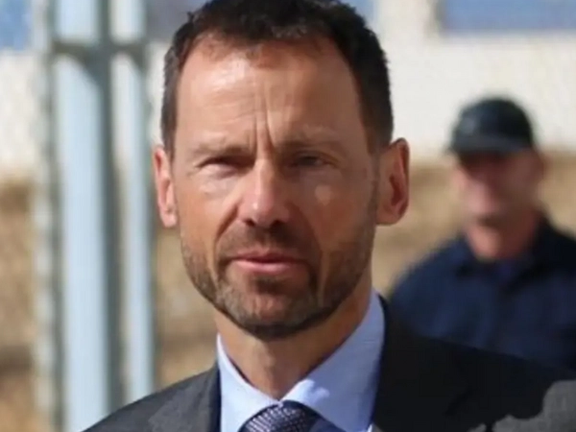
Tomas Niklasson, the European Union's Special Envoy for Afghanistan, said that arbitrary arrests of Afghans who stand up for their rights and the rights of others, are illegal.

Tomas Niklasson, the European Union's Special Envoy for Afghanistan, said that arbitrary arrests of Afghans who stand up for their rights and the rights of others, are illegal.
Niklasson said that these arrests weaken the trust needed for building domestic legitimacy and constructive dialogue.
He also joined the campaign for the release of Matiullah Wesa, Zholia Parsi, and Neda Parwani on social media platform X and called for their release.
Nabila Massrali, Spokesperson for Foreign Affairs and Security Policy of the EU, also called on the Taliban to cease arbitrary arrests, and release human rights activists Zholia Parsi and Neda Parwani, along with their families, and demanded the release of Matiullah Wesa, an education rights activist in Afghanistan, who has been held in Taliban custody for six months.


Local sources told Afghanistan International that the Taliban officials have arrested a former officer of the National Directorate Security (NDS), the Afghan Intelligence agency in previous government, on Tuesday.
According to sources, the officer who is named Haidar, was subjected to physical assault by the Taliban officials after his arrest. He, along with two of his companions, had been arrested in the Khan Abad district of Kunduz province.
Sources said that Haidar was a former commander of the NDS in Askamesh district of Takhar.
The Taliban forces have published pictures on social networks showing Haidar in civilian attire with his hands tied behind him.
Taliban had announced "general amnesty" after takeover of the power in Afghanistan, but the UN agencies have repeatedly reported that the group has killed or detained dozens of former security forces member during the past two years.
United Nations Assistance Mission in Afghanistan (UNAMA) recently reported that the Taliban has violated human rights in more than 1,600 cases in 19 months. According to the report, the Taliban have tortured prisoners using "electric shocks, asphyxiation, physical beating and severe pain" in order to obtain confessions.

Amnesty International said that many Afghans who fled from Afghanistan to Pakistan fearing persecution by the Taliban are facing a wave of arbitrary arrests and threats of deportation.
The organisation criticised the indifference of the international community to the situation of these Afghan immigrants.
In a report, Dinushika Dissanayake, Amnesty International’s Deputy Regional Director for South Asia, said, “It is deeply concerning that the situation of Afghan refugees in Pakistan is not receiving due international attention”.
On Monday, the government of Pakistan announced that it will deport 1.1 million illegal immigrants from the country.
Pakistani media reported that the decision also included "Afghans with residence cards".
According to Pakistani media outlets, the deportation plan will be implemented in three stages.
In the first stage, all illegal immigrants without documents and in the next stages, Afghan immigrants with residence cards, will be deported from the country.
Amnesty International had previously published reports that following the Taliban's takeover of power in Afghanistan, many Afghans had been forced to flee to Pakistan due to the Taliban's persecution and have been facing difficulty in registration, asylum and visa processes since the past two years.
The organisation said that the international community has failed to adequately protect those fleeing persecution in Afghanistan.

Amir Khan Muttaqi, the Taliban's foreign minister, leading a delegation of the group's officials left for China on Tuesday to participate in the third meeting of the Trans-Himalaya Forum.
Zia Ahmad Takal, Taliban’s deputy spokesperson for the foreign ministry, said that Muttaqi travelled to China at the official invitation of Beijing.
Takal said that the countries around the Himalayas will discuss economic, regional and climate change issues in the meeting.
According to the Taliban, Muttaqi will meet his Chinese counterpart and some representatives of the participating countries on the sidelines of this meeting.
The meeting will be held on October 4 and 5 in the Tibet Region.
During the past week, it is the second trip of the Taliban’s foreign minister to the regional countries. Muttaqi had visited Kazan city of Russia last week to participate in the Moscow Format meeting.
Despite China's close relations with the Taliban, the country has not recognised the Taliban. Beijing recently introduced a new ambassador to Afghanistan and the Taliban welcomed him in a special ceremony.
Last week, at the Moscow Format meeting, Muttaqi called on the countries of the region to follow China’s model of engagement with the Taliban.
The Chinese companies have signed many contracts with the Taliban in the field of mining in Afghanistan in the last two years. Critics of the Taliban said that the group does not have national and international legitimacy and any kind of contract with them is illegal.

Abbas Jowhari, the deputy governor of Tehran, referred to the presence of 2.5 million immigrants in the western part of the Iranian capital, as a big challenge for the province.
Afghans make up the largest immigrant population in Iran, and they have repeatedly complained about the behaviour of the Iranian government.
At the 11th regional meeting of the Tehran Cultural Council on Sunday, Jowhari said that the issue of the presence of immigrants, especially in the field of education, requires financial resources.
According to reports, Afghan immigrants in Iran are facing many problems. One of them is the education of Afghan immigrant children, who encounter difficulties when trying to enroll in schools.
The issue of Afghan immigrants has also been discussed in the Iranian parliament. Mohammad Taghi Naghd, representative of Khomeinishahr, claimed that Iranian citizens are unhappy with the increasing presence of foreign nationals and consider it an "invasion".
He said, "The presence of foreign nationals in the cities, particularly in the realm of education, has had an impact on the security of the localities”.
Naghd asked for the explanation of the parliament’s speaker in this regard.
According to the statistics of Iran’s Ministry of Interior, more than five million Afghan immigrants live in Iran.

Launching a petition, Amnesty International has asked the French government to facilitate visa issuance for Afghan women and girls.
So far, more than 4,500 people have signed the petition and asked France to provide the opportunity for Afghan women and girls to enter the country.
Amnesty International had launched this online petition to collect signatures in support of the request on September 12. It even held an event in Paris last week in support of the campaign.
In the petition, it has been stated that the Taliban is persecuting girls and women in a systematic, widespread and organised manner. According to Amnesty International's legal analysis, the behaviour of the group can be described as a "crime against humanity".
This international human rights organisation said that women who flee from the persecution of the Taliban to neighbouring countries, such as Iran and Pakistan, face other harassment in those countries as well.
As an example, Amnesty International has mentioned the arbitrary arrest of Afghan women by the local authorities of Iran and Pakistan and the risk of their forced return to Afghanistan.
The organisation wrote that French visas are sparsely issued in these countries, and the wait times for securing an appointment at consulates are long.