Unknown Armed Men Kill Shia Cleric In Herat Province
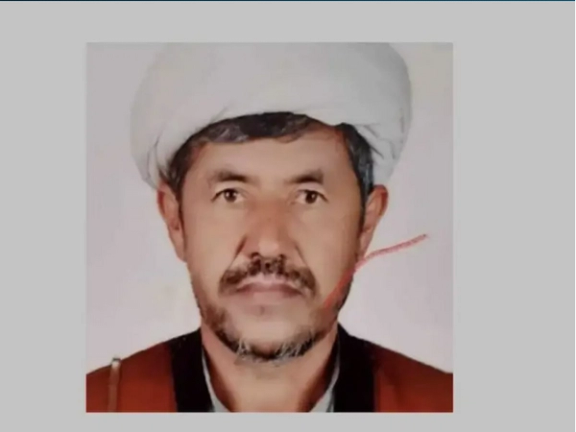
Local sources in Injil district of Herat province told Afghanistan International that unknown gunmen attacked a Shia cleric Eid Mohammad Etimadi.
Local sources in Injil district of Herat province told Afghanistan International that unknown gunmen attacked a Shia cleric Eid Mohammad Etimadi.
According to sources, the armed men kidnapped this Shia cleric and later, his corpse was found with gunshot wounds on Monday, October 23.
The motive behind the murder is not clear yet.
Taliban security officials have not commented on the matter.
Etimadi was a member of the Herat Shia Ulema Council and Imam of Khashrood Mosque located in Injil district of Herat province.
Mohammad Mohaqiq, the leader of the People's Islamic Unity Party of Afghanistan, has confirmed that Etimadi has been killed.
On X social media platform, Mohaqiq called the killing of Etimadi a "deep sorrow".
Jalil Abbas Jilani, Pakistan's Caretaker Foreign Minister, said that Ubaid Ur Rehman Nizamani, the Charge d'affaires of the country's embassy in Kabul, will be introduced as Pakistan's new ambassador to Afghanistan.
Last year, Nizamani was appointed as the Charge d'affaires of the Pakistani embassy in Kabul. He also survived an assassination attempt in Afghanistan.
Despite border tensions and differences over the Tehreek-e-Taliban Pakistan (TTP), Pakistan and the Taliban have maintained close relations. After the fall of the previous Afghan government in Afghanistan in 2021, Islamabad maintained its active embassy in Kabul, with the country's ambassador continuing to work there.
After Mansoor Ahmad Khan concluded his mission as the ambassador of Pakistan in Kabul, Nizamani arrived in Kabul in late 2022 and assumed his role as the Charge d'affaires of the Pakistani embassy.
After an assassination attempt, he left Kabul however, he returned after some time. He has previously worked in various diplomatic positions in Washington, New Delhi, Dakar, Berlin, and Jeddah.
While no country, including Pakistan, has officially recognised the Taliban, China and Pakistani have appointed new ambassadors in Kabul in recent months.
The Federal Investigation Agency of Pakistan (FIA) has established a visa verification system at the Torkham crossing to prevent the illegal entry of Afghans into Pakistan.
The agency announced that the new mechanism will prevent the entry of people who are considered as a security risk to Pakistan.
Officials at Pakistan's FIA said that an organised group of smugglers is involved in transporting Afghans without legal travel documents, which they said is a major security risk for Pakistan.
Pakistan said that the installation of a new visa verification system at the zero point of the border will enable immigration officials to screen and identify fake travel documents.
According to FIA officials, the visa approval system at the Torkham border checkpoint expedites the arrival of legitimate travellers while reducing the likelihood of suspicious individuals entering with questionable travel documents.
The Spontaneous Movement of Afghan Women (SMAW) confirmed that the Taliban has detained Manizha Sediqi, a human rights activist and a member of the movement, in Kabul.
In a statement, the movement wrote that the Taliban had arrested Sediqi on October 9.
Previously, sources quoting Sediqi's relatives told Afghanistan International that she had been missing for two weeks, and now it is clear that the Taliban detained her from the Khair Khana area of Kabul and did not inform her family.
There is still no clear information about Sediqi's health status and place of detention.
The SMAW has written in its statement that Sediqi is the third member of the movement to be a victim of "seeking justice" under the Taliban rule.
The movement has considered the detention of Sediqi as the continuation of the Taliban's "gender apartheid" policy and the detaining of women and human rights activists.
Taliban sources have not publicly commented on the matter.
The group has previously detained protesting women on multiple occasions.
Since the Taliban’s takeover of power in 2021, the group imposed extensive restrictions on civil freedoms and especially women's activities.
Consecutive orders attributed to the Taliban leader to restrict women within their homes have provoked widespread protests by Afghan women activists, and in the last two years, these activists have formed protest movements to pursue their demands.
United Nations Assistance Mission in Afghanistan (UNAMA) released a report on human rights situation in Afghanistan for the period of July to September and highlighted how minority communities continue to face human rights violations.
The report highlighted how between June and August, there had been alleged killings of Hazaras and destruction of property and agricultural crops belonging to Hazara farmers in Khas Uruzgan district of Uruzgan province.
UNAMA in the report stated that there were allegations that local Taliban security forces might have been involved in these incidents.
Also, the UN organisation stressed that between January and September, it recorded killings of at least six Hazara residents, destruction of property, and incidents of beatings.
Meanwhile, it also added that there had been many violations of rights of Shia community members. Citing examples, it stated that on July 25 and 26, in Kabul, Taliban security forces reportedly mistreated Shia mourners for not adhering to previously announced security arrangements.
The report highlighted how on July 28, in Ghazni city, Taliban security personnel fired upon a crowd of Shia mourners, resulting in the deaths of four individuals, including a child and a woman.
While stressing on human rights violations, the report also spoke about arbitrary arrests and detentions and said that the Taliban officials continue to arrest human rights defenders, particularly women’s rights activists, and media workers without specifying grounds for detention.
UNAMA touched upon the state of freedom of the media in the country under the Taliban as well. The report stated that there have been concerns among media personnel regarding potential increased pressure and censorship by the Taliban authorities.
The closure of a radio and TV station, Hamisha Bahar, in Jalalabad city on August 1 for running mixed-gender journalism classes further heightened concerns about media freedom, the report said.
The report also had details of how the Taliban continues to enforce restrictions on women, including a ban on music and monitoring men’s appearance.
“The Taliban officials have publicly implemented corporal punishments of convicted individuals, including large groups, in various parts of the country,” the report added on the issue of the deteriorating judicial system.
Mortaza Behboudi, an Afghan journalist who was released after spending 284 days inside Taliban prison, said that constant pressure by the media on the group saved his life.
Christophe Deloire, the Secretary General of Reporters Without Borders (RSF), also called the media coverage of Behboudi's arrest "extraordinary".
During a press conference at the headquarters of RSF in France he said, "Without the media, I wouldn't be alive.”
He thanked Afghanistan International and other media outlets for covering his detention and the international campaign for his release.
Deloire added that the media coverage "has sent an extraordinarily important message to the Taliban”.
Behboudi arrived in Kabul in January to report on the situation in Afghanistan. Two days later, he was arrested by the Taliban on suspicion of "espionage”. After enduring 284 days in Taliban’s detention, he was released on October 18.
This journalist spoke about his experience inside the Kabul Central Prison and said that about 1,200 other political prisoners were also kept there.
According to him, he was repeatedly interrogated and tortured by the Taliban, and said that he did not think he would make it out alive.
Behboudi said that after five court sessions, he was finally found not guilty and was released on the condition of submitting his “future articles to the Taliban for approval before publication".
