No Deadline Extension for Deportation of Illegal Immigrants, Says Pakistani Minister
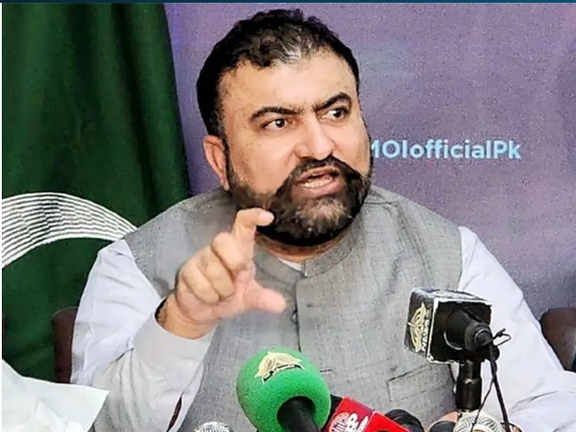
Sarfaraz Bugti, the Interior Minister of Pakistan, said that his country currently has no plans to extend the deadline for the deportation of illegal immigrants.

Sarfaraz Bugti, the Interior Minister of Pakistan, said that his country currently has no plans to extend the deadline for the deportation of illegal immigrants.
Bugti also said that the decision to deport illegal immigrants after November 1 was "misinterpreted" and Pakistan's target was not to only deport Afghan illegal immigrants.
The government of Pakistan recently announced that all illegal immigrants living in the country have until November 1 to leave Pakistan.
This decision faced a lot of criticism in Pakistan and Afghanistan. Several human rights organisations also expressed concern about the Pakistani government’s decision.
Addressing the Pakistani Senate on Wednesday, Bugti said that Pakistan's announcement about the deportation of illegal foreign immigrants has been "misunderstood”.
Bugti clarified, "We talked about deporting illegal residents, but this message was spread in such a way that we are deporting only Afghans. The government's message was not only for Afghans; it was for all illegal immigrants."
He said that the Pakistani government will also deport illegal Iranian immigrants who belong to the Baloch ethnic group.
Pakistan's interior minister added that anyone with a refugee card or visa is "our guest".


Khalil Ur Rahman Haqqani, the Taliban's Minister of Refugees and Repatriation, said that most of the aid provided by relief organisations "is spent on administrative issues and projects that are not necessary”.
Haqqani made these statements during a meeting with the head of the European Union (EU) development aid in Afghanistan.
The Taliban’s Minister of Refugees added that the aid from foreign organisations should be used to provide shelters to returnees, build clinics, and schools, and for other important projects.
In a statement, the Ministry of Refugees of the Taliban quoted the EU official as saying that the European Union has signed a memorandum of understanding for 15 million euros in aid for Afghan returnees.
So far, the official sources of the European Union have not announced any aid for the Afghan returnees. The Taliban has not provided more details regarding this matter.
The European Union official and the Taliban’s Minister of Refugees also discussed the Herat earthquake victims and how to provide humanitarian support to them.
Earlier, the European Union donated 3.5 million euros to the Herat earthquake victims.

The Pakistani embassy in Kabul has announced that more than 116,000 Afghan applicants have received Pakistani visas since the beginning of this year.
According to the embassy, this year the embassy and four consulates of Pakistan in Afghanistan have issued visas to an average of 550 people per day.
It added that the country issued about 250,000 visas to Afghan applicants in 2022 and nearly 410,000 visas in 2021.
According to the announced statistics, the total number of visas issued to Afghan applicants in the last three years is about 776,000.
Official data indicates that close to 957,000 Afghan refugees reside in Pakistan's Khyber Pakhtunkhwa province only, with fewer than 650,000 of them being officially registered with the Office of the United Nations High Commissioner for Refugees.
The state government of Khyber Pakhtunkhwa said that it has invalidated 597 fake ID cards. Also, based on these statistics, 3,911 Afghan refugees have been arrested for various crimes.
According to Pakistani government estimates, about 1.7 million unregistered Afghan migrants reside in Pakistan.
While the country has hosted millions of Afghan refugees for the past four decades, the Pakistani government last month set a one-month deadline for all immigrants without residency documents that they will be arrested and deported if they do not leave Pakistan.
Meanwhile, reports indicate that the Pakistani government has increased arrests of Afghan migrants to address the issue of migrants without legal documentation.

Reliable sources told Afghanistan International that the Taliban leader Hibatullah Akhundzada refused to meet Feridun Sinirlioğlu, the UN Special Coordinator, and did not allow him to travel to Kandahar.
According to sources, following the decision of Akhundzada, his advisors met Sinirlioglu in Kabul.
Our sources said that this senior UN official planned to meet the Taliban leader in Kandahar during his second trip to Afghanistan, however, Akhundzada not only refused to meet with him, but also did not allow him to travel to Kandahar.
Sources added that following this decision of the Taliban leader, eight of his senior advisers went to Kabul from Kandahar and met Sinirlioğlu at one of the UN offices in Kabul.
Jan Mohammad Madani, Mullah Shamsullah, Ahmadjan Omari, Abdul Hadi Torab, Mullah Mohammad Mujahid, Mullah Mohammad Rasool and Akhtar Mohammad Zafarani are among the advisers of the Taliban leader who met Sinirlioglu in Kabul.
According to sources, the meeting took place on October 22 and 23.
Human rights, women's education, security and recognition of the Taliban regime and the international community's cooperation with the group were among the main topics of their discussions.
According to sources, UN officials have said that the Taliban leaders in Kabul do not have the authority to make decisions and it is better to discuss the issues with the Taliban leadership in Kandahar.
The UN Special Coordinator has met with a number of Taliban officials in Kabul in recent days.
Mullah Hibatullah Akhundzada resides discreetly in Kandahar and avoids public appearances or meetings with foreign officials.

Ahmad Vahidi, Iran’s Minister of Interior, has said that dealing with Afghan criminals and offenders does not mean that they are anti-Afghans.
On Wednesday, Vahidi told reporters that criminals and offenders exist in the community of five million Afghan immigrants.
He stressed that thousands of immigrants who have committed crimes are currently in Iranian prisons.
He added that these violations will be addressed with strict measures, but they should not be misconstrued as being anti-Afghan. Regarding the repatriation of illegal Afghans, Iran's interior minister stated that the process is actively underway, and approximately 200,000 migrants lacking legal documentation have been returned to their home country so far.
According to Vahidi, some of these refugees come back to Iran after being deported to Afghanistan. To solve this problem, he said that stricter legal solutions should be adopted.
In response to a journalist who asked, "Do the Taliban help you in the process of returning Afghan immigrants?", the Iranian minister said that the issue is not "serious" for them.
In recent weeks, dozens of Iranian citizens protested on the streets of Eqbaliyeh city of Qazvin province over the presence of Afghan immigrants.
With increasing pressure on Afghan immigrants in Iran, videos circulated on social media show that some Afghan immigrants have faced severe physical abuse from Iranian citizens.

Richard Bennett, UN's Special Human Rights Rapporteur for Afghanistan on Tuesday, said that the Taliban's focus on "religious education" promotes extremism.
Bennett added that the focus on madrassas (religious schools) increases the risk of homegrown terrorism and regional and global instability.
He presented a report on the human rights situation in Afghanistan to the United Nations General Assembly on Tuesday.
In the report, the repressive policies and measures of the Taliban, the continuous humanitarian and economic crisis, and the recent deadly earthquakes have been mentioned as factors causing the deterioration of the human rights situation in Afghanistan.
Regarding the situation of human rights in Afghanistan, Bennet said that a grave picture has emerged that provides “a glimpse of what may lie ahead for the human rights of many Afghans, particularly women, and girls, and also for other groups including human rights defenders, journalists, ethnic and linguistic minorities, LGBTI person, people with disabilities, former government officials and military and security personnel”.
He added that despite promises, there is torture and inhumane treatment in Taliban’s detention centres as well as violation of human rights of the former government officials and security forces.
The UN Special Rapporteur has also mentioned the continuation of arrests of human rights defenders.
Also, Bennett stressed on lifting the ban on girls' education, referring to the Taliban's claim of "temporary suspension" of girls' education.
Bennett expressed concern that the actions of the Taliban could potentially be categorised as gender-based persecution. He stressed on the need for a more thorough examination of the systematic discrimination, oppression, and separation of women and girls, which he referred to as a form of “gender apartheid”.
This UN official also considered the arrest of journalists as an example of the collapse of the civic space in Afghanistan.
Referring to the recent earthquakes in Herat province and their wide-ranging consequences, Bennett urged the international community to provide needed assistance.
He also mentioned the concern of Afghans regarding the normalisation of the situation and that human rights are being sidelined in favour of larger geopolitical interests.
He expressed his hope that the member states of the United Nations will stand by the women and people of Afghanistan.