• العربية
  • پښتو
  • فارسی
Brand
  • Afghanistan
  • Sport
  • Markets
  • Afghanistan
  • Sport
  • Markets
  • Theme
  • Language
    • العربية
    • پښتو
    • فارسی
  • Afghanistan
  • Sport
  • Markets
All rights reserved for Volant Media UK Limited
volant media logo

Afghanistan Sees $7Bn Worth of Cumulative Trade in First 3 Quarters of Year, Says Taliban

Feb 20, 2024, 10:34 GMT+0

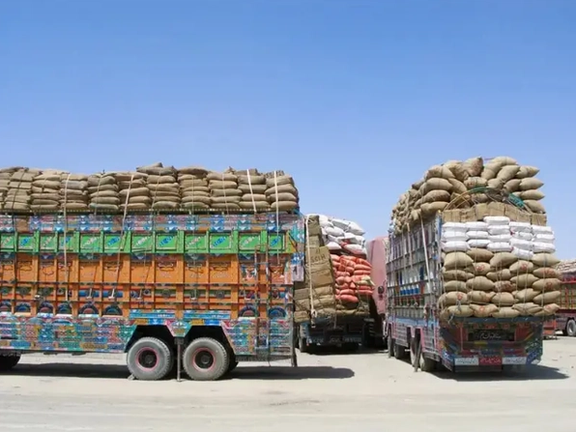
On Monday, the Taliban's National Statistics and Information Authority (NSIA) announced that Afghanistan had combined exports worth $1 billion and 355 million in the first three quarters of this year [hijiri calendar].

It added that the total value of imports for the corresponding nine months amounted to $6 billion and 228 million.

According to the Radio Television Afghanistan (RTA), based on the statistics of the NSIA, the most exported items of Afghanistan are dried fruits, medicinal plants, minerals, and fresh fruit, which are sent to Pakistan, India, and the United Arab Emirates.

The imported items include petroleum products, oil, machinery, transportation vehicle parts, textiles, metals, and metal products. These goods were predominantly imported from Iran, Pakistan, and China.

Most Viewed

Taliban Ignore Afghanistan’s Interests By Backing Militants, Says Pakistan Army Chief
1

Taliban Ignore Afghanistan’s Interests By Backing Militants, Says Pakistan Army Chief

2

Female Ismaili Entrepreneur Shot Dead In Badakhshan

3

Afghanistan May Not Remain Intact In Future, Says Pakistani Analyst

4

French Parliament Hosts Two-Day Meeting On Afghanistan

5

Taliban Renews Call For China To Launch Aynak Copper Mine

•
•
•

More Stories

No Taliban Official Willing to Conduct A Video Interview, Claim Journalists in Kandahar

Feb 20, 2024, 09:50 GMT+0

A day after the governor of Kandahar ordered a ban on photographing people, several journalists in the province reported that Taliban officials are now refusing to conduct video interviews.

Meanwhile, the Taliban has prohibited journalists from disseminating news regarding this matter.

On Sunday, February 18, Mullah Shirin, the Taliban's governor of Kandahar, issued an official letter instructing government department officials to refrain from capturing photographs and videos during their official and unofficial meetings.

Following this order, the Kandahar governor's office has stopped including photographs in its statements, opting to release only textual content.

A local reporter told Afghanistan International, “Today, while attempting to create a television report, we were denied permission to interview officials from various directorates.”

It seems like the Taliban wants to make the media in Afghanistan similar to how it was during their previous rule.

Taliban Declares Cryptocurrency Banned in Badghis

Feb 19, 2024, 16:16 GMT+0

A resident of Badghis province shared a video with Afghanistan International, capturing a Taliban herald denouncing cryptocurrency as un-Islamic.

The herald in the video asserts that cryptocurrency is considered gambling and haram (forbidden) according to Islam.

The footage shows two Taliban members on a motorbike, using a loudspeaker to campaign against the use of digital currencies.

The individual who shared the video mentioned it was filmed in the Sang Atash district of Badghis province.

Additionally, in a separate audio message, Abdul Samad Jawid, the Taliban-appointed governor of Badghis, announced a ban on digital and online currency transactions within the province.

He emphasised that individuals defying this ban would face legal repercussions.

The Taliban-led Central Bank had previously prohibited online trading in foreign currencies across Afghanistan.

The economic downturn following the Taliban's takeover in August 2021 has prompted many Afghans to explore online trading and digital currencies as a means to preserve their assets.

Taliban Sought Recognition As Precondition To Joining Doha Meet, Says UN Chief

Feb 19, 2024, 15:05 GMT+0

At the end of the second day of the Doha conference on Afghanistan, UN Secretary-General Antonio Guterres stated in Qatar that the UN aims for a peaceful Afghanistan.

He stressed on the importance of Afghanistan's role in the international community.

Guterres revealed that he received a letter from the Taliban with "unacceptable" demands before the Doha meeting. This letter sought to limit the UN's engagement with other Afghan representatives.

He noted the Taliban's failure to address global concerns yet expecting recognition. This stance, according to Guterres, has stalled resolution of the Afghan situation. He highlighted the deteriorating conditions for Afghan women, unresolved terrorism, and the lack of an inclusive government.

He emphasised that Afghanistan must not become a terrorist haven and called for a government that represents all ethnicities.

Guterres also said the voices of all Afghan society segments, beyond the Taliban, need to be heard. He regretted Russia's absence from an Afghan civil society meeting and disagreed with Moscow's position.

Describing the second Doha meeting as beneficial, Guterres noted that the Taliban's absence didn't detract from its success. He praised the constructive nature of discussions with special representatives, which reached a consensus on major issues.

Guterres announced plans for a third Doha meeting on Afghanistan and immediate consultations for a new UN representative. He proposed that this representative should provide a lasting framework for Afghan issues.

Pakistan Backs UN Special Envoy Appointment For Afghanistan, Reports Pak Media

Feb 19, 2024, 13:57 GMT+0

Pakistani Newspaper, The Express Tribune, quoted sources and reported that the country supports the appointment of a UN special envoy for Afghanistan at the Doha meeting.

A source said that Pakistan does not consider itself obliged to defend the positions of the Taliban.

The two-day Doha meeting for Afghanistan has been initiated with the participation of the UN Secretary-General and special representatives of more than 20 countries to find a solution for the critical situation in Afghanistan and the world's interaction with the Taliban.

Asif Durrani, Pakistan's special envoy for Afghanistan affairs, led the Pakistani delegation in Doha.

The Express Tribune newspaper wrote that despite previous concerns of Pakistan regarding the appointment of a UN special envoy, now the country backs the proposal.

Islamabad has said that the UN special envoy should be a "Muslim, experienced diplomat, and from the region".

Pakistan's change of position regarding the UN special envoy is a direct contradiction to the Taliban's position, which has repeatedly expressed its opposition to the appointment of the Secretary-General's special representative.

Quoting a Pakistani official, this newspaper wrote that “this was because Islamabad was no longer advocating the Taliban’s case.”

If officially confirmed, it seems that Pakistan’s support for the appointment of a special representative reflects the country’s continued dissatisfaction with the Afghan Taliban for supporting the militants of the Tehreek-e-Taliban Pakistan, which has claimed responsibility for violent attacks on Pakistani military forces in the past year.

Afghan Protestors In Canada Say Diplomacy With Taliban Won’t Provide Solution

Feb 19, 2024, 11:52 GMT+0

On the first day of the Doha meeting, a group of Afghan protestors in the city of Calgary in Canada gathered to protest against the invitation of the Taliban to the meeting and the United Nations' focus on interaction with the Taliban.

One of the organisers of this gathering said that the world cannot change the policies of the Taliban through interaction.

These demonstrators voiced their opposition to human rights violations, gender apartheid imposed by the Taliban in Afghanistan, and the targeted attacks on the Hazara community.

Sediqullah Tawhidi, one of the organisers of the protest, told Afghanistan International that despite the interaction of several countries with the Taliban, the group has not changed its policies.

He highlighted numerous instances of human rights violations in Afghanistan, specifically emphasising on the widespread denial of women's social and economic rights by the Taliban, persisting despite international appeals.

"Why does the world interact with a terrorist group? Diplomacy and interaction will not lead to the group’s alteration of policies. The world should support the efforts of the Afghan people to overthrow the Taliban," he said.

The United Nations invited the Taliban to participate in the Doha meeting, however, the group declined to attend, citing the non-acceptance of their demands by the United Nations as the reason for their refusal.

Several nations, including the United States, China, and Russia, have expressed their expectation that diplomatic engagement with the Taliban will prompt a positive shift in the group's behaviour. However, Tawhidi said that the Taliban had two years to change, yet they did not alter their stance.