US Urges UN To Develop Roadmap For Afghanistan's Integration Into International System

Thomas West, the US representative for Afghanistan, stated that his country welcomed the continuation of the Doha meetings on Afghanistan.

Thomas West, the US representative for Afghanistan, stated that his country welcomed the continuation of the Doha meetings on Afghanistan.
He added that the US is seeking a United Nations-led process to develop a roadmap for the full integration of Afghanistan into the international system.
West mentioned that the welfare of Afghans and the shared interests of the global community will guide this effort.
The US representative for Afghanistan wrote on X social media platform on Friday that there is a strong consensus on the collective benefits in Afghanistan.
West added that no country wants to see the emergence of a terrorism threat from Afghanistan and all desire the return of Afghan girls and women to schools, universities, and work.
The second Doha meeting on Afghanistan, hosted by António Guterres, the Secretary-General of the United Nations, took place on February 18 and 19.
Following the meeting, the Secretary-General of the United Nations mentioned in a press conference that the situation of women in Afghanistan has worsened, the issue of combating terrorism sanctuaries remains unresolved, and an inclusive government has not been established.
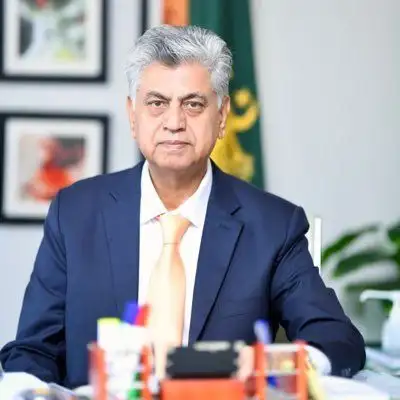

Shavkat Mirziyoyev, the President of Uzbekistan, has asked Vladimir Putin, the President of Russia, to have Moscow participate in the Afghan-Trans railway project.
The news agency RIA Novosti reported that Mirziyoyev informed Putin that he had also discussed the project with the Russian Minister of Transportation.
RIA Novosti reported that Mirziyoyev spoke with Vladimir Putin on Wednesday, in the city of Kazan.
During the meeting, the Uzbek president said that the value of joint projects between Uzbekistan and Russia currently amounts to $45 billion.
The Afghan-Trans railway project, proposed in 2018, aims to create an economic corridor connecting Central Asia with Pakistan's seaports, involving Afghanistan, Pakistan, and Uzbekistan.
The construction cost of this railway is estimated at over 4.5 billion dollars and spans 573 kilometres. According to the plan, the railway route will start in Termez, Uzbekistan, and after passing through the cities of Mazar-e Sharif and Kabul, it will reach Peshawar, Pakistan.
The Taliban's Railway Authority announced on Tuesday, February 20, that a memorandum of understanding for the commencement of the technical and economic study of the "Afghan-Trans" railway project has been signed with Uzbekistan and the United Arab Emirates. It has been stated that the cost of the technical study of this project will be covered by an Arab company.

Local sources in Ghazni, who witnessed the execution of two accused at a stadium in the capital of the province, informed Afghanistan International that the Taliban carried out the execution by shooting down the individuals.
Eyewitnesses said that the Taliban forced the two individuals to lie on the ground and shot eight bullets at each individual through their spine.
They stated that the Taliban forces executed these two individuals at the football field in Ali Baba village in the capital of Ghazni province while imposing strict security measures. According to them, the people who gathered in the field passed through several security checkpoints, and "dozens of Taliban members" were standing in each row among the people in the stadium.
On Thursday, the Supreme Court of the Taliban announced that with the approval of Hibatullah Akhundzada, the leader of the group, two men were executed on charges of murder at a stadium in Ghazni.
The Taliban court disclosed the identities of the individuals as Sayed Jamal and Gul Khan.
The Taliban claimed that Sayed Jamal had killed a person named Amir Mohammad seven years ago, and Gul Khan had killed a person named Mohammad Qasim five years ago in Ghazni province. According to the Taliban, both murders were carried out with a knife.
In the statement by the Taliban, it has been stated that the death sentence of these two defendants was confirmed by the preliminary, intermediate, and final courts of the Taliban, and then Hibatullah Akhundzada, the leader of this group, reviewed and confirmed this sentence.
The execution took place despite concerns raised by human rights institutions which state that the Taliban courts do not adhere to fair trial standards.
In a research report, the human rights organisation, Rawadari highlighted issues such as discriminatory decisions, instances of torture, coerced confessions from the accused, lack of independence and impartiality, and violations of the principle of acquittal within Taliban courts.
The Taliban in Ghazni province urged residents to gather at the Ali Baba village football stadium to witness the execution of these two men.
As per the Taliban's announcement, several high-ranking officials of the group, including judges, had travelled to Ghazni to be present for the execution.

In a joint statement following the Doha conference, Afghan political entities and women activists criticised the focus on the Taliban's role in Afghanistan's crisis, arguing that it fosters a political impasse.
They underscored that a comprehensive resolution to Afghanistan's enduring crisis necessitates the active participation of all stakeholders.
The joint statement issued by the National Resistance Front, Islamic Unity Party, Afghanistan Freedom Front, and various Afghan women's protest movements, lamented the Doha meeting's failure to delve into Afghanistan's profound, decades-long issues.
They pointed out that the meeting neglected critical concerns such as human rights, poverty, gender discrimination, and the plight of forced migrants, accusing the Taliban of flouting fundamental human and civil rights.
Addressing UN Secretary-General António Guterres and the special representatives who participated in the Doha meeting, these groups emphasised on Afghanistan's core challenge: reclaiming the citizens' rights to self-determination and human rights, which they claim have been seized by "the clutches of terrorism.”
Released by the National Resistance Front on Wednesday, their statement highlighted the necessity for the UN's acknowledgment that resolving Afghanistan's crisis demands constructive dialogues with all parties involved.
They also criticised the second Doha meeting for its exclusion of Afghan political and societal representatives, which they believe is a critical given the country's diverse ethnic and cultural fabric.
Furthermore, the National Resistance Front and women's protest groups urged the UN Secretary-General to appoint a special representative focused on fostering a democratic, people-centred political framework reflective of the Afghan populace's aspirations. They advocated for a nominee well-versed in Afghan affairs, adhering to neutrality, and capable of independent action in their mandate.
The statement also warned that an exclusive reliance on the Taliban for addressing the current crisis, the appointment of a new UN special representative, and governance could stymie the political process, thereby broadening the range of alternative solutions outside the conventional political discourse.
Despite the Taliban's formal invitation to the Doha conference by the United Nations, the meeting conspicuously lacked participation from any Taliban opposition groups, with the exception of five civil society members, during its proceedings on February 18 and 19.

Matthew Miller, US State Department spokesperson, stated that the US supports the territorial integrity of “both Afghanistan and Pakistan within their internationally recognised borders”.
This statement came in response to Taliban’s Deputy Foreign Minister’s comments regarding the Durand Line.
Afghanistan is the only country in the world that does not recognise its border with Pakistan. Abbas Stanikzai, Taliban’s deputy foreign minister, had said that the Taliban does not recognise the Durand Line as the official border between Afghanistan and Pakistan, like the previous governments.
In response, the Ministry of Foreign Affairs of Pakistan called Abbas Stanikzai’s statements "self-serving and fanciful".
However, Stanikzai’s statement had been welcomed by Hanif Atmar, the former foreign minister of Afghanistan. On February 17, Atmar wrote on X social media platform that despite the differences with the Taliban, he agrees with the statements of this Taliban official and that Stanikzai is not alone in his national stance.
18,000 Special Immigrant Visas
Meanwhile, on another issue, Miller told Marzia Hosseini, a reporter of Afghanistan International, that last year the US government approved more than 18,000 Special Immigrant Visas (SIVs) to Afghan applicants outside the US.
He said that this number has been the highest in any single year.
The spokesperson of the State Department once again asked the US Congress to pass the Afghan Adjustment Act.

Hassan Kazemi Qomi, Iran's envoy to Afghanistan, stressed that the UN Special Representative should have a profound understanding of Afghanistan and be derived from a country with substantial familiarity and collaboration with Kabul.
Qomi highlighted that during the discussions in Doha, UN Secretary-General António Guterres acknowledged the critical role of regional nations in addressing Afghan matters.
In an interview with the Islamic Republic News Agency (IRNA) on Wednesday, Kazemi Qomi, who also serves as the Islamic Republic's ambassador in Kabul, elaborated on the qualifications for the new UN envoy.
He underscored the necessity for the appointee to originate from an area deeply connected and cooperative with Afghanistan, reflecting a consensus on the importance of regional engagement in Guterres' summarisation of the meeting.
Iran's special representative stressed on the pivotal role of neighbouring countries in fostering stability and security within Afghanistan.
He noted the Doha meeting's efforts to galvanise international support for the UN's regional initiative, tackling critical issues such as terrorism, migration, narcotics, border security, and the pursuit of a political consensus.
The Doha conference which concluded on Monday, did not see the participation of Taliban representatives and witnessed Iranian and Russian delegates abstaining from meeting with Afghan civil society and women's groups at the Taliban's behest.
Previously criticised by Iran's national broadcaster as "fruitless," the Doha meeting was defended by Secretary-General Guterres, who argued that the Taliban's non-participation did not detract from the meeting's efficacy, asserting the productive nature of the discussions held.