• العربية
  • پښتو
  • فارسی
Brand
  • Afghanistan
  • Sport
  • Markets
  • Afghanistan
  • Sport
  • Markets
  • Theme
  • Language
    • العربية
    • پښتو
    • فارسی
  • Afghanistan
  • Sport
  • Markets
All rights reserved for Volant Media UK Limited
volant media logo

No Legal Void In Afghanistan As Quran & Hadith Are Our Constitution, Says Taliban Minister

Apr 1, 2024, 12:29 GMT+1

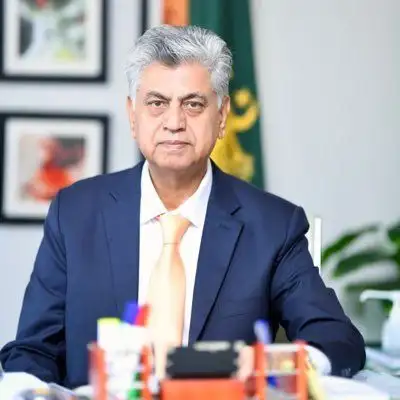
Abdul Hakim Sharei, the Taliban's Justice Minister, has dismissed criticisms regarding the absence of a constitution in Afghanistan under the group’s rule.

He said, "The Quran, the Hadiths of the Prophet, and Hanafi jurisprudence form the basis of our constitution."

In response to concerns about the lack of legislation in the Taliban governance, Sharei noted that following the group's takeover of power, directives from the Taliban leader and various laws were published in five official journals of the ministry of justice.

These statements have triggered objections from a new critic of the Taliban, who has consistently challenged statements made by Taliban officials and spokespersons in recent weeks. Habiburrahman Hekmatyar, the son of Gulbuddin Hekmatyar, has been involved in virtual disputes with Taliban officials following his father's expulsion from his residence by the Taliban’s Justice Minister.

On Monday, Hibiburrahman wrote on X social media platform that the Taliban government lacks a constitution and referred to Sharei’s contradictory statements on this issue.

He pointed out that the Taliban’s Justice Minister had previously indicated intentions to implement the constitution of former king of Afghanistan, Mohammad Zahir Shah, while also stating that work is underway on a new constitution. Hekmatyar's son argued that Sharei's remarks regarding the Quran and tradition suggest a lack of the existence of the Taliban’s constitution.

Furthermore, Hekmatyar criticised the behaviour of the Taliban, saying that such actions mock Islam and push the youth towards "secularism”.

He challenged Sharei’s remarks by questioning if the Quran serves as the Taliban's constitution, then he must clarify, "Where has it been stated that the minister should have three deputies, Kabul should be the capital, and you should be the minister?"

In the early days of the Taliban's rule in 2021, the Taliban's Justice Minister had declared that the group would temporarily implement the constitution of Mohammad Zahir Shah's era, except for provisions conflicting with Sharia law.

Subsequently, last year, the Taliban's deputy prime minister for political affairs announced that, under the directive of Hibatullah Akhundzada, the group's leader, efforts were underway to draft a new constitution. However, despite two and a half years having passed under Taliban rule, the desired constitution is yet to be formulated.
Most Viewed

Female Ismaili Entrepreneur Shot Dead In Badakhshan
1

Female Ismaili Entrepreneur Shot Dead In Badakhshan

2

Afghanistan May Not Remain Intact In Future, Says Pakistani Analyst

3

French Parliament Hosts Two-Day Meeting On Afghanistan

4

Pakistan Welcomes Local Ceasefire Agreement In Kunar & Nuristan Border Areas

5

Taliban, Iran Working On Surveillance App For Afghan Users, Say Sources

•
•
•

More Stories

No Authority Has Right to Interfere in Purification Commission Affairs, Says Taliban MoD

Mar 30, 2024, 15:35 GMT+0

In an official letter addressed to the governors of the Taliban, Mullah Yaqoob, the group’s defence minister, has said that no authority possesses the right to interfere in the affairs of the Taliban's commission for purifying its ranks.

According to the letter, the Taliban has commenced the process of purging its forces under new conditions.

Mullah Yaqoob, son of Mullah Mohammad Omar, the former Taliban leader, not only holds the position of the defence minister, but also leads the Taliban's purification commission.

The letter, issued officially on Saturday, explicitly states that the committee's delegations across all provinces operate independently in their endeavours.

The letter indicates that the deputy governor in each province is tasked with overseeing the Taliban's purification commission and holds the authority to address the issues.

Furthermore, it adds that every member of the Taliban must be stationed in the province where they participated in combat during the 20-year war against the Islamic Republic of Afghanistan.

Previously, the activities of the Taliban's purification commission had sparked numerous objections among group members, with some accusing commission members of discriminating against non-Kandahari individuals.

Taliban’s Governor Calls for More Religious Schools in Panjshir

Mar 30, 2024, 13:07 GMT+0

Mohammad Agha Hakim, the Taliban’s governor in Panjshir, during a meeting with the group's Deputy Prime Minister, called for an increase in religious schools in Panjshir.

The Taliban’s Prime Minister’s office reported on Friday, quoting Hakim, that religious schools in remote areas of Panjshir need to be strengthened.

In a statement, it was mentioned that Hakim had presented a report to Abdul Salam Hanafi, the Taliban’s deputy prime minister on the social, economic, and local governance situation of the Taliban in Panjshir. The details of this report have not yet been released.

However, over the past two and a half years, a significant number of Panjshir residents have been arrested, tortured, and killed for allegedly supporting the National Resistance Front of Afghanistan and fighting against the Taliban. Previously, in July 2022, Mawlawi Abdul Kabir, the Deputy Prime Minister of the Taliban, had stated that the capacity for recruitment in jihadist schools in Panjshir should be increased.

Taliban Members Often Disobey Orders From Hibatullah Akhundzada, Claims Research Center

Mar 30, 2024, 11:28 GMT+0

The Institute for the Study of War, in its new research report, documented numerous instances where Taliban members have defied orders from Hibatullah Akhundzada.

The report highlights that Taliban members have breached their leader's decrees on various issues, including the prohibition of polygamy, nepotism, and extrajudicial killings.

Published on Friday, the new research details the Taliban's governance in Afghanistan, revealing that there is a divergence of opinions among the Taliban leader and senior officials on cultural and social policies.

A significant disagreement is about the ban on girls' education, with members of the Taliban’s cabinet publicly opposing the group's leadership decisions multiple times.

Mullah Yaqoob, Sirajuddin Haqqani, and Abbas Stanikzai are among the officials who have publicly criticised Hibatullah Akhundzada's policies.

The Institute for the Study of War report also mentions that Taliban officials have secretly sent their daughters to schools, blatantly ignoring Akhundzada's orders.

According to the report, Akhundzada has issued several decrees declaring polygamy as "unnecessary and wasteful," and prohibited it. Nonetheless, many Taliban commanders have continued to engage in multiple marriages despite Akhundzada's orders.

Furthermore, in direct violation of the group leader's promise of a general amnesty, Taliban members have widely continued extrajudicial killings of former Afghan government employees.

Additionally, the report states that Taliban officials have appointed relatives and associates to governmental positions, disregarding Akhundzada's directives against nepotism and corruption.

NRF Claims Responsibility For Two Attacks in Kabul

Mar 30, 2024, 10:03 GMT+0

The National Resistance Front (NRF) stated that in two separate attacks on Taliban positions in Kabul city, three Taliban members had been killed, and two others were injured.

Earlier, local sources reported hearing two explosions in western Kabul.

In a statement released on Friday, the front mentioned that its forces targeted a Taliban checkpoint near the Koti Sangi bridge around 7PM, located within the fifth police district of Kabul city.

According to the front, two Taliban members had been killed, and two others were injured in this attack.

The front reported that the second attack took place at 7:30PM, when its forces targeted a Taliban checkpoint near Habibia High School in the seventh police district of Kabul city, resulting in the death of one Taliban member and the injury of another.

NRF did not elaborate on the nature of these attacks.

However, the front released a video of one of these two attacks, showing its members firing towards the Taliban checkpoint. A significant explosion is visible in the video.

Earlier, some residents of Kabul as well as several sources reported hearing two explosions around Koti Sangi. One source described one of the explosions as massive.

The Taliban typically refrains from commenting or acknowledging attacks by the NRF. In recent days, attacks by the resistance front forces on Taliban personnel in Kabul and some other provinces, including Ghor, have intensified.

According to the NRF’s statement, in one of the recent attacks by the front in Ghor province, the Taliban’s commander of the governor's guards and one of his guards were killed.

3 Individuals Publicly Flogged By Taliban Officials In Ghor Province

Mar 30, 2024, 09:09 GMT+0

On Friday, the Taliban publicly flogged three individuals aged between 15 and 24 in the Dawlat Yar district of Ghor province.

The Taliban's information and culture office in Ghor province, without mentioning the charges against them, stated that the sentence for these individuals was carried out in the presence of the group's officials.

Local sources told Afghanistan International that after Friday prayers, the Taliban flogged these individuals at the grand mosque of Dawlat Yar district.

According to the sources, the Taliban lashed each of these individuals 39 times.

From time to time, the Taliban publicly flogs citizens in several cities on various charges.

Despite criticisms of public punishments by the Taliban, the group has continued to punish citizens in this manner. Human rights defenders say that the accused do not have access to lawyers and fair trials.