• العربية
  • پښتو
  • فارسی
Brand
  • Afghanistan
  • Sport
  • Analysis
  • Markets
  • Afghanistan
  • Sport
  • Analysis
  • Markets
  • Theme
  • Language
    • العربية
    • پښتو
    • فارسی
  • Afghanistan
  • Sport
  • Analysis
  • Markets
All rights reserved for Volant Media UK Limited
volant media logo

Pakistan Air Strikes Hit Kunar, Helmand; Taliban Says Nine Civilians Killed

Oct 1, 2026, 09:18 GMT+1

Taliban spokesperson Zabihullah Mujahid said “Pakistani aircraft bombed” residential areas in Kunar and Helmand early on Thursday, 1 October, killing nine civilians, including women and children, and wounding 11 others.

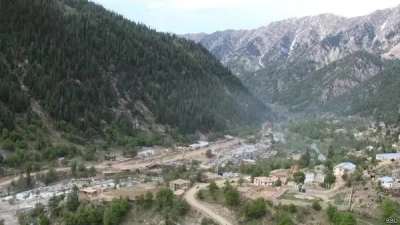
Mujahid said the air strikes targeted the districts of Shultan and Chugam in Kunar province, as well as Garmser district in Helmand.

The Taliban governor’s office in Helmand said two residential homes were destroyed in an air strike on the Safar area of Garmser district at around 3:30 am, killing four civilians and wounding six others.

Local Taliban officials in Kunar also said a “civilian home” was hit during the bombing of Shultan district, killing five civilians and wounding three others.

Mujahid strongly condemned the strikes, describing them as a “crime”, an “act of aggression” and a violation of all accepted principle.

Islamabad Confirms Strikes, says ‘22 Terrorists’ Killed

Meanwhile, Pakistan’s Information Ministry confirmed that the country had carried out air strikes on locations inside Afghanistan.

In a statement issued on Thursday morning, 1 October, the ministry said the targeted and planned strikes were carried out as part of the military operation known as “Ghazab-Lil-Haq” and were based on what it described as precise intelligence.

According to the ministry, camps and hideouts belonging to Tehreek-e-Taliban Pakistan and Baloch militant groups were precisely targeted at two locations in Afghanistan, killing what it called 22 terrorists and destroying large quantities of weapons and ammunition.

Islamabad also said counter-terrorism operations by Pakistan’s security forces would continue with full force to eliminate threats.

Pakistan had previously carried out air strikes on locations in Kandahar, Khost and Paktia.

Most Viewed

Anti-Taliban Front Publishes Images Of 10 Taliban Fighters Killed In Nuristan
1

Anti-Taliban Front Publishes Images Of 10 Taliban Fighters Killed In Nuristan

2

Pashtuns Hold Power While Other Ethnic Groups Are Excluded, Says Islamabad Conference

3

Taliban Should Move Away From ‘Militant Mindset’, Says Pakistani Minister

4

Pakistan Helped Armed Fighters Enter Nuristan, Says Taliban

5

Do Not Test Afghans’ Patience, Taliban Minister Warns Pakistan

•
•
•

More Stories

Opposition Will Use Every Opportunity To Defeat Taliban, Says Former Afghan MP

Sep 30, 2026, 17:15 GMT+1
100%

Amanullah Paiman, a former Afghan MP who attended the Islamabad conference, said Taliban opponents would use every opportunity to defeat the group and would cooperate with any country supporting what he called the Afghan people’s just struggle.

Paiman spoke at the international conference titled “Afghan Predicament and the Trajectory to Peace” in Islamabad. He told Afghanistan International that Taliban opponents were seeking to persuade not only Pakistan, but countries across the region and the world, that continued Taliban rule was not in the interests of Afghanistan or the region.

“We will cooperate with any country that supports the just struggle of the Afghan people,” he said, adding that resistance movements and Taliban opponents would use every opportunity to achieve victory and defeat the Taliban.

Paiman also referred to the current tensions between the Taliban and Pakistan, saying Taliban leaders had lived and operated in Pakistan for many years but that the group’s relations with Islamabad had now become strained.

He said the main threat facing Pakistan came from the Taliban and added that he had raised the issue at the Islamabad conference. He said that Pakistan itself faces many internal problems, but today the greatest dangers to the country come from the Taliban.

The Afghan politician also said life under Taliban rule had become difficult for a large section of Afghanistan’s population and that the group’s opponents were therefore seeking support from countries in the region and around the world.

Paiman accused the Taliban of damaging Afghanistan’s cultural and historical symbols. “They have attacked all our cultural symbols, including the Persian language,” he said. He also held the Taliban responsible for the political and military environment that led to the killing of former Afghan president Mohammad Najibullah.

The international conference “Afghan Predicament and the Trajectory to Peace” was held in Islamabad on 29 and 30 September, with a number of politicians, political activists and Taliban opponents, including Paiman, taking part.

The conference’s final statement said the Taliban administration was not inclusive and lacked political legitimacy. Organisers claimed that Pashtuns, who make up 42% of the population, hold power, while the remaining 58%, including Tajiks, Hazaras, Uzbeks and Turkmens, are excluded from participation in government.

Pashtuns Hold Power While Other Ethnic Groups Are Excluded, Says Islamabad Conference

Sep 30, 2026, 14:15 GMT+1
100%

The Islamabad International Conference on Afghanistan said Pashtuns, who make up 42% of the population, hold power, while the remaining 58%, including Tajiks, Hazaras, Uzbeks and Turkmens, are excluded.

The statement said the Taliban administration was neither inclusive nor legitimate, adding that excluding a large part of society from power created conditions for structural instability.

The international conference, titled Afghan Predicament and the Trajectory to Peace, was held in Islamabad on 29 and 30 September.

Maria Sultan, president of the South Asian Strategic Stability Institute, presented the conference’s final statement.

The statement said Afghanistan was facing a dual crisis of a non-inclusive and unrepresentative government, while also alleging that the Taliban administration provided safe havens for terrorist groups.

The Islamabad conference said Afghanistan was now facing three fundamental challenges concerning legitimacy, capacity and inclusion.

It said excluding different groups from government created structural instability. The statement added that cohesion within the Taliban regime did not amount to national cohesion and argued that the Taliban system was illegitimate not merely because it lacked recognition, but because of its structure.

The Taliban has described its government as inclusive, saying people from different ethnic groups are represented within its institutions. Critics, however, say the presence of individuals from different ethnic backgrounds does not necessarily amount to political participation by ethnic and social groups in major decision-making.

Current Government Does Not Represent Afghans

In the section titled the Islamabad Declaration 2026, participants said the current Taliban government did not represent the people of Afghanistan.

The document said that control does not mean legitimacy; the absence of war does not mean peace; and regime cohesion does not mean national cohesion.

The declaration also said genuine change was not possible within the Taliban’s current framework and argued that a government excluding women and minorities could not guarantee stability, development or respect for human rights.

Participants called for power to be returned to the Afghan people through the establishment of an inclusive, balanced and modern government.

Warning Over Girls’ Education And Expansion Of Religious Schools

Another section of the statement focused on Taliban restrictions on women and girls.

The document said depriving women and girls of education, employment and parts of public life was among the factors weakening Afghanistan’s capacity.

It also warned about the expansion of religious schools, saying their number had risen to around 22,000 over the past five years, compared with about 18,000 regular schools.

Participants said Afghanistan’s education system should provide religious education alongside science, technology, vocational training and critical thinking.

The declaration described the exclusion of women, who make up roughly half of Afghanistan’s population, as strategic suicide, saying that without women’s participation and an inclusive political system, the younger generation could not be protected from poverty, extremism and violence.

Concern Over Presence Of Armed Groups

The Islamabad conference also warned about the presence and activities of armed groups in Afghanistan.

The statement said more than 20 groups had safe havens in Afghanistan and that their continued activities could have security consequences for Pakistan, Iran, Central Asia, Russia, China and other countries.

The Taliban has denied the presence of terrorist groups in Afghanistan and has repeatedly said it will not allow Afghan territory to be used against other countries.

The declaration called for the establishment of a joint monitoring mechanism involving the United Nations, the Organisation of Islamic Cooperation and the Shanghai Cooperation Organisation to assess commitments related to preventing safe havens, recruitment and financing for armed groups.

Criticism Of International Community

Participants at the Islamabad conference also criticised the international community’s approach towards Afghanistan.

The statement said there was a contradiction between the principles set out in the charters of the United Nations, the Organisation of Islamic Cooperation and the Shanghai Cooperation Organisation and the “tolerance” of Afghanistan’s current situation.

It said engagement with the Taliban without clear benchmarks had failed and argued that any future engagement should be linked to criteria concerning women’s education and employment, political participation, citizens’ rights and efforts against armed groups.

The declaration also called for greater transparency in international aid, saying assistance should reach families directly, particularly women and children.

The Islamabad Declaration 2026 concluded that Afghanistan’s crisis was not solely a matter concerning the government in Kabul but was also linked to what it described as unfulfilled responsibilities of the region and the international community.

Participants warned that ignoring what they called Afghanistan’s non-Taliban majority could become a strategic failure, with security and humanitarian consequences extending beyond Afghanistan’s borders.

Using the phrase Kabul governs, Kandahar commands, the statement said key decision-making within the Taliban structure was concentrated under the group’s leader in Kandahar.

In the statement it is said that forty-two per cent, the Pashtuns, govern, while 58 per cent, including Tajiks, Hazaras, Uzbeks and Turkmens, are excluded.

Do Not Test Afghans’ Patience, Taliban Minister Warns Pakistan

Sep 30, 2026, 13:22 GMT+1
100%

Noorullah Noori, the Taliban’s Borders, Tribes and Tribal Affairs Minister, warned Pakistan and the group’s armed opponents, saying Islamabad should learn from Afghanistan’s history and that Taliban opponents would be “defeated” if they chose war.

Speaking on Wednesday at a meeting with Kuchi elders from six provinces, Noori said those seeking to destabilise Afghanistan would face “serious consequences”.

Relations between the Taliban and Pakistan are highly strained, with both sides accusing each other of supporting armed opponents.

Taliban and Pakistani forces have repeatedly clashed along the border, and last week Pakistan carried out air strikes on targets in several Afghan provinces.

Referring to the tensions, Noori said: “Pakistan’s army and intelligence services should understand the people of Afghanistan from a historical, ideological, political and practical perspective.”

He added that many books had been written about Afghanistan and said Pakistan should learn from the fate of powers that had fought in the country.

The Taliban minister claimed that both the Soviet Union and the United States had been defeated in Afghanistan, saying: “The Americans will write in their history that they were defeated in Afghanistan.”

Addressing Pakistani officials, he added: “Study history, the Afghans and their politics. You should not test the patience and endurance of Afghans.”

In another part of his remarks, the Taliban minister criticised the group’s political and military opponents, including the National Resistance Front and other armed groups.

Referring to nearly five years of Taliban rule, he said: “From whom are you liberating Afghanistan? You are in other countries and say you are resisting to free Afghanistan. From whom do you want to gain freedom?”

Taliban opponents, including the Afghanistan Freedom Front, National Resistance Front and United Front of Afghanistan, have stepped up attacks against the Taliban in recent months.

Noori said Taliban opponents had stood alongside what he called “occupiers” during the presence of US and NATO forces in Afghanistan, but now spoke of fighting for freedom.

He claimed that Afghanistan was now ruled by a “government of religious scholars, martyrs, the people and victims”, adding: “This regime is Islamic, Sharia-based and Afghan.”

The Taliban minister also asked what system the opposition wanted to replace the current administration with, saying the Afghan people were Muslims and that armed resistance against Taliban rule had “no basis in Sharia”.

Noori urged opponents to abandon armed struggle and return to Afghanistan. “Afghanistan is the home of all Afghans. We believe in understanding and we will talk with you,” he said.

He added: “Return to your country and live peacefully. But if you come with guns, you will be defeated.”

Taliban opponents have repeatedly challenged the legitimacy of the group’s administration, saying the Taliban seized power by force, established an ethnically and gender-exclusive government, excluded women from public life and marginalised ethnic communities.

Taliban Should Move Away From ‘Militant Mindset’, Says Pakistani Minister

Sep 29, 2026, 17:55 GMT+1
100%

Pakistan’s Information Minister Attaullah Tarar urged the Afghan Taliban to move away from what he called a militant mindset and adopt the approach of a responsible government, saying their policies were driving tensions with Pakistan.

Speaking at a conference on Afghanistan in Islamabad, Tarar said Pakistan had repeatedly tried to resolve its differences with Kabul through dialogue, but continued insecurity and the activities of armed groups remained the biggest obstacles in relations between the two countries.

The conference, held in Islamabad on Tuesday, focused on the situation in Afghanistan and prospects for peace in the region.

Tarar said Pakistan and Afghanistan were neighbouring countries with deep historical, geographical and cultural ties and would inevitably have to live alongside one another.

He said Islamabad had consistently supported peace, dialogue and peaceful coexistence, but questioned whether there was sufficient willingness on the Afghan side to achieve peace.

The Pakistani information minister said his government had made several attempts in recent years to resolve problems with the Taliban. According to him, Pakistani delegations had travelled to Afghanistan several times, while talks had also been held in third countries, including Istanbul and Doha.

Tarar repeated Islamabad’s allegations against the Taliban, saying terrorist safe havens and the presence of armed groups on Afghan soil were among the main obstacles to peace between the two countries. He claimed that banned organisations continued to operate in Afghanistan.

Pakistan has repeatedly accused the Taliban in recent years of failing to prevent armed groups opposed to Islamabad from operating from Afghan territory. Taliban officials have rejected the allegations and say they do not allow Afghan soil to be used against any country.

Tarar also said peace and stability in Afghanistan could create significant economic and trade opportunities for the region.

He added that Afghanistan had the potential to become a bridge between Central Asia and Pakistan, allowing Central Asian countries to gain access through Pakistan to its ports and warm-water routes.

Ties With Taliban At ‘Point Of No Return’, Says Pakistani Official

Sep 28, 2026, 12:14 GMT+1
100%

Pakistan’s Express Tribune has reported that relations between Islamabad and the Taliban have reached a stage where a diplomatic reset is becoming increasingly difficult.

A senior Pakistani official involved in Afghanistan policy told the newspaper that relations between the two neighbours were likely to become even more strained.

“We have, I think, reached a point of no return,” the official said.

The report, written by journalist Kamran Yousaf, said that despite recent efforts by Türkiye and Qatar to reduce tensions between Islamabad and Kabul, Pakistani officials believe the relationship could deteriorate further.

“We know the Taliban so well. They are not going to mend their ways,” the unnamed Pakistani official told the Express Tribune.

The official added that the Taliban’s measures to address Pakistan’s security concerns “are not enough and are cosmetic in nature.”

According to the report, the head of Türkiye’s intelligence service travelled to Kabul and Islamabad as part of regional efforts to ease tensions. However, the diplomatic initiative collapsed before it could gain traction.

The newspaper reported that a day after Turkish and Qatari officials held meetings in Kabul, a deadly attack targeted the police lines in Kohat, with one of the suicide attackers identified as an Afghan national.

Pakistani officials cited the attack as evidence of the continued presence of terrorist groups on Afghan territory, and Pakistan subsequently carried out strikes inside Afghanistan.

The Express Tribune reported that the Taliban responded by sending rudimentary drones towards Pakistan, which Pakistani officials said were neutralised before causing casualties or significant damage.

Pakistan then launched further strikes against drone storage facilities and launch sites at around 10 locations in Afghanistan, including one target in Kandahar.

The report also said the Turkish delegation had expected to meet Taliban leader Haibatullah Akhundzada in Kandahar, but that he instead deputed a member of his staff to meet the delegation. The move was not well received by the Turkish side.

The report further noted that some Pakistani officials believe the growing rift could change perceptions among anti-Taliban groups. For years, some of these groups had viewed Pakistan as still somehow aligned with the Taliban. As tensions deepen, that perception may shift.

“If the Taliban regime’s writ is challenged further, it won’t be a surprise,” the official said.