One Taliban Fighter Killed In Kabul, Claims NRF
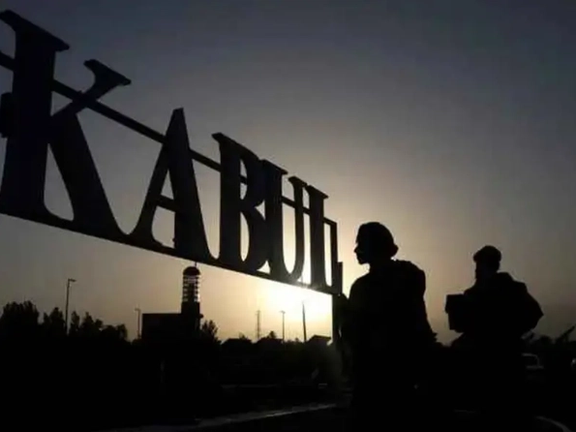
On Sunday, the National Resistance Front (NRF) announced that it had attacked a Taliban checkpoint in the Company area of Kabul.
On Sunday, the National Resistance Front (NRF) announced that it had attacked a Taliban checkpoint in the Company area of Kabul.
In a statement on the X social media platform, the front said that a Taliban fighter had been killed and three others were injured in this attack.
NRF stated that in this attack, neither civilians nor NRF forces were harmed.
The Taliban has not yet commented on this attack.
NRF, an anti-Taliban military and political faction, has carried out numerous attacks against the group in the past two and a half years.

Najibullah Haqqani, the Taliban's Minister of Telecommunications and Information Technology, has declared that his ministry has completed a plan to limit or entirely block access to specific social platforms, including Facebook, in Afghanistan.
Haqqani argued that shutting down Facebook would help to "prevent the waste of youth's time and resources" and curb exposure to "immoral content."
During an interview with TOLOnews, Haqqani expressed concern over the state of Afghan youth, describing them as "scientifically weak and largely illiterate," and criticized their consumption of social media for benefiting corporations at the nation's expense.
While no specific timeline for the implementation of this plan was disclosed, Haqqani revealed that the Ministry of Telecommunications and Information Technology is preparing a policy to enact the Facebook ban in Afghanistan.
The minister stressed the importance of education for Afghan youth over time spent on social networks.
This announcement follows a directive from Mullah Hibatullah Akhundzada, the Taliban's supreme leader, instructing the cabinet to consider the proposal to disable Facebook access.
Additionally, the Taliban cabinet has instructed the Ministry to block other platforms and channels, including TikTok and PUBG, citing their potential to mislead youth.
This move to restrict access to Facebook in Afghanistan comes as "Meta," Facebook's parent company, has already blocked accounts associated with the Taliban and Afghan government institutions under U.S. "anti-terrorism" laws.
The Taliban's Ministry of Justice has declared that two political parties and 75 social associations and charity organisations have been referred to the group's security agencies in the solar year 1402 due to "illegal activities."
Political party activities have been proscribed in Afghanistan by the Taliban.
On Sunday, the Ministry of Justice released a communiqué indicating a review of the activities of hundreds of social associations and charity organisations over the past year.
The ministry disclosed that various political parties and numerous social organisations were introduced to the group's security agencies.
The communiqué did not specify the names of these parties and organisations.
Over this period, the review of 36 additional charity organisations took place, with the operations of 19 organisations being terminated due to the untimely renewal of their operating licences.
This action aligns with the Taliban's prior warnings to political parties in Afghanistan to halt their activities.
Taliban officials have affirmed that engaging in political activities under the guise of a party is forbidden, and violators will be subject to "legal and Sharia" consequences.
Although the Taliban has repeatedly detained and incarcerated many for their civic and political engagements, the group has recently made an official proclamation banning the political activities of parties.
Reliable sources have provided Afghanistan International with footage depicting the Taliban's construction of security brick walls encircling the Eidgah Mosque in Kandahar, amid concerns over potential ISIS attacks.
The construction effort reflects the Taliban's growing anxiety that Hibatullah Akhundzada, their leader, could be an ISIS target during the forthcoming Eid al-Fitr prayers.
The footage, received on Sunday, shows Taliban military units actively transporting and positioning brick barriers around the mosque's perimeter, effectively forming a stringent security barrier.
This development follows a detailed report by Afghanistan International, derived from informed sources, about a security assembly convened by the Taliban in the province, addressing fears of an ISIS incursion during Eid celebrations.
In a security session held in Kandahar last Friday, Taliban officials voiced apprehensions regarding the likelihood of ISIS orchestrating an assault on the Eid congregational prayers.
The officials deliberated on the possibility of ISIS aiming at the Taliban's paramount leader during the Eid al-Fitr prayers in Kandahar, prompting a preemptive effort to select the Eid prayer venue just a night before the occasion.
Moreover, the assembly resolved to augment security and intelligence operations for the Eid al-Fitr prayers in Kandahar, indicating the high level of threat perceived.
Sources stressed that two specific locales have been earmarked for Hibatullah Akhundzada to conduct the Eid al-Adha prayers: the Hazrat Mohammad Grand Mosque and the Eidgah Mosque in Kandahar, with the final decision on the venue to be made on the eve of Eid by Akhundzada's security detail.
The session also highlighted the pressing concern of ISIS infiltrators mingling among the populace.
Following these deliberations, Taliban officials have specifically instructed the central prison authorities in Kandahar to intensify security measures during the Eid festivities, in light of the palpable threat landscape.
These heightened security measures are being implemented against the backdrop of a devastating suicide bombing at the Kabul Bank branch in Kandahar, for which ISIS claimed responsibility, resulting in the loss of at least 43 lives and injuring 45 others.
A source linked to the National Resistance Front (NRF) has informed Afghanistan International that the arrest of three Afghan refugees in Karaj city by Iranian police was a result of a misunderstanding, with no ties to ISIS.
The source highlighted that the arrests stemmed from flawed intelligence, targeting refugees fleeing Taliban persecution in Iran.
Iranian media, referencing Saeed Montazer-ul Mahdi, a police commander, initially described the arrest of these individuals as a crucial capture of an "ISIS terrorist unit." According to a report by the Iranian news agency IRNA, the operation was conducted based on "extensive intelligence efforts by the Alborz Province Police Intelligence, bolstered by the vigilant identification by a responsible citizen."
However, insiders affiliated with the NRF have clarified that the detainees are relatives of Khair Mohammad Andarabi, a notable member of the Afghan National Resistance Front.
These sources categorically refute any links between the arrested individuals and ISIS, pointing to an erroneous operation by the Iranian police. Reports indicate that at least two of the Afghan citizens were injured during the police intervention on their vehicle. The current health status of these individuals is yet to be determined.
Amrullah Saleh, the former Vice President of Afghanistan and leader of the Afghanistan Green Trend, has revealed the identification of 58 high-ranking officials and nearly six thousand operatives within the Taliban's intelligence agency.
Saleh disclosed that these individuals had all previously been stationed in Pakistan, with the majority receiving training there.
In a detailed statement on the social media platform X, Saleh unveiled that the leadership of the Taliban's General Directorate of Intelligence (GDI) had deep ties to Pakistan, where they were predominantly trained. He highlighted that among those identified by the Green Trend's intelligence efforts were key figures responsible for orchestrating terrorist attacks in major Afghan cities over the last two decades, with significant support from Pakistan's Inter-Services Intelligence (ISI).
Saleh criticised the GDI for its attempts to obscure its operations and personnel through aliases and covert tactics, pointing out its vulnerabilities to corruption, foreign infiltration, and nepotism. He emphasised the ISI's substantial influence on the Taliban's intelligence operations.
One notable individual, Tajmir Jawad, was singled out by Saleh for running a bomb-making facility in Kohat, Pakistan, for 20 years before being appointed as the deputy operations director of the Taliban intelligence. Jawad, according to Saleh, operates an independent section within the GDI.
Furthermore, Saleh warned of the Islamic State Khorasan Province's (ISKP) infiltration into the Taliban’s GDI, exploiting corrupt elements to facilitate the movement of personnel and materials for terrorist operations both within and outside Afghanistan.
Saleh also accused the Taliban of suppressing media coverage to hide the surge in criminal activities in major cities, alleging that the majority of kidnappings are perpetrated by the group, especially its intelligence wing.