Taliban Claims To Have Killed Two ISIS Members In Kunar

Bakhtar News Agency reported that the Taliban carried out an operation in Kunar province, in eastern Afghanistan, killing "two ISIS members”.

Bakhtar News Agency reported that the Taliban carried out an operation in Kunar province, in eastern Afghanistan, killing "two ISIS members”.
The state-controlled news agency under Taliban control released a report on Thursday stating that another "ISIS member" was arrested during this operation.
No further information regarding the identities of these individuals has been released yet.
Quoting officials from the Taliban's press office in Kunar province, Bakhtar News Agency reported that the operation was launched on Wednesday night in the Dewgal Valley of Choki district.
Two firearms were discovered and confiscated during the confrontation.
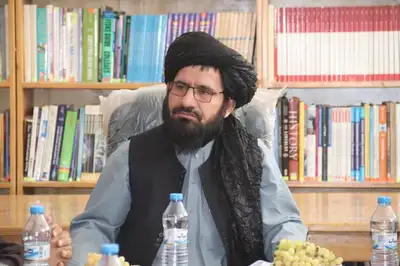
Gulbuddin Hekmatyar, the leader of Hezb-e-Islami party of Afghanistan, in his Eid message, said that Afghanistan is yet to achieve full freedom and independence, and the country's airspace is still under the control of the United States.
According to Hekmatyar, Afghans and people around the world believe that the dollar packages coming from the US is the price of buying Afghanistan's airspace.
However, he emphasised that "we must prove this accusation wrong”.
He referred to the American dollar packages as "poison bags" and said that "sinister intentions" are hidden behind them.
The leader of Hezb-e-Islami urged the Taliban to refuse the cash packages from the US because, in his view, this money does not validate "our faith and integrity”.
In a statement released on Wednesday, from addresses close to Hekmatyar, it has been stated that US unmanned aircrafts continue to roam the Afghan airspace and carry out reckless attacks, and the Taliban are powerless to control them.
Request for Compensation from the US
In his new statement, Hekmatyar wrote that the Taliban should have demanded compensation from the US in the Doha Agreement for the destruction of Afghanistan and the killing of one million Afghans.
According to him, instead of such a demand, it has been stated in the Doha Agreement that "US will assist in the reconstruction of Afghanistan”.
He further added that any kind of political interaction with America must be conditional on paying compensation.
Siege of the US Embassy and Expulsion of American Diplomats
In his Eid message, Gulbuddin Hekmatyar also stated that if the US does not end the "occupation of Afghanistan," the embassy of the country in Kabul should be besieged, and all Americans, including embassy staff, should be expelled from Afghanistan.
This is while the US has not confirmed the reopening of its embassy in Kabul in official statements.

The Human Rights Watch (HRW) has reported that after two and a half years of systematic abuses against women and girls, the Taliban has become bolder in its attacks against women.
Citing the resumption of stoning women to death, the organisation said that the Taliban is imposing abusive moral and social norms on Afghan women.
On Wednesday, HRW wrote on X social media platform expressing concerns that the Taliban's adoption of one abusive policy after another has brought them to their current position, largely due to a lack of accountability from the international community.
HRW emphasised on the importance of governments holding the Taliban responsible for severe violations of women's and girls' rights, urging actions such as filing cases under the women’s rights convention in the International Court of Justice.
The organisation also warned that if these unchecked abuses persist, even more, severe crimes may follow.
Rina Amiri, the US Special Envoy for Afghan Women, Girls, and Human Rights, previously warned that without global support for Afghan women, women's rights everywhere are at risk.
On April 9, 2023, the UN Women’s Office stated that excluding Afghan women from decision-making processes deprives Afghanistan of crucial opportunities to emerge from the crisis.
Over the past two and a half years, women in Afghanistan have been denied fundamental rights such as education, employment, sports, travel, visiting parks, and freely walking in the streets.

General Asim Munir, Pakistan’s Chief of Army Staff, visited border areas near Afghanistan on the first day of Eid al-Fitr.
The Pakistani Army's public relations office stated on Wednesday that Munir assessed the operational readiness of the army and the security situation along the borders with Afghanistan.
The army chief traveled to Miranshah and Spinwam areas in North Waziristan, Khyber Pakhtunkhwa, which are in the vicinity of the Khost province of Afghanistan.
This marks the first visit by Pakistan’s Chief of Staff following the country's airstrikes on Khost and Paktika provinces of Afghanistan.
Pakistan’s air force conducted airstrikes on Paktika and Khost in the early morning of March 18. According to Pakistan, the target of the airstrikes was Pakistani Taliban militants on Afghan soil.
Despite Afghan Taliban being called allies in Islamabad, Pakistan's security concerns about the activities of Pakistani militant groups in Afghanistan have increased following the Taliban's takeover of power in Afghanistan.

Yaqub Rezazadeh, a member of the Iranian Parliament, accused Pakistani border guards and the Afghan Taliban of collaborating with Jundallah, a militant group in Iran.
Rezazadeh said, "Taliban and Pakistan forces are not only weak in securing their borders, but also sometimes they collaborate with Jundallah."
In an interview with the Iranian media outlet, Hayat News Agency, this Iranian official stated, "Iran shares approximately 2000 kilometres of border with Afghanistan and Pakistan, yet both countries lack the necessary control over the security of their borders with our country."
He said that the Iranian border forces bear sole responsibility for securing the eastern borders of Iran with Afghanistan and Pakistan.
Rezazadeh highlighted that the collaboration between the Taliban and Pakistani border forces with Jundallah facilitates the infiltration of this group into Iranian territory.
According to him, while efforts are underway to thwart Jundallah's infiltration into Iran, several members of the Iranian security forces have been killaed in recent attacks.
As of now, officials in Islamabad and the Taliban in Afghanistan have not responded to the remarks made by this Iranian official.

Russia, along with fellow Collective Security Treaty Organization (CSTO) members, voiced their apprehensions about the terrorist threats emanating from Afghanistan, highlighting the persistent issues related to terrorism and drug trafficking.
The Russian state news agency, TASS, reported that during a meeting in Moscow on Wednesday, CSTO members held a detailed discussion on Afghanistan's situation, where attendees noted the ongoing negative trends affecting the nation's social, economic, and security environments. This meeting marked the 32nd session of the organization's Foreign Ministers Council’s Working Group.
The CSTO underscored its readiness to aid in coordinating the efforts of its member states to foster stabilization and kickstart the peace process in Afghanistan, as stated in the organization's release.
Simultaneously in Moscow, the heads of the anti-terrorism national centers from CSTO countries flagged international terrorist organizations and cyber attacks as significant threats facing their nations.
According to TASS, the discussion pointed to the rise and spread of terrorist threats being linked to the activities of international terrorist groups in regions like Afghanistan, Syria, and Iraq, in addition to the situations in Ukraine and the Middle East.
The meeting also delved into concerns over the illicit trafficking of weapons and ammunition into CSTO territories and the increased adoption of advanced technologies, including artificial intelligence, unmanned systems, and robotics, in perpetrating threats.
The CSTO is comprised of Russia, Belarus, Kazakhstan, Kyrgyzstan, and Tajikistan, all uniting under shared security concerns.
