Afghan Refugees Protest In Front of UN Office In Indonesia

On Monday, a group of Afghan refugees in Indonesia started a sit-in outside the United Nations office in Makassar city.

On Monday, a group of Afghan refugees in Indonesia started a sit-in outside the United Nations office in Makassar city.
The refugees say that their asylum pleas have been disregarded for years.
They have warned that their protests will persist until they receive a response from the organisation.
The refugees accuse the Indonesian police of resorting to violent measures against protesters. They allege that following their demonstrations, the local police have detained an Afghan woman.
The protesters called for attention to their immigration cases and for relocation and resettlement to other countries. According to official figures, nearly 12,000 refugees reside in Indonesia, with the majority being Afghan nationals.
Over the past year, Afghan protesters in Indonesia have staged multiple demonstrations in front of the United Nations office, yet their cases remain unaddressed.
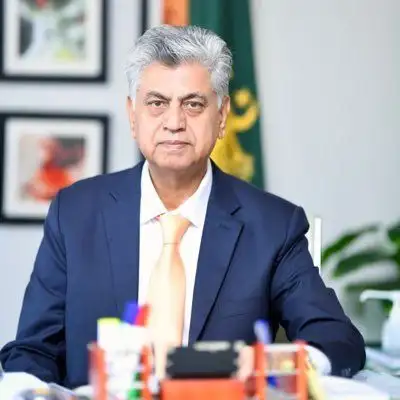
The Taliban’s Ministry of Refugees and Repatriation announced that 1,379 Afghan migrants were repatriated from the Islam Qala crossing on a single day, under both voluntary and forced circumstances.
The ministry's announcement on Monday detailed that the returnees included 308 families, as reported by border officials at Islam Qala.
However, the specifics of how many migrants returned forcibly versus voluntarily had not been disclosed.
Included among the returnees were 21 orphaned children, who have been identified and referred to the International Organisation for Migration for further assistance and family tracing efforts.
In a related statement, Iran’s Interior Minister Ahmad Vahidi declared that Iran expelled 1.3 million "illegal" migrants last year and emphasised that Iran is not accepting new citizens, insisting that all "unauthorised" nationals must exit the country.

The Taliban's Supreme Court has confirmed that three individuals in Paktia were convicted and flogged on charges, including "desecration," "theft," and "insult”.
Two of the individuals received 30 lashes each, while a third was sentenced to 20 lashes, although the specifics of the offences were not disclosed.
This decision was handed down on Monday by the primary court in the Ahmad Aba district of Paktia province.
In addition to corporal punishment, the court also imposed prison sentences, with two of the accused receiving one year each, and the third person being sentenced to eighteen months.
Critics have consistently argued that since their return to power, the Taliban have leveraged accusations such as these to suppress dissent, leading to arrests and trials on a range of charges.
In a similar vein last month, the Taliban court in Kandahar sentenced three individuals to extended prison terms and lashes for their involvement in political activities, illustrating the ongoing use of severe measures, including public lashings, as punishment across Afghanistan.

Mulana Fazlur Rehman, leader of Pakistan's Jamiat Ulema-e-Islam party, has claimed that 30,000 armed Pakistani youths have fought in Afghanistan to support the Taliban.
During a speech to his party supporters in Karachi on Sunday, Rehman contested statements by Pakistan's Chief of Army Staff regarding the border's security with Afghanistan.
He referenced a discussion with General Qamar Javed Bajwa, who claimed that extensive measures, including the installation of barbed wire costing billions of rupees, had been implemented to prevent crossings to and from Afghanistan.
Rehman questioned the effectiveness of these measures. He asked how 20 to 30 thousand armed Pakistani youths participated in the Taliban's conflict against American forces, if the borders had been sealed?
The cleric further scrutinised the alleged border security measures and expenditures made by the Pakistani military, raising concerns about the return of these youths to Pakistan, purportedly more empowered.
Highlighting potential security lapses, Rehman challenged the Pakistani military's oversight, "While you were stationed along the border, how did such a large number of armed men cross it?"
He commented on the credibility of Pakistan's military might and resources, suggesting they are unreliable.
To date, neither the Pakistani military leadership nor the Taliban have responded to Rehman's allegations.
Previously, Pakistani government leaders accused the Taliban of permitting Tehreek-e-Taliban Pakistan (TTP) militants to operate from Afghan soil, alleging that TTP members have launched attacks into Pakistani cities from Afghanistan.
The Taliban have refuted these accusations, labelling the TTP threats as a domestic Pakistani issue.

Reliable sources from Balkhab district in Sar-e-Pul province, reported to Afghanistan International that the Taliban officials have detained and tortured at least 14 local residents.
The families of these detainees have not been allowed to visit them for weeks.
According to local sources, several operatives of the Taliban’s intelligence department, masquerading as mining contractors, have attempted to coerce locals into denouncing the Taliban's oppressive measures.
When some residents voiced complaints about discriminatory practices by the Taliban and expressed sympathy towards resistance movements, they were reportedly recorded by Taliban spies.
Following these events, Taliban forces conducted raids in three villages within the Balkhab district, resulting in the detention of 14 civilians. The Taliban have also demanded that these families surrender weapons allegedly left behind by Mawlawi Mehdi Mujahid, a former commander who had parted ways with the Taliban. Mujahid was reported to have been killed by the Taliban after internal conflicts.
The residents of Balkhab district assert that they do not possess weapons and lack the financial resources to acquire them. Some reports indicate that the Taliban are forcing locals to pay cash instead of surrendering weapons.
In the wake of Mawlawi Mehdi Mujahid’s death, numerous reports have surfaced about widespread human rights abuses in the area. Last year, the Afghanistan Human Rights Commission accused Taliban forces of executing civilians in Balkhab, Sar-e-Pul.
Furthermore, the United Nations Assistance Mission in Afghanistan (UNAMA) in Kabul announced that it was actively investigating these reports of severe human rights violations in the region.

Afghanistan Green Trend (AGT) has reported that due to security concerns related to their leader, the Taliban substantially increased police presence in Kandahar and Helmand provinces, quadrupling the numbers compared to other regions.
AGT, led by Amrullah Saleh, stated that the police force numbers have surged to 22,500 in Kandahar and 16,000 in Helmand.
This augmentation includes special units designated for the protection of Hibatullah Akhundzada, the Taliban's leader, alongside his personal specialised units.
According to AGT, this extensive deployment may be motivated by Akhundzada's concerns over his security. Kandahar, being the residence of Akhundzada, serves as the Taliban's power stronghold.
The report further highlights that a significant portion of Afghanistan's budget, approximately seventy percent, is allocated to the Ministry of Defence, Ministry of Interior, the Taliban's intelligence services, and Akhundzada’s office.
The Ministry of Interior alone, as reported by AGT, has an annual budget of 78 billion Afghanis, making up 31% of the Taliban's total budget. Notably, nearly 20% of this budget is specifically expended in Helmand and Kandahar, surpassing the combined spending of five central provinces.
Additionally, the report notes that of 220,000 staff in the Ministry of Interior, half are officers. AGT emphasised that in this ministry, there is a one-to-one ratio of officers to policemen.
Under the leadership of Sirajuddin Haqqani, the Ministry of Interior has been instrumental in creating employment opportunities for Taliban militias by appointing them as officers, thus securing their financial and occupational status.
