• العربية
  • پښتو
  • فارسی
Brand
  • Afghanistan
  • Sport
  • Markets
  • Afghanistan
  • Sport
  • Markets
  • Theme
  • Language
    • العربية
    • پښتو
    • فارسی
  • Afghanistan
  • Sport
  • Markets
All rights reserved for Volant Media UK Limited
volant media logo

Plan to Seal Eastern Borders & Expel Illegal Immigrants, Says Iranian Parliament Speaker

Jun 12, 2024, 10:12 GMT+1

Mohammad Bagher Ghalibaf, Iranian Parliament Speaker and candidate for the presidential elections, stated in a television interview that addressing the issue of illegal immigrants, most of whom are Afghans, is part of his campaign agenda.
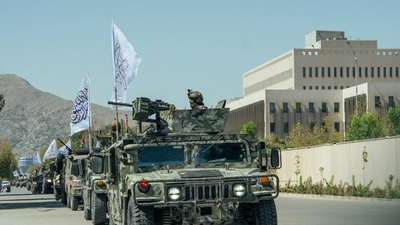
He said that if he wins the election, he will completely seal Iran's border with Afghanistan.

On Tuesday, during a live television programme, Ghalibaf said, "The eastern borders (with Afghanistan) will definitely be sealed with budget allocation throughout the plan."

Ghalibaf, outlining his election programme, emphasised that "unauthorised foreign nationals will certainly be expelled”.

Previously, Iran's Interior Minister announced that USD three billion have been allocated for the plan to seal the eastern border (with Afghanistan).

According to Iranian officials, nearly six million Afghan immigrants currently live in Iran, with a significant portion residing in the country without valid residency documents.

Ghalibaf is one of the first prominent candidates in Iran's presidential election to make Afghan immigrants a focus of his campaign.

Last week, he described Afghan immigrants as a security threat.

Most Viewed

Taliban Ignore Afghanistan’s Interests By Backing Militants, Says Pakistan Army Chief
1

Taliban Ignore Afghanistan’s Interests By Backing Militants, Says Pakistan Army Chief

2

United Nations Delivers Education Kits To Four Million Afghan Children

3

Taliban Renews Call For China To Launch Aynak Copper Mine

4

Taliban Leaders In South-West Hold Security Meet In Kandahar

5

Afghan Deportations Is Strategic Mistake, Says European Parliament Member

•
•
•

More Stories

UN Special Rapporteur Urges Governments to File ICC Case Against Taliban

Jun 12, 2024, 09:30 GMT+1

Heather Barr, a Human Rights Watch official, stated that the UN Human Rights Rapporteur in his new report on Afghanistan has called for countries to criminalise gender apartheid.

Barr wrote that Richard Bennett, UN Human Rights Rapporteur for Afghanistan, has asked governments to file a complaint against the Taliban at the International Court of Justice (ICC) for violating women's rights.

Bennett will present his new report on the human rights situation to the UN Human Rights Council on June 21.

However, he has not yet released the report. On Tuesday, Barr published an article regarding the contents of this report.

She wrote that Bennett has strongly urged countries to hold the Taliban accountable for their crimes against women and girls in Afghanistan.

According to her, "Bennett calls the Taliban’s system of discrimination a crime against humanity, saying it constituted in and of itself a widespread and systematic attack on the entire civilian population of Afghanistan."

In his report, the UN Special Rapporteur has supported the call by women's rights activists for gender apartheid to be recognised as a crime under international law by UN member states.

Currently, organisations and human rights defenders are striving for gender apartheid to be recognised as a crime in international law, similar to racial apartheid in South Africa. However, major world governments have not yet supported this demand.

According to Heather Barr, Bennett has also urged governments in his report to "support the International Criminal Court's investigations into Taliban crimes, including those related to the gender-based persecution of women”.

Additionally, countries should refrain from normalising or legitimising the Taliban until concrete and verified actions in the field of human rights, especially for women and girls, are taken.

The third Doha meeting, hosted by the United Nations and special representatives of countries for Afghanistan, is scheduled for June 30 – July 1.

Earlier, a group of international human rights organisations, in a letter to the participating countries of the Doha meeting, stated that "the world is dangerously close to accepting the legitimacy of the Taliban's rule”.

They urged countries not to grant concessions to the Taliban regarding women's rights.

Iran International Journalist Moved To Safe House In Sweden Following Security Threats

Jun 11, 2024, 16:02 GMT+1

Following threats against Iran International TV network staff, Mehran Abasian, a journalist for this network in Sweden, was placed under the protection of the Swedish security police and moved to a safe house due to security threats.

The Swedish police assessed the security threat as "serious and real”.

In explaining the threat, Abasian said, "Recently, a criminal group in Sweden has been tasked by the Islamic Republic with killing me and one of my colleagues."

This Iran International journalist had previously received numerous threatening messages on social media, especially during the coverage of Hamid Nouri's trial in Stockholm.

Last year, the Swedish Supreme Court rejected Nouri's appeal, and his life sentence for involvement in the execution of political prisoners in the 1980s in Iran was confirmed.

In the latest public threats against Iran International staff, Kazem Gharibabadi, secretary of the High Council for Human Rights and deputy head of the Iranian judiciary, called Iran International "terroristic" on the X social media platform, threatening its staff.

Gharibabadi's remarks came a week after five UN special rapporteurs condemned the cross-border violence and "threats of death and intimidation against Iran International staff”.

In their statement, these experts expressed deep concern over the increase in threats and intimidation against the staff of the media outlet, citing the "knife attack and acts of violence" against Pouria Zeraati, a journalist of Iran International.

Zeraati, one of Iran International's journalists, was attacked by three assailants with a knife in recent months and was hospitalised for several days.

Following Gharibabadi's remarks, an Iran International spokesperson stated, "Iran International TV is an example of independent journalism that provides accurate and unbiased information."

He added that the media outlet prides itself on upholding the highest principles of journalism and ensures that its reports remain fair and unbiased.

In 2022, Iran International was forced to temporarily move its TV broadcast from London to Washington due to security threats.

After a few months' hiatus, Iran International resumed its broadcasts from its new studio in London.

During one of the attempts to "carry out a terrorist operation against Iran International," an Austrian Chechen national named Mohammad-Hussein Dovtaev was identified and arrested by the Metropolitan Police in 2023.

The Central Criminal Court of England sentenced Dovtaev to three years and six months in prison for "terrorist activity against Iran International."

Taliban Governor's Bodyguard Killed During Sexual Assault on Woman in Ghor

Jun 11, 2024, 14:50 GMT+1

Local sources told Afghanistan International that "Hamid Shamerghak”, the bodyguard of Taliban’s governor for Ghor province, has been killed during a "sexual assault" on a woman.

According to sources, this incident occurred on Monday in Muhajirin town of Firozkoh city, and the woman was also killed in this shooting.

Sources claimed that Mullah Hamid was the governor of Charsada district in Ghor and a close associate of Mullah Ahmad Shah Dindost, the Taliban’s governor of Ghor, and his bodyguard.

Based on images obtained by Afghanistan International, the bodies of the victims are bloody. In these images, the Taliban governor's bodyguard is seen wearing civilian clothes.

Local sources said that the two were shot dead by the woman's husband around 1:00pm on Monday. Sources said that the assailant has been arrested.

Taliban officials have not yet commented on this matter.

Last year, a Taliban member named Mullah Qodus was killed in Firozkoh, the capital of Ghor province, after he was shot while attempting to sexually assault a woman.

In June 2022, credible local sources told Afghanistan International that the head of Taliban’s attorney in Ghor province was arrested on charges of sexually assaulting his bodyguard. He was released from prison without trial following his arrest.

At that time, sources said, "Taliban released Ainuddin Samim Muhajer fearing public backlash and the infamy of the group."

Over the past year, numerous reports of Taliban individuals committing sexual assaults have emerged. However, the Taliban has not yet prosecuted any of its members accused of sexual assault. This is while the Taliban occasionally lash citizens in various provinces on charges of sexual relations, publicly.

BRICS Foreign Ministers Calls For Peaceful Solution To Afghanistan Issue

Jun 11, 2024, 13:51 GMT+1

The Foreign Ministers of BRICS called for an immediate peaceful solution to the Afghanistan issue to enhance security and stability in the region.

In a statement, the BRICS Foreign Ministers wrote that tangible actions should be taken in Afghanistan to ensure that terrorist groups do not use Afghan soil.

They emphasised on Afghanistan's independence and peace and supported an Afghanistan free from terrorism, war, and drugs.

The BRICS Foreign Ministers' meeting was held for two days (June 10 and 11) in the city of Nizhny Novgorod, Russia.

According to the statement, the BRICS Foreign Ministers stressed on the need for immediate and uninterrupted humanitarian assistance to the people of Afghanistan and the protection of the fundamental rights of all Afghans, including women, girls, and various ethnic groups.

BRICS, consisting of major emerging economies including Brazil, Russia, India, China, and South Africa, was formed in 2010 with the goal of seeking a stake in the global order. Iran joined this group last year.

The Foreign Ministers of this organisation discussed international issues, strategies to enhance global governance, conflict resolution in multilateral frameworks, and emphasized increasing the influence of developing countries.

Fearing Afghanistan’s Development, Taliban Prevents Girl’s Education, Reports IRCRA

Jun 11, 2024, 12:55 GMT+1

The International Research Council For Religious Affairs (IRCRA) reported that the Kandahari Taliban adopt a stricter and more conservative stance on girls' education compared to the Haqqani Network and the Taliban from Paktika.

According to this Pakistani organisation, the Taliban, fearing the progress of Afghanistan, prevent the education of girls.

This research, titled "Taliban Profile: Views and Strategies," examines the policies and perspectives of the Taliban over the past year.

The researchers traveled to Afghanistan and interviewed dozens of Taliban officials, including Mullah Shirin, the group's governor in Kandahar and senior advisor to Hibatullah Akhundzada, Taliban leader, as well as researchers and members of Afghan civil society.

A copy of this report has been obtained by Afghanistan International.

The authors of the IRCRA believe that the Kandahari Taliban oppose girls' education because they fear that allowing women in public spaces will "lead Afghanistan towards modernisation and progress”.

The study states that the Kandahari Taliban believe that "granting rights to women will blur the boundaries between democracy and Islamic Sharia”.

Fragmentation Within Taliban

The IRCRA noted that the Taliban is a fragmented movement with noticeable regional divisions. Their approach to the Taliban's ideology also varies.

The report identifies three main divisions within the Taliban: extremist/moderate, tribal/regional (such as the contrast between Kandahari and Paktika Taliban), and the distinction between military forces and the political class.

Despite internal rumours of dissent, the Pakistani research institution believes that the Taliban leader's control over the group is "stable and unchallenged”.

Rural vs Urban Taliban

The authors suggest that Kandahari Taliban leaders have lived in rural areas, while Haqqani Network leaders have resided in Pakistani cities, influencing their views on issues like women's education and relations with the outside world.

The study indicates that Kandahari Taliban, who lived in remote areas of Pakistan such as Chaman, Qilla Abdullah, Qilla Saifullah, Kuchlak, and the outskirts of Quetta, were not familiar with modern urban phenomena like women's education.

Conversely, the Taliban from Paktika, who mostly live in Kabul, Khost, Paktia, Paktika, and parts of Logar, have relatively open views on issues like women's education due to their experiences living in Pakistani cities like Islamabad, Bannu, Peshawar, and Dera Ismail Khan.

The study also notes that the Paktika Taliban, due to their close ties with foreign militants like Al-Qaeda and Tehreek-e-Taliban Pakistan (TTP), and their urban experiences, are considered relatively moderate, pragmatic, and open to engagement with the world.

Power and Influence in Kandahar

The IRCRA states that the Kandahari Taliban comprise religious scholars and jihadist commanders residing in Kandahar, Helmand, Farah, Uruzgan, and parts of Nimroz. Kandahar is the group's power center, and the Kandahari Taliban have significant influence within the Taliban leadership.

Hibatullah's Inner Circle

This organisation provided information about members of Hibatullah’s close circle. According to the study, Khalid Hanafi, Minister for the Propagation of Virtue and Prevention of Vice; Fariduddin Mahmood, Head of the Academy of Sciences; Yousuf Wafa, Governor of Balkh; Mullah Shirin, Governor of Kandahar; Abdul Hakim Haqqani, Minister of Justice; Noor Mohammad Saqib, Minister of Hajj and Religious Affairs, and Habibullah Agha, Minister of Education, are close advisors to the Taliban leader.

These individuals advise the group’s leader on important issues, especially those related to religious matters and foreign affairs.

5,000-Strong Suicide Unit

The study revealed that Hibatullah has formed an independent 5,000-strong unit for suicide bomber forces. The IRCRA noted, "The Taliban leader holds great respect for those who voluntarily join the suicide unit."

Despite the end of the war against the US and the former Afghan government, the Taliban's suicide units remain active.

The report stated that the Taliban leader closely oversees the support to the families of deceased fighters, who are under the care of the Ministry of Martyrs and Disabled Affairs. This initiative aims not only to address these families' needs, but also to strengthen loyalty within the Taliban ranks.

Security Apparatus Monopolised by Taliban

The study highlighted that the Taliban only allow their members and relatives into the security apparatus. Taliban fighters have been promised gradual integration into the army and police.

The chances for non-Taliban individuals to join the army and police are very low.

Doha Office's Diminished Credibility

The study noted that some Taliban members view the Doha office with suspicion, causing a rift between Taliban commanders and Doha office members who have engaged in political negotiations with foreign officials over the past few years.

According to an analyst close to a Taliban commander, the Taliban commanders and fighters feel that Doha office members have a luxurious and comfortable life. Additionally, they believe the Doha office members have been given undue credit for the US withdrawal from Afghanistan, while the commanders feel they played the primary role in forcing the US to leave.

The report stated that the Taliban leader has the final say on foreign policy matters.

While it appears that regional countries are moving towards recognising the Taliban, the IRCRA noted that these countries remain cautious. The global community prefers engagement with the Taliban without official recognition, focusing mainly on humanitarian aid to Afghanistan.

Crackdown on Salafists

The study reported that the Taliban have brutally cracked down on Salafists, whom they accuse of supporting ISIS. This suppression extends to banning Salafist activities in mosques, schools, and gatherings.

The authors believe that this crackdown could drive more Salafists to join ISIS.

The study also mentioned the suppression of Uzbek militants. A Taliban commander stated that the Taliban eliminated 300 members of the Islamic Movement of Uzbekistan, including women, in Nangarhar and Kunar.

The Islamic Movement of Uzbekistan poses a threat to Uzbekistan, a country seeking to persuade the Afghan Taliban to suppress and control Uzbek militants through expanded trade and political relations.

Despite the crackdown, ISIS remains a serious threat to the Taliban's rule.

Non-Pashtuns Presence Is Symbolic

According to this Pakistani think tank's study, despite the Taliban appointing some Tajik, Hazara, and Uzbek figures to government positions, their presence is largely symbolic. The power structures in non-Pashtun provinces like Bamiyan are controlled by Pashtun Taliban.