233000 Afghan Migrants Deported From Iran In One Month, Says IOM
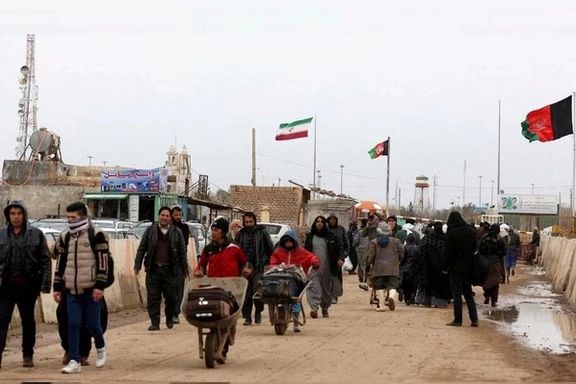
More than 233000 Afghan migrants were returned from Iran between 1 and 27 June 2025, the International Organization for Migration (IOM) confirmed on Monday.

More than 233000 Afghan migrants were returned from Iran between 1 and 27 June 2025, the International Organization for Migration (IOM) confirmed on Monday.
Avand Azeez Agha, a spokesperson for the IOM, told Agence France-Presse (AFP) that the total number of returnees from Iran since January has now surpassed 691000. He added that more than 70 percent of those returned were forcibly deported.
The IOM warned that a sharp decline in foreign aid, coupled with the rising volume of deportations, has severely limited its ability to assist returnees. The organisation said it has been able to provide support to only 3 percent of those sent back from Iran in recent weeks.
The surge in deportations comes amid growing international concern over the treatment of Afghan migrants in neighbouring countries and the worsening humanitarian crisis inside Afghanistan.


Afghan women’s-rights activists have pressed the United Nations to step up independent monitoring and documentation of abuses under Taliban rule, citing a sharp rise in violence and repression.
During a meeting in Ankara on Sunday, 29 June, the activists told UN Special Rapporteur Richard Bennett that women and girls in Afghanistan face systematic violations, including domestic violence, forced and child marriages, harassment, arbitrary arrest and torture. They said human-rights defenders, civil-society activists and journalists are also being targeted.
The group, which campaigns for human and women’s rights from outside Afghanistan, voiced additional concern over the recent surge in deportations of Afghan migrants from Iran, Pakistan and Türkiye, warning that returning women are at particular risk.
Bennett, the UN special rapporteur on the human-rights situation in Afghanistan, has previously reported that some impoverished families are marrying off daughters to avoid forced unions with Taliban members. He has said Afghan women now endure “multiple layers” of gender and ethnic discrimination.
The activists urged Bennett to push for stronger international mechanisms to document abuses and hold perpetrators to account, arguing that without sustained scrutiny, violations will continue with impunity.

A seven-member delegation from the Taliban has travelled to Qatar to attend two United Nations-led working group meetings under the framework of the Doha Process, according to a report by the state-run Radio Television Afghanistan.
The delegation, which departed for Doha on Saturday, includes representatives from the Taliban’s Ministries of Public Health, Interior, Foreign Affairs and Agriculture. They will participate in the third meeting of the Counter-Narcotics Working Group and the second meeting of the Private Sector Support Working Group.
The meetings are scheduled to take place on Monday and Tuesday, 30 June and 1 July 2025, and are part of ongoing efforts to address key issues in Afghanistan through international dialogue.
Qatar’s Permanent Representative to the United Nations, Alya Ahmed bin Saif Al-Thani, previously confirmed her country would host the meetings. She said the sessions would include representatives from the Taliban government, countries involved in the Doha Process, and international experts.
These working-level meetings follow the third official Doha Process conference, held last summer, which also saw participation from a Taliban delegation led by spokesperson Zabihullah Mujahid.
In a recent statement, the Government of Qatar reiterated its commitment to Afghanistan’s future, emphasising its role in coordinating international efforts and facilitating dialogue between the UN, regional stakeholders, and the Taliban authorities.
The Doha Process, launched in the aftermath of the Taliban’s return to power in 2021, has re-emerged as a key diplomatic platform for regional and international engagement on Afghanistan.

The Taliban’s High Commission for Addressing Migrant Issues announced that 9307 Afghan nationals were deported from Iran on Saturday.
According to the commission, 5825 of the deportees entered Afghanistan via the Islam Qala border crossing in Herat province, while another 3482 returned through the Pul-e Abrisham crossing in Nimruz.
In a statement, the Taliban said nearly 1000 of the returnees were transferred to the northern provinces of Badakhshan, Takhar, Kunduz, Baghlan, Balkh and Sar-e Pul. It added that a total of 12,158,000 Afghanis in assistance was distributed among the deported migrants.
Independent sources previously told Afghanistan International that approximately 16000 Afghans were deported on Friday and around 13000 on Saturday. On 26 June alone, an estimated 36000 individuals were expelled.
Since the ceasefire between Iran and Israel, Iranian authorities have significantly increased deportations of Afghan migrants. Reports indicate that more than 110000 Afghans have been returned from Iran in recent weeks.

The Taliban has once again denied the presence of ISIS in Afghanistan, following renewed concerns raised by a senior Russian security official over the group’s alleged activities in the region.
Hamdullah Fitrat, deputy spokesperson for the Taliban, said in an interview with the state-run Radio Television Afghanistan (RTA) that ISIS has been “suppressed” and no longer operates within Afghan territory.
His remarks came in response to statements by Yury Kokov, deputy secretary of Russia’s Security Council, who said Moscow remains deeply concerned about ISIS’s intentions in Afghanistan. According to Kokov, the group aims to use Afghan territory to infiltrate Central Asian nations and Russia itself.
Despite Fitrat’s assurances, Kokov reiterated that Afghanistan continues to pose a source of instability and a threat to neighbouring countries.
While Russia maintains diplomatic and limited economic ties with the Taliban-led government, it remains wary of extremist groups and arms trafficking spilling over into Central Asia, a region viewed by Moscow as a strategic buffer zone.

The Afghanistan Freedom Front (AFF) has condemned Iran’s mass deportation of Afghan migrants, calling the expulsions, and the reported abuse that accompanies them, a violation of international law and basic human dignity.
In a statement issued Sunday, the anti-Taliban political-military group said Afghan asylum seekers in Iran face discrimination, arbitrary arrest and forced return even as the humanitarian situation in Afghanistan remains dire.
“The repression of ethnic groups, religious minorities and the absence of the rule of law under Taliban rule leave returnees with no guarantee of safety or dignity,” the statement said, adding that any deportations under current conditions constitute a breach of human rights.
The AFF noted that millions of Afghans have fled the country since the Taliban seized power in August 2021, driven by insecurity, political persecution and the loss of civil liberties.
Calling on Iran and other Muslim-majority neighbours to honour both their legal obligations and their religious duties to protect refugees, the group urged the United Nations and the wider international community to take “urgent, concrete and effective” steps to safeguard Afghan migrants.
The statement comes amid a sharp rise in expulsions: the International Organization for Migration reported that more than 88000 undocumented Afghans were returned from Iran during the week of 19–25 June, straining already limited aid resources at the border.