• العربية
  • پښتو
  • فارسی
Brand
  • Afghanistan
  • Sport
  • Markets
  • Afghanistan
  • Sport
  • Markets
  • Theme
  • Language
    • العربية
    • پښتو
    • فارسی
  • Afghanistan
  • Sport
  • Markets
All rights reserved for Volant Media UK Limited
volant media logo

UN Deputy Secretary-General Rosemary DiCarlo to Supervise Doha Meeting

Jun 24, 2024, 10:20 GMT+1

A UN source confirmed to Afghanistan International that the third Doha meeting will be held under the supervision of Rosemary DiCarlo, the UN Deputy Secretary-General.

The source added that DiCarlo will meet separately with representatives of the Taliban and Afghan civil society.

The Doha meeting, scheduled for about a week from now, will take place in Doha, Qatar's capital, with the participation of special representatives from several countries, a delegation from the Taliban, and several Afghan civil activists.

The UN's decision to send DiCarlo comes amid widespread criticism that the organisation has "overlooked" the inclusion of female representatives and the issue of women's rights at this meeting.

Critics have stated that the UN, at the request of the Taliban—who have excluded women from all areas of public life, including banning their employment and education—has sidelined women and women's rights from the Doha meeting.

However, Roza Otunbayeva, the UN Special Representative for Afghanistan, has said that women's rights will be addressed in areas such as combating drug abuse at the meeting.

Otunbayeva noted that women make up 35% of the three million drug addicts in Afghanistan, highlighting the importance of discussing this issue at the Doha meeting.

Previously, a Taliban Foreign Ministry official announced that the agenda for the Doha meeting had been shared with the group and that the discussions would focus on private sector issues, finance, banking, and combating drugs.

Meanwhile, some protestors at a demonstration in Paris called on European countries to boycott the Doha meeting.

Rosemary DiCarlo, the UN Deputy Secretary-General for Political Affairs, reportedly visited Kabul a few weeks ago and invited Amir Khan Muttaqi, the Taliban’s Foreign Minister, to attend the Doha meeting.

The previous UN meeting in Doha on Afghanistan, attended by UN Secretary-General António Guterres, included several female representatives and Afghan civil activists.
Most Viewed

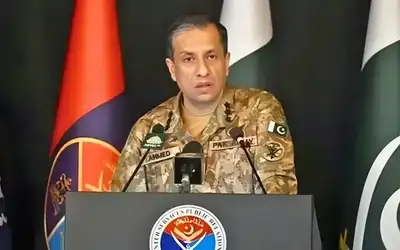
Taliban Ignore Afghanistan’s Interests By Backing Militants, Says Pakistan Army Chief
1

Taliban Ignore Afghanistan’s Interests By Backing Militants, Says Pakistan Army Chief

2

United Nations Delivers Education Kits To Four Million Afghan Children

3

Taliban Renews Call For China To Launch Aynak Copper Mine

4

Taliban Leaders In South-West Hold Security Meet In Kandahar

5

Afghan Deportations Is Strategic Mistake, Says European Parliament Member

•
•
•

More Stories

Women's Rights to Be Highlighted at Doha Meeting, Says UN Spokesperson

Jun 24, 2024, 09:28 GMT+1

Stéphane Dujarric, the UN spokesperson, stated on Sunday that the goal of the Doha meeting is to encourage the Taliban to engage with the world in a coordinated and orderly manner for the benefit of the Afghan people.

Dujarric added that human rights, particularly women's rights, will be highlighted in all discussions at the meeting.

He further noted that the Doha meetings are part of a process, not a one-time event, and that Afghan women and civil society will remain part of this process.

The Taliban will send their representatives to Qatar late next week to participate in a two-day meeting with senior UN officials and special representatives from 25 countries for Afghanistan in Doha.

This is the third UN-led meeting and the first to include Taliban officials. However, the exclusion of women and civil society representatives from the main meeting has sparked widespread criticism.

Tirana Hassan, executive director of Human Rights Watch, told Reuters that excluding women from the Doha meeting risks legitimising the Taliban and causing irreparable damage to the UN's credibility as a defender of women's rights and meaningful participation.

Agnès Callamard, Secretary-General of Amnesty International, stated that marginalising crucial discussions on human rights is unacceptable and sets a very damaging precedent.

Rosemary DiCarlo, the UN's head of political affairs, and Roza Otunbayeva, the UN's special representative for Afghanistan, are set to meet separately with Afghan civil society groups after their meeting with the Taliban.

However, at a press conference in New York, in response to a question from Maryam Rahmati, a journalist for Afghanistan International, about the Taliban's opposition to women's participation in the Doha meeting, Otunbayeva said, "[The Taliban] are not like us. The Taliban have come from the mountains and from war, and turning them into people who sit at the negotiation table and accept our principles is not easy."

Otunbayeva said that the Doha meeting will focus on the private sector and combating drugs. She also noted that the upcoming meeting has created significant expectations that realistically cannot be met in one session.

Pakistani Newspaper Reports Border Guards Clashing with Militants Along Afghan Border

Jun 23, 2024, 16:27 GMT+1

The Pakistani newspaper Dawn reported, citing local sources, that Pakistani border forces clashed with militants in the Maidan area of Lower Dir district in Khyber Pakhtunkhwa province on Saturday.

The Pakistani army has not yet commented on the incident, and no exact details about potential casualties have been released.

According to Dawn, the clashes occurred when "terrorists" attempted to enter Pakistan from the border areas with Afghanistan. Pakistani security forces surrounded the militants at three different points, and army helicopters conducted airstrikes on militant hideouts.

The severity of the conflict prompted the army to dispatch additional troops to the area.

Taliban Urges Islamic Republic to Recognise Group in Afghanistan

Jun 23, 2024, 15:16 GMT+1

Zabihullah Mujahid stated that the Taliban expect the Islamic Republic of Iran to recognise the group more than other countries. Mujahid once again urged the Islamic Republic to prioritise the recognition of the Taliban.

In an interview with Tabnak News Agency, published on Sunday, the Taliban spokesperson said, "Our expectation from Iran is higher. The Islamic Republic should have more interactions in the area of recognition compared to other countries, and this recognition should be a priority for the Islamic Republic of Iran."

Mujahid highlighted that the Taliban have achieved good cooperation with the Islamic Republic of Iran in various sectors, including the economic field.

While the Islamic Republic of Iran, like other countries, does not officially recognise the Taliban, it maintains economic and political relations with the group and has handed over the Afghan embassy in Tehran to the Taliban.

Confirming the Taliban's interactions with the Islamic Republic of Iran, Mujahid said, "We find these interactions beneficial, and we have more trust in this area, and we will continue to move towards further strengthening these relations."

Over the past three years, despite interacting with the Taliban, the Islamic Republic of Iran has repeatedly emphasised the need for an inclusive government to be formed in Afghanistan.

Earlier in June, Hassan Kazemi Qomi, the Islamic Republic's Special Representative for Afghanistan, stated after the Contact Group meeting for Afghanistan in Tehran that suggesting a government with the presence of various groups and "competent individuals" in Afghanistan does not mean interfering in Afghanistan's affairs.

However, in his interview with Tabnak News Agency, Mujahid implicitly considered Qomi's request as interference in the Taliban's affairs. He stated, "The formation of the government, the nature of the government system, inclusivity or exclusivity, is specific and belongs to the Afghans and not to any other country."

Regarding the Taliban's non-participation in the Contact Group meeting for Afghanistan in Tehran, Mujahid said that the Taliban have their own policy about participating in certain meetings.

Iran Prohibits Employing Afghans Without Work Permits In Khorasan Province

Jun 23, 2024, 13:42 GMT+1

Gholamreza Ashrafi, Iran’s Director General of Cooperatives, Labour, and Social Welfare of South Khorasan, announced that employing Afghans without work permits in the province is prohibited, and employers who hire foreign citizens lacking work permits will face fines.

The Mashhad Guild Office recently declared that Afghan workers are banned from working within a 3-kilometre radius of the Imam Reza Shrine. According to Iran's Bazaar News Agency, the fine for each day of illegal employment of Afghans is approximately $200 since the beginning of this year.

Ashrafi reported that in the year 1402 (Solar Hijri calendar), 260 joint inspections of foreign nationals were conducted in South Khorasan Province in collaboration with relevant executive agencies. Similar restrictions on Afghan workers are being enforced in other provinces.

On Saturday, the IRNA News Agency reported that Mohsen Sayyadi, the Director of Inspection and Supervision of Businesses in Mashhad, announced that employing Afghans within a 3-kilometre radius of the Imam Reza Shrine is prohibited. Sayyadi stated that "violation files" have been opened for 31 business units in Mashhad for employing Afghans.

According to the General Directorate of Foreign Nationals of Khorasan Razavi, after Tehran, which has the highest number of foreign immigrants, Mashhad has nearly 400,000 foreign citizens with legal documents and nearly 300,000 foreign citizens without legal documents. No international organisation has confirmed these figures so far.

Previously, the Director General of Foreign Nationals and Immigrants Affairs of Kermanshah Province announced the prohibition of movement, residence, and employment of Afghan immigrants in 16 provinces. These provinces include East Azerbaijan, West Azerbaijan, Ardabil, Zanjan, Kurdistan, Kermanshah, Ilam, Lorestan, Chaharmahal and Bakhtiari, Kohgiluyeh and Boyer-Ahmad, Gilan, Mazandaran, Sistan and Baluchestan, Hormozgan, and Hamadan.

Nicaragua Appoints Non-Resident Ambassador for Afghanistan

Jun 23, 2024, 11:32 GMT+1

In an unprecedented move to establish diplomatic relations with the Taliban, Nicaragua has appointed a non-resident ambassador for Afghanistan.

Nicaraguan officials stated that Michael Campbell, the country's ambassador to China, will manage the affairs of Nicaragua's embassy in Kabul from Beijing. This is the first time Nicaragua has appointed a non-resident ambassador for Afghanistan. Located in Central America, Nicaragua previously had no diplomatic relations with Afghanistan.

Rosario Murillo, the Vice President of Nicaragua, said, "We appreciate the Islamic Emirate (the Taliban) and the people of Afghanistan for the opportunity given to our comrade Michael Campbell."

Nearly three years after the Taliban's return to power, no country has yet recognised the Taliban. The Nicaraguan government has also made no reference to recognising the Taliban government.

In recent months, Nicaragua's ambassador to China had met with Taliban diplomats in Beijing. The Taliban stated that the Nicaraguan ambassador conveyed the president's condolences to the Taliban for the flood casualties in Afghanistan.