Taliban Delegation Visits China for Agricultural Collaboration
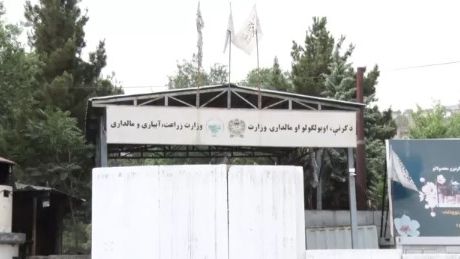
The Taliban's Ministry of Agriculture, Irrigation, and Livestock has announced that a delegation from the ministry has traveled to China.

The Taliban's Ministry of Agriculture, Irrigation, and Livestock has announced that a delegation from the ministry has traveled to China.
The purpose of the visit is to gain insights from China's advancements in the agricultural sector and to participate in a trilateral meeting involving the Taliban, Pakistan, and China.
According to the ministry's press release on Saturday, August 31, the delegation will attend a ten-day meeting in the city of Xi. During this time, the Taliban representatives will familiarize themselves with China's agricultural developments and the country's achievements in attaining self-sufficiency in this field.
The ministry also noted that the delegation will tour China's agricultural facilities and examine the country's farming equipment.
Currently, Afghanistan relies on imported wheat and flour, which are supplied by other countries. The Taliban's Ministry of Agriculture had earlier announced plans to purchase surplus wheat from local farmers and store it to help stabilize market prices.
This visit marks an effort by the Taliban to explore international agricultural practices and potentially strengthen Afghanistan's agricultural sector through collaboration with China.


Mohsin Dawar, the leader of Pakistan's National Democratic Movement, has stated that anyone who wishes to advocate for rights of Pashtuns must first take a stand against the Taliban.
In a message posted on his Facebook page on Friday, he emphasised that without confronting the Taliban, Pashtuns’ rights cannot be achieved. He further said that those who are fighting for Pashtuns’ rights must first make a move against the Taliban.
Referring to some Pashtun nationalists who, in his view, show leniency toward the Taliban and adopt a softer stance against the group, Dawar said that if anyone tries to justify or provide excuses for legitimising the Taliban, their statements against the establishment [Pakistan's military] are baseless and false.
He also clarified that such approaches and policies are not a fight for Pashtun rights but rather a betrayal of those rights under the guise of struggle.
Dawar urged Pashtun nationalists in Pakistan who adopt a soft stance toward the Taliban to learn from "Afghanistan's experience”.
Although Dawar did not explicitly name any individuals, recent days have seen tensions and disagreements on social media between supporters of Dawar's party and those of Mahmood Khan Achakzai, a Pashtun nationalist politician in Pakistan.
Dawar concluded by stating, "Accepting the Taliban is a betrayal of your nation and people."

Abdul Mateen Qani, Taliban’s interior ministry spokesperson, criticised "human rights" as a "ridiculous and disgraceful slogan" in a statement marking the anniversary of the last US soldier's departure from Afghanistan on August 30.
In his statement, Qani described NATO as the "largest military and tyrannical force”. He also said that Muslims should "unite and be cohesive" to combat "infidels”.
He condemned the 20-year presence of the United States and NATO forces in Afghanistan as an invasion, claiming that the Taliban had taught them a lesson.
Qani called August 30 as the day the US was brought to its knees, describing the withdrawal of NATO forces as a "disgraceful exit" and framing it as a victory for the Taliban.
Previously, the Taliban had celebrated August 14 as a victory over "US and its allies' occupation," marking it with a public holiday and commemorating the third anniversary of their takeover of Kabul.
In reaction to the anniversary of the final US soldier's departure, some social media users noted that the Taliban still receives weekly payments from the US and continues to benefit from US support.

Turkmenistan’s Ministry of Foreign Affairs announced that officials from Turkmenistan and the Taliban signed several economic cooperation agreements during a meeting in Ashgabat on Friday, August 30.
These agreements focus on advancing joint projects in the energy and transportation sectors.
Hidayatullah Badri, the Taliban’s Minister of Mines and Petroleum, led the Taliban delegation, which included representatives from the Breshna Company and the Ministries of Foreign Affairs, Finance, and Public Works. The meeting aimed to strengthen bilateral economic relations between Turkmenistan and the Taliban.
Among the agreements signed were initiatives for the Turkmenistan-Afghanistan-Pakistan (TAPI) power transmission line and the construction of facilities for the Torghundi railway line. Additionally, an agreement was reached between the companies involved in the TAPI project in Turkmenistan and Afghanistan, though specifics were not disclosed.
While Turkmenistan does not officially recognise the Taliban, it maintains substantial economic ties with the group.
Abdul Ghani Baradar, the Taliban’s Deputy Prime Minister for Economic Affairs, stated after a virtual meeting with Turkmen Foreign Minister Rashid Meredov that Turkmenistan aims to "start work on the TAPI project in Afghanistan soon”.
On August 8, Baradar and Meredov discussed practical steps for implementing the TAPI project in Afghanistan, expanding the railway station at Torghundi port, and developing comprehensive transit and transportation facilities.
The TAPI project, inaugurated in December 2015 in Ashgabat by leaders from Afghanistan, Pakistan, India, and Turkmenistan, is an 1,800-kilometre pipeline valued at $10 billion. It was initially slated for completion by 2019 but faced delays due to security issues in Afghanistan.
The pipeline begins in western Turkmenistan, travels through Herat and Kandahar in Afghanistan, continues to Quetta and Multan in Pakistan, and ends in western India.
The Taliban have confirmed that all legal stages of the TAPI project are complete and are prepared to collaborate on its implementation.

Michael McCaul, Chairman of the US House Foreign Affairs Committee, has announced plans to meet with representatives of the National Resistance Front of Afghanistan (NRF), including its leader Ahmad Massoud, on September 10.
McCaul expressed his eagerness to hear about Massoud's efforts to liberate the Afghan people from Taliban control.
On Friday, McCaul shared on X social media platform that he and his team have maintained ongoing communication with Massoud and the NRF for years.
He emphasised, “The Taliban’s terrorist regime has destroyed any progress made on human rights in Afghanistan."
McCaul reaffirmed his support for the Afghan people and his opposition to the Taliban rule, describing the mission of the NRF as "honourable”.
In addition to the upcoming meeting, McCaul announced that the House Foreign Affairs Committee will release its report on the US withdrawal from Afghanistan on September 9, with Ahmad Massoud expected to be present during the report's presentation.
McCaul also praised journalist and former US Navy member Shawn Ryan for his efforts to draw attention to Ahmad Massoud and the NRF.
Ryan recently launched a campaign to cut financial aid to the Taliban and invited Massoud to testify before the Congress, with tens of thousands signing the petition.
Ahmad Massoud is currently in the United States. The National Resistance Front's head of foreign relations, Ali Maisam Nazary, welcomed McCaul's remarks, stating that the Front looks forward to the meeting with the leader of the front.
McCaul has been a vocal critic of the Taliban, consistently condemning their actions over the past three years.
He has also been a strong opponent of the chaotic US withdrawal from Afghanistan under the Biden administration, with the House Foreign Affairs Committee summoning several US officials involved in the process.

Taliban officials in Parwan have announced that around one thousand security cameras have been installed in the province.
On Saturday, Radio Television Afghanistan (RTA), under Taliban control, reported that these cameras have been placed in important and busy areas.
Earlier, the Taliban's Ministry of Interior had stated that the security cameras would be connected to the control room of the Taliban police command in Parwan.
This move comes amid occasional attacks on Taliban forces in Parwan province.
The National Resistance Front and the Afghanistan Freedom Front have claimed responsibility for these armed attacks.