Explosion Targets Taliban Employees in Kabul, Leaving 'At Least 12 Dead'

Witnesses reported that Monday's explosion in Kabul was caused by a suicide bomber targeting employees of the Directorate of Monitoring and Enforcement of Taliban Decrees.

Witnesses reported that Monday's explosion in Kabul was caused by a suicide bomber targeting employees of the Directorate of Monitoring and Enforcement of Taliban Decrees.
Photos received show the bodies of at least eight individuals lying on the ground. A source within the Taliban confirmed that 12 people have been killed.
A video showing the dismembered body of the suicide bomber has been obtained by Afghanistan International.
Abdul Mateen Qani, spokesperson for the Taliban's Ministry of Interior, confirmed the explosion in Darulaman, Kabul, but did not provide further details about the nature of the explosion or the number of casualties.
No group has yet claimed responsibility for the incident.
Local residents informed Afghanistan International at around 4:15pm local time that they heard the explosion on the street leading to the Darulaman Palace in Kabul's sixth district.
The explosion occurred as staff from the Directorate of Monitoring and Enforcement of Taliban Decrees were leaving work and heading home.
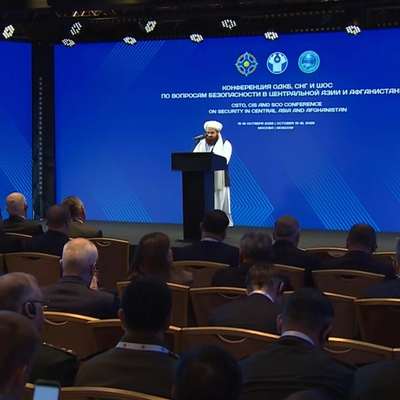

Sources have informed Afghanistan International that Turkish Foreign Minister Hakan Fidan refused to meet Amir Khan Muttaqi, the Taliban's Foreign Minister.
Muttaqi, who made a stop in Türkiye on his return from Cameroon to Kabul, was reportedly met with a cold and indifferent reception by Turkish officials.
Diplomatic sources confirm that despite keeping its embassy open in Kabul, Türkiye is not keen on expanding relations with the Taliban, describing the interaction as one of "necessity”.
The Turkish Ministry of Foreign Affairs has not provided any explanation for Hakan Fidan's refusal to meet Amir Khan Muttaqi.
Sources indicated that during his visit to Istanbul, the Taliban’s Foreign Minister only had brief and informal meetings with lower-level officials.
After being excluded from the group photo at the Organisation of Islamic Cooperation (OIC) meeting and having the Taliban flag omitted, Muttaqi visited the Afghan consulate in Istanbul upon his return to Kabul.
Reports suggest that Muttaqi visited a few mosques in Türkiye as a tourist and met with staff at the Afghan consulate in Istanbul.
Three years after the Taliban's takeover of Afghanistan, no country, including Türkiye, has officially recognised the group's rule. However, diplomatic missions from both sides remain open and continue to engage with one another.

The Taliban's Supreme Court announced that four individuals were flogged in Sayed Khel district of Parwan province on charges of engaging in "same-sex relations”.
According to the Taliban's Supreme Court, these individuals were sentenced to 39 lashes each by the primary court of the group in Sayed Khel district.
In a statement released on Monday, September 2, the court noted that three of the individuals were also sentenced to one year of imprisonment, while the fourth person received a two-year prison sentence.
Over the past three years, the Taliban has publicly flogged dozens of citizens in various provinces for various alleged offences. The group has also carried out executions of some accused individuals.
Human rights organisations and the United Nations have repeatedly urged the Taliban to immediately halt executions and all forms of corporal punishment. However, the Taliban has so far ignored these international appeals.
Abdullah Sarhadi, the Taliban governor of Bamiyan province, recently stated that the group believes that it can reform society through retribution and amputation.

The United Nations has reported that the Security Council intended to issue a statement criticising the Taliban's ratification of the "Law on the Propagation of Virtue and the Prevention of Vice”.
However, the decision was blocked by two member states.
According to the UN, these two countries argued that the ratification of the law is an "internal matter" for Afghanistan.
During a briefing on its September agenda, the Security Council noted that the critical statement regarding the newly ratified Taliban law was expected to be released on August 21. However, two members questioned the appropriateness of such an action under the current circumstances.
The UN did not name the two opposing members, but the report indicated that China and Russia believe that the international community should assist Afghanistan, regardless of issues like human rights.
The report also stated that Beijing and Moscow advocated for dialogue and engagement with the Taliban without increasing pressure on the group.
The UN mentioned that the two members opposing the release of a critical statement about the Taliban's new law argued that the United Nations Assistance Mission in Afghanistan (UNAMA) is still assessing the implications of the "Virtue and Vice" law. They also noted that the Security Council has previously addressed the challenges related to women's rights in Afghanistan.
The Taliban recently announced that their leader ratified the "Virtue and Vice" law, which imposes extensive restrictions on women and girls, including declaring their voices as "awrah" (a concept in Islamic jurisprudence referring to the parts of the body that must be covered).
The ratification of this so-called "Virtue and Vice" law by the Taliban has sparked widespread criticism both within and outside Afghanistan.

The Taliban's Supreme Court announced that the group publicly flogged two people, including a woman, in the Baraki Barak district of Logar province on charges of "moral corruption and running away from home”.
The Taliban has stated that the accused were sentenced to five years of imprisonment and 39 lashes each.
The Taliban's Supreme Court confirmed the sentencing of the accused in a statement issued on Monday.
The Taliban frequently report the implementation of flogging sentences against accused individuals in various provinces of Afghanistan several times a week.
Human rights organisations have repeatedly called on the Taliban to stop the corporal punishment of accused individuals, but the group has ignored these requests.
These organisations argue that the Taliban's judicial system lacks proper standards, and the accused are often denied access to legal representation and other avenues for justice.

Abdul Latif Mansur, the Taliban's Minister of Energy and Water, held talks with the head of an Indian company regarding the handover of the 500 kV Arghandi substation.
Previously, the Taliban had announced that a private company would invest in completing this substation.
In July, Abdul Ghani Baradar, the Taliban's Deputy Prime Minister for Economic Affairs, inaugurated the remaining work on the Arghandi substation in Kabul, with an estimated value of over $8 million.
The Taliban's Ministry of Public Works had stated that the Arghandi substation project would be completed with private investment from the Awfi-Bahram Trading Company. This project, designed to transfer electricity from Turkmenistan through the Khwaja Alwan Desert in Baghlan to the Arghandi area of Kabul, is expected to take two years.
During the inauguration ceremony, Mansur mentioned that the completion of this project, along with other related projects with a total value of $183 million, would provide approximately 1,000 megawatts of electricity from Turkmenistan, addressing a significant portion of the country's power shortage.
The Taliban has provided some information about the role of the Indian company "Goodrich Logistics" in the Arghandi power project. The Ministry of Energy and Water stated that in the meeting, Abdul Latif Mansur directed ministry officials to prepare for the "handover and transfer of transformers for the substation”.
It appears that India, a former ally of the previous Afghan government and an adversary of Pakistan, is now positioning itself to collaborate with the Taliban on infrastructure projects following Central Asia's lead.