Taliban Asks Germany to Revoke Diplomatic Immunity of Afghan Diplomats

Diplomatic sources told Afghanistan International that the Taliban asked Germany to strip the Afghan embassy’s ambassador and diplomats of their diplomatic immunity.

Diplomatic sources told Afghanistan International that the Taliban asked Germany to strip the Afghan embassy’s ambassador and diplomats of their diplomatic immunity.
According to the sources, Germany has entered negotiations with the Taliban regarding the status of diplomats from the previous government.
Previously, a German media outlet revealed, based on official documents, that Germany’s Foreign Ministry accepted the Taliban's move to invalidate the services of Afghanistan’s embassy and consulate in Berlin and Bonn. The outlet reported that Berlin had communicated with the Taliban's foreign ministry in Kabul regarding this matter.
On July 30, the Taliban’s foreign ministry announced that the consular services of 14 Afghan missions that do not cooperate with the Taliban were no longer valid. This list includes the Afghan embassy in Berlin and the Afghan consulate in Bonn.
German media outlet Deutsche Welle reported that Germany’s Foreign Ministry, in an official notice to the acting foreign minister in Kabul, accepted that Afghan consular services would be limited to the Munich mission, which collaborates with the Taliban.
Although Germany does not officially recognise the Taliban, it appears to be under public pressure to deport Afghans with criminal records to Afghanistan, leading to a possible consular engagement with the Taliban.
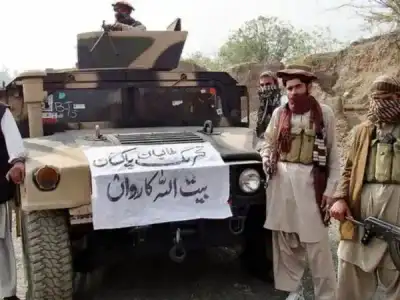
Mumtaz Zahra Baloch, spokesperson for Pakistan's Ministry of Foreign Affairs, emphasised that the use of Afghan territory to promote terrorism against neighbouring countries is not just Pakistan's concern.
During a press briefing on September 5, Baloch stated that Pakistan has repeatedly provided evidence of terrorist group hideouts in Afghanistan. She also highlighted recent UN reports that underscored the presence and activity of terrorist groups in the country.
Baloch urged the Taliban to take decisive action against these groups and ensure that they do not carry out attacks on Pakistan.
In response to comments from the Taliban’s Chief of Army Staff, Fasihuddin Fitrat, who claimed that Tehreek-e-Taliban Pakistan (TTP) controls areas within Pakistan and operates from there, Baloch reiterated Islamabad's stance. She noted that Pakistan has, on several occasions, shared evidence of terrorist sanctuaries in Afghanistan.
Since the Taliban took control of Afghanistan, attacks by militant groups, particularly TTP, have surged in Pakistan.
Pakistani officials consistently claim that the Afghan Taliban provides refuge to TTP fighters, a charge the Afghan Taliban continues to deny.
Pakistan Supports Right To Education for Afghan Girls
In response to another question about the Taliban's recent restrictions on women and girls, the spokesperson for Pakistan’s foreign ministry said that Islamabad’s stance on the rights of women and girls, particularly their inherent right to education, is clear and consistent.
Baloch stated that Pakistan believes every man and woman has an inherent right to education in accordance with Islamic teachings.
She further emphasised that Islam guarantees equal access to education and other rights for women, including inheritance and public participation.
She concluded by stating that the Constitution of Pakistan enshrines these rights for women, expressing hope for similar protections for women across the region.
She added that Islam is a religion of equality and grants women the right to education, inheritance, and public participation. She emphasised that Islam guarantees women the right to a dignified life free from violence.

Ahmed Sharif Chaudhry, Director General of the Inter-Services Public Relations, announced that over the past month, 90 militants have been killed in military operations.
The Pakistani official also claimed that an increasing number of Afghan citizens are joining the Tehreek-e-Taliban Pakistan (TTP).
On Thursday, during a press conference in Islamabad, Chaudhry emphasised that the fight against terrorism will continue until the last extremist has been eradicated.
He stated that in the past eight months, the military has conducted 32,173 intelligence-based operations against "terrorists," adding that only in the past month, 4,000 operations were organised against militants.
The military official reported that the army has been conducting 130 daily operations against terrorists over these eight months, resulting in the deaths of 193 soldiers.
Referencing the increased logistical and training support for terrorist groups in Afghanistan following the Taliban's rise to power, Chaudhry said that Taliban officials should not prioritise "terrorists" over the Pakistani government. He also warned that terrorist groups have gained access to weapons left behind by the US in Afghanistan.
He emphasised that Pakistan and the Afghan Taliban are engaged in dialogue and said that attempts to create division between the brotherly nations of Pakistan and Afghanistan will not succeed. He also highlighted Pakistan's long standing support for Afghanistan during challenging times.
In recent months, the Pakistan army has ramped up its operations against militants in border regions with Afghanistan. Pakistani officials claim that many deadly attacks in the country are planned by the TTP from Afghan soil.
Last week, Pakistan's Foreign Ministry spokesperson urged the Afghan Taliban to hand over TTP members to the Pakistani government. However, Taliban spokesperson Zabihullah Mujahid, in an interview with a Pakistani media outlet, stressed that the TTP is an internal matter for Pakistan and is unrelated to the Afghan Taliban.

Abdusalom Azizov, the head of Uzbekistan's State Security Service, stated that the Taliban is fighting international terrorism to the best of its ability.
At a counterterrorism meeting in Tashkent, Azizov emphasised that Afghanistan is on the frontlines in the fight against ISIS and should not be left isolated.
According to Uzbek media, Azizov, speaking at a Shanghai Cooperation Organisation (CSO) and Commonwealth of Independent States (CIS) meeting in Tashkent, said that mutual trust, regular information exchange, and coordinated actions in the fight against international terrorism are crucial for ensuring stability and security.
The SCO and CIS conference on combating terrorism and extremism was held over two days on September 4 and 5 in Tashkent.
Yevgeniy Sysoev, head of the CIS Anti-Terrorism Centre, warned at the meeting about the rising threat of ISIS-Khorasan, stating that its threat has peaked, with the group's goal being to incite hostility between ethnic groups and radicalise societies.
Since the Taliban's takeover of power, many regional countries have expressed concerns about the presence of terrorist groups in Afghanistan.

The National Resistance Front of Afghanistan (NRF) claimed responsibility for an attack on Taliban forces in Taloqan, the capital of Takhar province, stating they killed three Taliban members and injured another.
According to local sources, three civilians, including a child, were also injured and have been transported to the central hospital in Taloqan.
The NRF’s statement detailed that the attack occurred at 4pm on Wednesday, targeting Taliban fighters near Old Taloqan, in the Kabul Gate area.
Local sources informed Afghanistan International that the injuries resulted from a bicycle bomb explosion in the same area.
Witnesses confirmed that all those injured were civilians, with one being a child.
Taliban officials have not yet commented on the incident.
Following the explosion, local residents reported that Taliban forces cordoned off the area and blocked all access routes.

The UN Secretary-General, in his latest report to the Security Council, warned about the increasing cross-border threats posed by ISIS-Khorasan in Afghanistan.
According to reports, ISIS has ordered its fighters in Afghanistan to carry out attacks in other countries.
This warning was issued in the UN Secretary-General's report to the Security Council regarding ISIS’ threat to international security.
In Antonio Guterres’ report, Afghanistan is described as a dangerous base for ISIS-K to launch attacks on Europe and regional countries.
The report indicates that, following terrorist attacks in Kerman, Iran, on January 3, and in Moscow on March 22, the threat posed by various groups based in Afghanistan has raised concerns among member states.
It further noted that member states have reported ISIS directing its operatives in Afghanistan and neighbouring countries to conduct attacks abroad, while also exploiting Afghan and Central Asian migrant communities for logistical, financial, and operational support.
Despite the dismantling of several ISIS-K cells in Europe, logistical and financial support remains available to operatives travelling from Afghanistan and Central Asia to Europe, according to the report.
Intelligence from member states, whose names were not disclosed in the Secretary-General’s report, indicates that ISIS-K, through its networks between Afghanistan and Turkiye, is capable of transferring its operatives from Central Asia and Afghanistan to Europe for operations.
The report also mentioned that ISIS-K is attempting to recruit Afghan migrants in Europe.
Meanwhile, the UN Security Council's Sanctions Monitoring Team, in its 34th report on ISIS, al-Qaeda, and the Pakistani Taliban, issued a similar warning.
The Security Council's Monitoring Team report indicated that European countries now assess ISIS-K as the largest terrorist threat to Europe.
The committee’s report referred to several operations against ISIS in Belgium, France, Germany, the Netherlands, Spain, Sweden, and Turkiye, highlighting the renewed ambitions, efforts, and potential capacity of the group to carry out large-scale attacks on European soil.
The monitoring team predicted that in the coming year, Europe will face more complex plots from ISIS, which is why both European and non-European countries are deeply concerned about the terrorist threat emanating from Afghanistan.
The report also mentioned that ISIS is focusing on expanding its presence in Africa. The group has demonstrated its presence through bloody attacks on civilians in Africa.
This is not the first time the UN and its members have warned about the threat of ISIS and other terrorist groups in Afghanistan. However, the Taliban has described these warnings as an exaggeration of the ISIS threat.
Nevertheless, the Security Council’s Monitoring Team, in its new report, estimated that the number of ISIS fighters ranges from 4,000 to 6,000.
The report states that Sanaullah Ghafari remains the leader of the ISIS-K branch in Afghanistan, and Abu Ahmad al-Madani (an Iraqi national) commands the group's external operations unit in Kunar, Nuristan, and the Islamic Republic of Iran.
Previously, the Taliban claimed that the ISIS threat in Afghanistan had been significantly weakened. However, this week, ISIS attacked the Taliban’s Directorate of Monitoring and Enforcement of Taliban Decrees in Kabul.
Naseer Faiq, Afghanistan's representative to the UN, said this attack shows that the Taliban's claim of securing Afghanistan is questionable, as ordinary people continue to be killed by terrorist attacks.
The Security Council's committee said that ISIS-K is seeking to control Afghanistan as the country is a territory from which it can infiltrate neighbouring countries and expand terrorist threats to Central Asia, Russia, and Iran.
According to the committee, ISIS has softened its domestic operations in Afghanistan but strengthened its external operations.
The report states that the main routes for ISIS fighters entering Afghanistan are from Central Asia, Turkiye, and the Islamic Republic of Iran. Currently, ISIS has sent part of its forces to Kunar and Nangarhar, and others to Badakhshan, Herat, and Nimroz.
