• العربية
  • پښتو
  • فارسی
Brand
  • Afghanistan
  • Sport
  • Markets
  • Afghanistan
  • Sport
  • Markets
  • Theme
  • Language
    • العربية
    • پښتو
    • فارسی
  • Afghanistan
  • Sport
  • Markets
All rights reserved for Volant Media UK Limited
volant media logo

World Has Not Taken Meaningful Action To Lift Taliban's Ban on Girls' Education, Says HRW

Sep 18, 2024, 09:07 GMT+1

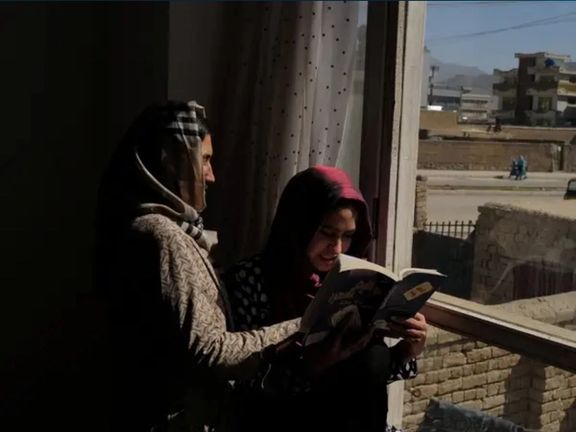
With girls above the sixth grade being banned from attending school, Human Rights Watch has said that the international community has not taken meaningful action to lift the Taliban's restrictions.

The organisation called on the world to exert more pressure on the Taliban to lift the ban on girls' education.

On September 17, 2021, more than a month after the group came to power, the Taliban's Ministry of Education announced in a statement the reopening of schools in Afghanistan, but called only male students and male teachers to schools.

Zabihullah Mujahid, the spokesman for the Taliban government, announced that the closure of schools above the sixth grade for girls is "temporary" and will be reopened when suitable conditions are provided.

Since then, about 1,096 days have passed and girls above the sixth grade have not gone to school.

In a statement on Tuesday, Human Rights Watch said that the Taliban, like the first term of their rule, when they deprived girls of education for five years, this time are wasting "precious time" of girls in the most critical years of their personal and academic growth, learning, and development.

"Girls who dropped out of school during those years [the first round of Taliban rule] mostly never fully recovered, and girls who dropped out of school today will also face lifelong and intergenerational consequences," the organisation said in a statement.

The human rights organisation also said that despite the ban on girls' education above the sixth grade in Afghanistan, there is still a need for governments and international institutions to take meaningful steps to lift the ban.

Human Rights Watch has called on the Taliban to provide safe and quality education to all girls.
"Donor countries should support communities that seek to protect girls' right to education and fund online and underground education initiatives implemented by women," the organisation's statement said.

Most Viewed

Explosions & Aircraft Activity Reported Over Kabul
1

Explosions & Aircraft Activity Reported Over Kabul

2

Nearly 23,000 Militants Operating In Afghanistan, Says Russian Security Chief

3

Afghanistan Instability Is A Direct Regional Security Threat, Says Russia

4

EU Again Calls For Lifting Restrictions On Afghan Women & Girls

5

More Than One Million Added To Afghanistan’s Poor Under Taliban Rule, Says UN

•
•
•

More Stories

UNAMA Chief, Qatar's Representative To UN Discuss Stability in Afghanistan

Sep 17, 2024, 16:52 GMT+1

UNAMA chief Roza Otunbayeva on Tuesday met with Qatar's United Nations envoy, Alya Ahmed bin Saif al-Thani.

During the meeting, they discussed the situation in Afghanistan and international efforts to ensure stability in Afghanistan.

The meeting took place at the UN headquarters in New York, Qatar News Agency reported on Tuesday.
"The meeting discussed the current situation in Afghanistan and international efforts to ensure stability and improve the conditions of the Afghan people," the outlet wrote.

Roza Otunbayeva is scheduled to report on the situation in Afghanistan at a meeting of the UN Security Council on Wednesday morning.
The meeting comes as the Taliban have imposed sweeping restrictions on citizens, especially women and girls.

A new report by the UN Secretary-General shows that the people of Afghanistan, under the rule of the Taliban, face serious challenges, including a weak economy and significant violations of rights and freedoms.

The report shows that the challenges and problems of Afghans have been exacerbated by the Taliban's restrictive policies and behaviour.

Afghan Embassy In Oman Reopened Under Group's Control, Says Taliban

Sep 17, 2024, 15:17 GMT+1

Zia Ahmad Takal, deputy spokesman for the Taliban's Foreign Ministry, announced the reopening of the Afghan embassy in Oman under the management of the group's diplomats.

The Afghan embassy in Muscat, the capital of Oman, began operating on Sunday under the supervision of the Taliban's Foreign Ministry, he said.

On Tuesday, the Taliban's deputy spokesman for the Ministry of Foreign Affairs wrote on his X social media page that the services of the Afghan embassy in Oman have been resumed in cooperation with the host country and the management of the group's diplomats in Muscat.

The Ministry of Foreign Affairs of the Kingdom of Oman has not yet officially commented on the matter.
The Taliban's deputy spokesman for the Ministry of Foreign Affairs, however, called the reopening of the embassy and the resumption of its services a constructive step in strengthening the group's political, economic, and social relations with the Kingdom of Oman.

Earlier, the Taliban's Foreign Ministry announced on August 22 that the United Arab Emirates had accepted the credentials of the group's ambassador. According to the ministry, Badruddin Haqqani, the Taliban's former chargé d'affaires in the UAE, has been introduced as the group's ambassador to the UAE.

While no country in the world has recognized the Taliban so far, some countries in the region have accepted the group's diplomats at the chargé d'affaires level and a small number at the ambassador's level.

Taliban Publicly Flogs Two Women & A Man In Faryab

Sep 17, 2024, 13:53 GMT+1

The Taliban's Supreme Court announced that it had publicly flogged two women and a man in Faryab province on charges of having sex and running away from home.

The court said that it had sentenced one person to 39 lashes while the other two people were sentenced to 29 and 39 lashes each.

The Taliban's Supreme Court wrote in a statement on Tuesday, that the primary courts of Shirin Tagab and Pashtunkot districts of Faryab province had punished the individuals in the presence of the group's officials and the public.

The court reports the flogging of defendants in different provinces of Afghanistan everyday.
However, human rights organisations have called on the Taliban to stop the cruel and corporal punishment of defendants in public.

Anti-Taliban Fronts Carried Out 73 Attacks Against Taliban In 3 Months, Details UN Report

Sep 17, 2024, 12:14 GMT+1

The UN Secretary-General reported that anti-Taliban fronts, including the National Resistance Front (NRF) and the Afghanistan Freedom Front, have carried out 73 attacks against the Taliban.

The report states that from May 14 to July 31, 2,127 security incidents were recorded in Afghanistan, an increase of 53 percent compared to the same period last year.

The UN Secretary-General released his report to the UN Security Council for the past three months on Tuesday (September 17).
According to the report, 80 cases of armed conflict have been recorded in Afghanistan during this period, compared to 37 cases in the same period last year.

The report was published under the title "The Situation in Afghanistan and the Implications for International Peace and Security". It also reported that explosions caused by improvised explosive devices (IEDs) increased by six to 13 during this period compared to last year.

According to the report, despite the fact that anti-Taliban fronts such as the NRF and the Afghanistan Freedom Front have not been able to seize territory, they have carried out 73 attacks against the Taliban during this period.

The report states that the National Resistance Front was responsible for 53 attacks and the Afghanistan Freedom Front was responsible for 21 attacks. The perpetrators of the other 19 attacks remain unknown.

According to the Secretary-General's report, from May 15 to August 1, ISIS-K carried out four attacks in Bamiyan, Kandahar and Kabul, and an operation was carried out by the Taliban against ISIS in Nangarhar.

The report states that contrary to the Taliban's promise of a general amnesty, there have been reports of human rights violations against former military officials.

The United Nations has documented four cases of extrajudicial killings, nine cases of arbitrary detention, and six cases of torture and ill-treatment of former government officials and members of the Afghan National Defence and Security Forces. The UN has not specified who killed or tortured them.

According to reports, the Taliban has continued to arrest and in some cases kill former government military personnel despite a general amnesty.

In the new report, it has been stated that ISIS has continued its propaganda against the Taliban and the international community over the past three months.

According to the report, ISIS "ridiculed" the Taliban's claim of providing security in May by releasing a video.

"On May 26, ISIS released a video in which it threatened all foreigners and the United Nations in Afghanistan, mocking the Taliban's claim that security in the country has been successful," the report reads in part.

The report predicts that 23.7 million people in Afghanistan will need humanitarian assistance in 2024.

The report has said that as of August 30 this year, only 24.9 percent of the $2.9 billion needed to help Afghanistan has been secured.

The report shows that during this period, Taliban officials have continued to appoint people loyal to the group at the national and local levels.
At the national level, the Taliban have appointed two ministers, seven deputy ministers, a deputy spokesperson, the governor and first deputy of the Central Bank, and 12 directors in ministries.

At the local level, the Taliban have appointed four governors, four deputy governors, two mayors, and at least 26 local administrators and 24 district chiefs loyal to the group.

According to the report, Noor Ahmad Agha, the new governor of the Central Bank, is under UN Security Council sanctions.
Media Report Suggests Taliban Jammed Afghan TV Station 'With Iran's Help'

Sep 17, 2024, 11:08 GMT+1

A Gulf-based media outlet, The National, has reported that the Taliban has jammed the only remaining free press television station covering Afghanistan potentially with Iran’s assistance.

In the last week, the group has blocked broadcasts of Afghan International TV (AITV) into the country, denying people the last outlet to uncensored information. The jamming began on September 5 in what the channel called “a blatant violation of the free flow of information and a direct assault on press freedom”.

A ground station inside Afghanistan is sending the disruptive signals back to AITV’s broadcasting satellite, violating international regulations established by the International Telecommunication Union.

As per some sources at Iran International, the London-based sister channel of the station, who spoke to the media outlet, disclosed that a month before the incident the Taliban had “acquired the equipment and expertise for orbital jamming, with the intention of using it against us”.

“We do not have information on where or how the Taliban acquired the knowledge and technology, but we know that the Iranian regime supports the Taliban, and as mentioned earlier, Iran has the necessary expertise,” the source said.

Previously Iran International itself had experienced satellite jamming during the Mahsa Amini protests from 2022 to 2023, from a ground station in Karaj near Tehran.

AITV was launched on the day the Taliban took over the country on August 15, 2021 and soon became the most watched channel for news for its extensive coverage. Since then the station has been seen as a crucial outlet for reliable, unbiased news for the Afghan people following the extremists' victory.

But in May this year the Taliban banned people from co-operating with it with the Ministry of Information saying that “participating in discussions and facilitating the broadcast of this media outlet in public places is prohibited”.

“The Taliban's jamming of our satellite signal is a desperate attempt to silence the voice of the Afghan people,” said the station’s executive editor Harun Najafizada.

He added that it was part of a “systemic campaign to suppress independent media” as the Taliban fears “a well-informed populace” while it keeps its grip on power with censorship and propaganda.

The US State Department also condemned the action stating that the country had “regressed into one of the most restrictive environments for journalists”.