Taliban Bans Journalists From Filming & Photography in Takhar

Sources in Takhar told Afghanistan International that the Taliban has instructed journalists in the province that they are no longer allowed to film and photograph.

Sources in Takhar told Afghanistan International that the Taliban has instructed journalists in the province that they are no longer allowed to film and photograph.
According to sources, this order was recently issued by the Taliban's Department for the Promotion of Virtue in Takhar.
Local journalists in Takhar told Afghanistan International that these restrictions have made it difficult for them to report the news.
The Taliban also recently banned live broadcasting of political programmes in domestic media and warned the media that if they do not comply with the orders, they will take legal action against officials and other media workers.
Earlier, Mullah Shirin, the Taliban's governor in Kandahar, had ordered government departments and residents of the province to refrain from taking photos and videos of living creatures.
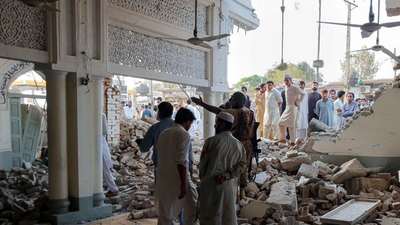

Sources from Baghlan province said that the Taliban’s intelligence agency arrested two former soldiers in Julga district of the province.
According to sources, these military personnel were arrested about two weeks ago and there is no news of them so far. Local Taliban officials have not yet commented on this issue.
According to sources, Noorul Haq Panjshiri, a former police officer in Baghlan province, and Abdul Rashid, a former officer of the Balkh Border Brigade Command, were arrested by the Taliban from their home in Panjsheri village of Julga district.
Local sources confirmed that the local Taliban officials denied the arrest of these former military personnel and despite the repeated visits of the families of these former soldiers to the Taliban's central offices in Kabul, the group has not provided any information about them.
Sources said that these people lived in their village after the fall of the previous government and were not connected to any military or political groups opposed to the Taliban.
According to international human rights organisations, including the United Nations, the Taliban has arrested, tortured, and in some cases killed military and security personnel of the former Afghan government in the three years since they regained power.
The Taliban has denied the accusations and in some cases linked the killings of former military personnel to personal animosities.

The interior minister of the Islamic Republic of Iran has said that the deportation of Afghan refugees is a popular demand and a national programme and is a priority for the country.
Eskandar Momeni claimed that all the resources of the Islamic Republic are spent on immigrants and that Iran can no longer accept them.
On Tuesday, October 1, on the sidelines of a meeting of commanders, deputies, and heads of the Intelligence Organisation of the Islamic Republic's Police Command, Iran's Interior Minister called on the responsible institutions to cooperate in the implementation of the plan to deport undocumented immigrants.
"We have prepared the necessary plans, and other sectors that are in charge of housing, work and jobs for nationals must cooperate so that this plan is properly implemented," he said.
In recent days, there have been reports about the ban on the education of Afghan children in the Islamic Republic's schools and the prohibition of selling bread to Afghans, which have provoked reactions.
Afghan immigrants in Iran do not have the right to rent a house, make transactions, sell or conclude any contracts.
Recently, the Commander-in-Chief of Iran's Police Force announced that by the end of this year, nearly two million Afghans without residency documents will be deported from Iran.

LGBT rights activist Mohra Barakzai was taken to the hospital on Monday evening due to weakness after a week-long hunger strike in front of the German Foreign Ministry in Berlin.
Barakzai, who is still in the hospital, said that she will return to her tent and continue her hunger strike. Barakzai told Afghanistan International on Tuesday that her condition had improved compared to the day before, but that she was still in hospital due to an irregular heartbeat.
The LGBT rights activist said that she had entered the eighth day of the hunger strike and would return to the tent soon.
She began a hunger strike last week to recognize gender apartheid and to protest the difficult situation of LGBT people in Afghanistan.
Last year, Mohra Barakzai went on an 11-day strike in Malmö, Sweden, to highlight the situation of LGBT people in Afghanistan, and spent 150 days in a sit-in tent.
One of Barakzai's demands is to transfer LGBT people from Afghanistan to other countries.
She said that LGBT people in Afghanistan are at risk of facing death, many of them are homeless, they are not given jobs, and some of them are threatened by the Taliban and even their families.
On Monday, Diana Daneshwar, another LGBT activist in Pakistan, was taken to hospital after a five-day hunger strike.
Daneshwar’s relatives told Afghanistan International that they found her unconscious at her home around noon on Monday when a number of people from her community visited her.
Diana Daneshwar has been on a hunger strike in a Pakistani city since Thursday, September 26, to recognise "sexual and gender apartheid and genocide of the Hazaras”.

Robert Dickson, Chargé d'Affaires of the British Embassy in Afghanistan, met with members of the Taliban's Chamber of Commerce.
Younus Mohmand, the deputy head of the chamber, asked the chargé d'affaires of the British embassy for London’s support in release of the foreign exchange reserves of the Taliban's central bank.
Bakhtar News Agency reported the meeting took place in Kabul on Monday. The deputy head of the Taliban's chamber of commerce promised the chargé d'affaires of the British embassy, who is based in Qatar, that the Taliban has taken steps to improve relations with the world.
Britain does not recognise the Taliban government and has stated that normal relations between the Taliban and London is conditional on the observance of human rights, especially women's rights.
Younus Mohmand told the British envoy that Afghanistan is a bridge between South and Central Asia .
This is not the first time that Taliban officials have insisted on the release of Afghanistan's frozen assets. Earlier, Amir Khan Muttaqi, the Taliban's foreign minister, had repeatedly asked for the release of the assets.
After the Taliban’s return to power, more than $9 billion of Afghanistan's assets were frozen in European and American banks.
On November 21, 2022, the United States established a trust fund in Switzerland to protect the asset and transferred $3.5 billion of Afghanistan's foreign exchange reserves to the fund.
The purpose of the fund is to strengthen financial and monetary stability and to confront Afghanistan's economic crisis.
Also, this fund helps to provide sufficient financial resources to prevent a liquidity crisis, pay for electricity imports, printing new passports and banknotes, among others.
Robert Dickson has not released a statement about his meeting. On Friday, September 28, he met with a number of Afghan investors and entrepreneurs in Kabul.
"Strengthening the private sector provides opportunities for women oppressed by the Taliban," he wrote.

Even though the Taliban has remained silent on the killing of Hassan Nasrallah, the group's Deputy Prime Minister for Political Affairs said at a meeting in Kabul that the group wants "stability and order" in the region and the world.
Abdul Kabir also said that they are trying to make Afghanistan self-sufficient in the field of electricity production.
"The group wants stability and order in the region and will fight against groups that disrupt security," the Taliban's deputy prime minister was quoted as saying on Monday, according to a Taliban statement.
It seems that the Taliban’s deputy prime minister reacted to the statement of the countries of the region about the presence of terrorist groups in Afghanistan. Munir Akram Pakistan's ambassador to the United Nations announced at a Security Council meeting last week that the Afghan Taliban are facilitating the activities and attacks of the Tehreek-e-Taliban Pakistan (TTP).
TTP militants use Afghan territory to carry out attacks inside Pakistan on a daily basis, Akram added.
Abdul Kabir said at a conference on investment opportunities in the energy production sector in Kabul that for the Taliban, "the management of water resources is a priority, and the Islamic Emirate intends to pave the way for the implementation of regional projects”.
The Taliban's deputy prime minister added that Afghanistan will soon become a regional trade and transit hub, and Afghanistan's domestic products will enter international markets.
The Taliban has been able to improve their trade relations with some Central Asian countries in the past three years. However, due to sanctions and the inclusion of the group on the UN list of terrorist organisations, the group has failed to improve political and economic relations with other countries.
However, Abdul Kabir also called for the lifting of restrictions on the Taliban's banking system.