Taliban Not Invited To SCO Summit In Pakistan
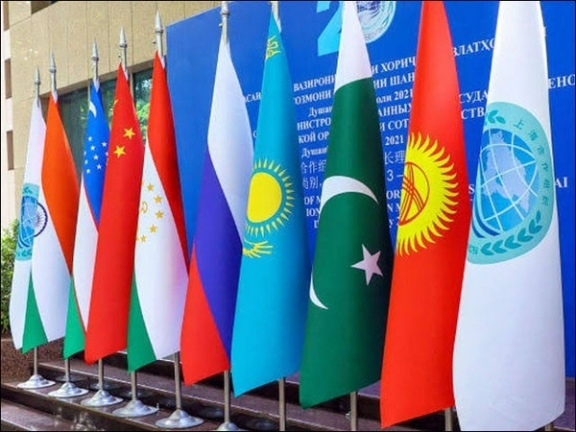
The Taliban has not been invited to the upcoming meeting of the Shanghai Cooperation Organisation (SCO), which will be held in Pakistan on Tuesday, October 15 and Wednesday, October 16.

The Taliban has not been invited to the upcoming meeting of the Shanghai Cooperation Organisation (SCO), which will be held in Pakistan on Tuesday, October 15 and Wednesday, October 16.
According to Pakistani media reports, the organisation's secretariat has not sent any invitations to the Taliban.
So far, no country has recognised the Taliban administration as the legitimate government of Afghanistan.
The Express Tribune, citing diplomatic sources, reported that Afghanistan's membership in the Shanghai Cooperation Organisation (SCO) has been inactive since September 2021 after the Taliban's entry into Kabul.
Afghanistan joined the SCO as an observer member on June 7, 2012.
Islamabad, as the host of the summit, expects to welcome the leaders of various countries and about 200 delegations.
Unlike the Taliban administration, the Mongolian government has been invited as an observer country.

The Speaker of the Iranian Parliament announced that during his visit to Tajikistan, he discussed Afghanistan, the fight against narcotics and arms smuggling.
Mohammad-Bagher Ghalibaf had gone to Dushanbe to attend an international parliamentary session and had a separate meeting with the President of Tajikistan.
Speaking to reporters in Tehran on Friday, October 11, after returning from Tajikistan, the speaker of the Iranian parliament said, "Important issues such as ensuring stability and security in Afghanistan, combating narcotics, and arms smuggling in Tajikistan were discussed."
He said, "Since Iran and Tajikistan are Afghanistan's neighbouring countries, there is a need for dialogue and coordination between the two countries."

The Taliban's Supreme Court announced that the group's criminal court in Kandahar has punished a person for robbery in Kandahar by flogging him in public.
The court said in a statement that the individual was sentenced to 39 lashes and two years in prison.
On Saturday, October 12, the Taliban's Supreme Court announced that the group's local court in Kandahar had sentenced a person to flogging in the presence of employees and public.
Despite condemnation of corporal punishment and human dignity by many international human rights organisations, and calls for an end to these types of punishments, the Taliban continues to impose corporal punishment and torture of defendants across Afghanistan.
International organisations emphasise that the Taliban's courts do not respect the principles of fair trial and that the defendants do not have access to a lawyer.

Jafar Mahdavi, a former member of parliament, claimed that talks between the Taliban and the group's political opponents have "entered promising stages”.
Mahdavi, who has close ties with the Taliban, said that "in the not too distant future, we will see the pleasant and practical results of these talks”.
Earlier, Almas Zahid, a member of the National Council of Resistance for the Salvation of Afghanistan, said that the council has become hopeful for peace in Afghanistan after several meetings with the Taliban.
Zahid said that the international community and the United States are aware of the council's talks with the Taliban.
Jafar Mahdavi wrote on social media platform X on Friday that the Afghan people do not support the continuation of war and violence and expect all parties to "support soft and non-violent capacities and mechanisms, such as direct dialogue”.
The National Resistance Council for the Salvation of Afghanistan is made up of former government officials and leaders of political parties and jihadi leaders. Opponents of the Taliban have repeatedly said that the Taliban is not willing to negotiate to resolve the Afghan issue. Among the opponents of the Taliban, the National Resistance Front and the Afghanistan Freedom Front have continued their armed struggle against the Taliban.
Jafar Mahdavi said that resolving Afghanistan's internal problems will be possible through meaningful and empathetic talks between all parties.

Local sources told Afghanistan International that a vehicle ferrying Taliban members ran over and killed General Abdul Rauf Mohtaj, the chief of staff of the 209th Shaheen Corps in the former government's army.
The incident took place on Friday (October 11) on the Russi road in Kabul's 11th district.
The sources added that the general was a resident of Kohistan district of Kapisa province and lived in the Khairkhana area of Kabul city.
According to sources, the Taliban vehicle fled the area after running over the former army official.
Some sources said that the incident was intentional. Taliban officials have not commented on the matter.
In the past three years, the Taliban has killed a number of former military personnel directly and indirectly.
The Taliban had announced a general amnesty, but according to the United Nations and human rights organisations, the Taliban's arbitrary arrests and extrajudicial killings of former military personnel continue.

Tajikistan's Deputy Foreign Minister said at a meeting between the Russian and Tajikistan parliaments that security cooperation between Dushanbe and Moscow is focused on Afghanistan's problems.
Sodiq Imomi added that the expansion of the activities of terrorist groups and the increase in drug trafficking in Afghanistan are worrisome.
"The security interaction between Tajikistan and Russia is more focused on the Afghan problem, as the situation in Afghanistan after the withdrawal of the Western coalition is worrisome and the trends taking place in the country appear to be very contradictory," Russia's state-run TASS news agency quoted Tajikistan's Deputy Foreign Minister Imomi as saying on Thursday, October 10.
The top Tajik diplomat noted that the ideology of religious radicalism has seriously affected security trends in the region, and "one should not be under any illusions about the Taliban's goals".
Tajikistan's deputy foreign minister also expressed concern over the expansion of terrorist groups and the increase in drug trafficking in Afghanistan, saying, "That is why our countries agree that peaceful dialogue with the aim of forming an inclusive government with the participation of representatives of all political and ethnic factions in Afghanistan will ensure the country's transition to peaceful development."
Emphasising on the security problems in Afghanistan, the Tajik official acknowledged that the programme to strengthen Tajikistan's border with Afghanistan will be completed by the end of this year.
This comes as with the Taliban's rise to power in Afghanistan, Tajikistan has always expressed concern over the emergence of security problems in the border areas with Afghanistan in the past three years. Last year, Russia's ambassador to Tajikistan announced the construction of security checkpoints on Tajikistan's border with Afghanistan. For this reason, the Tajik and Russian militaries held military exercises in areas bordering Afghanistan in April this year.
