Taliban Publicly Flogs Woman & Man In Ghazni
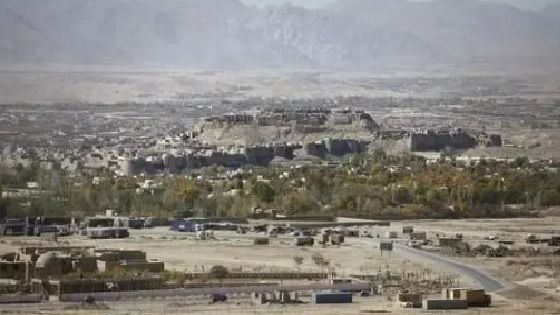
The Taliban's Supreme Court announced that the group's primary court in Muqur district of Ghazni province has punished a woman and a man on charges of extramarital affairs.
The Taliban's Supreme Court announced that the group's primary court in Muqur district of Ghazni province has punished a woman and a man on charges of extramarital affairs.
The court said in the statement that the individuals were sentenced to 39 lashes in public.
On Monday, November 11, the Taliban's Supreme Court wrote that it had sentenced one of these individuals to one year in prison and the other to five years in prison.
The Taliban considers public flogging to be an order of "Islamic law" and continues corporal punishment throughout Afghanistan.
Last week, the group flogged at least 30 men and women in front of the public on various charges in Jawzjan, Paktika, Kabul, Maidan Wardak, Parwan and Nangarhar provinces.

Malala Yousafzai, the Nobel Peace Prize winner, has warned that the Taliban's ideology is not limited to Afghanistan, but has also spread across Pakistan and will spread to the rest of the world too.
Yousafzai told the British newspaper The Times that this ideology is spreading because the world is not doing anything about it.
In an interview with the newspaper, Yousafzai stressed that Afghan women are exposed to "gender apartheid" under the Taliban's rule.
"Afghanistan is the only country in the world where girls are barred from secondary and university education," she said.
Regarding Afghan women's right to work and education, Yousafzai said, "Afghan women need support, they need equal rights, and I say that women's rights are at stake."
"My priority is the right of girls to education and women's right to work, which is at stake in Afghanistan," she added. "If we fail to take steps for women in Afghanistan, we will see a continuation of a severe form of gender discrimination."
In response to a question about the increase in terrorism outside Afghanistan, the women's rights activist said, "The Taliban's ideology is not limited to Afghanistan, it has spread to Pakistan, and we are witnessing this increase in other parts of the world as well."
She warned that the Taliban's "lack of accountability" to countries around the world has caused the group to continue oppression of women without fear of the consequences of its behaviour.
In an interview with Sky News, Yousafzai also criticised the international community's inattention to the situation of Afghan women.
Referring to Donald Trump's victory in the US election, she said, "We need courageous leaders who stand with Afghan women and support their rights."
Caitlan Coleman, an American citizen, who was imprisoned by the Taliban and the Haqqani Network for five years, has filed a lawsuit against the Taliban in a court in the US state of Pennsylvania.
The purpose of the complaint is to hold the Haqqani Network and the Taliban accountable as two terrorist groups.
Coleman and her husband, who later separated, were kidnapped by the Taliban in 2012. She was seven months pregnant at the time of her captivity. The family was finally liberated from the Taliban’s captivity by Pakistani forces in October 2017 after a clash in a border area.
Motley Rice Law Firm, representing the Coleman family, filed a lawsuit in a district court in Pennsylvania this week. The company said in a statement Friday (November 8) that the lawsuit filed under the Anti-Terrorism Act, addresses alleged acts of international terrorism, assault and battery, false imprisonment and intentional infliction of severe emotional distress.
The Haqqani Network and the Taliban are both designated as Specially Designated Global Terrorist (SDGT) organisations by the US government.
Michael Elsner, an attorney with Motley Rice, commented on the psychological and physical effects of the captivity: "Caitlin’s life will never be the same. She will constantly battle the physical and psychological impacts of her captivity. Even worse, her children who were born while being held hostage will endure and carry this trauma with them for the rest of their lives. The atrocities they endured at the hands of the Haqqani Network and the Taliban are unconscionable. We are committed to holding these groups accountable for their actions."
Coleman gave birth to three children during her incarceration.
The lawsuit states that during their five years in captivity, Coleman's family was subjected to severe physical, psychological and social pressure, and in addition to isolation, they were subjected to constant harassment and terror. "The Haqqani Network and the Taliban used the family as a tool to pressure other countries, including the United States," the statement said.
The lawsuit also brings a claim on behalf of Caitlan’s mother, Lynda Coleman, who tirelessly advocated for her daughter and their safe return.
"Nothing is more precious to me than the safe return of my daughter and grandchildren," Linda was quoted as saying in the statement. Years of worry and ignorance were a daily nightmare for me and my family."
As the main plaintiff in the case, Caitlan Coleman stated, “I am seeking what justice I can for the years of normalcy my children and I lost while being held by the Haqqani Network and Taliban. Three of my children were born in captivity and began their lives in those circumstances. It is important to me to stand up and send a message to terrorist forces abroad – holding Americans hostage is terrorism, and it cannot come without consequences. If there are not repercussions for these criminal and abusive actions, this could be seen as an incentive to do this to other Americans in the future. My thoughts are always with those victims that are still being held by terrorist forces around the world.”
Pakistan's Defence Minister Khawaja Asif called the deadly Quetta attack part of India's proxy war against Pakistan and accused the Afghan Taliban of "collusion and ignorance".
The use of Afghan soil in such attacks "amounts to aggression against Pakistan", he said.
Nearly 30 people were killed and more than 60 others were injured in Saturday's attack by the Baloch Liberation Army separatist group in Quetta. Some sources said that the majority of the victims were members of the Pakistani army.
"It may not be possible to say that this [attack] is officially approved by the Afghan government, but the failure to take action against these activities or ignore them shows some kind of condoning or even indirect collusion," Pakistan's defence minister said. "Afghan soil is used for such terrorist acts," he added.
The Taliban has rejected the accusations of Pakistani officials and said that Pakistan is blaming Afghanistan for its incompetence.
In the interview, Khawaja Asif accused India of waging a "proxy war" against the country by using the Tehreek-e-Taliban Pakistan (TTP) and the Baloch Liberation Army.
"The Quetta terrorist attack is part of a proxy war that India has waged against us through groups such as the Tehreek-e-Taliban Pakistan (TTP) and the Balochistan Liberation Army," the Pakistani defence minister said. "This is a conspiracy to thwart China's efforts to develop Pakistan," he said.
Chinese nationals based in Pakistan have been targeted repeatedly over the past year. On Tuesday last week, two Chinese citizens were injured after a security guard opened fire at a garment factory in downtown Karachi. Last month, two Chinese engineers were killed near the Karachi airport. In March this year, five Chinese workers were killed in Khyber Pakhtunkhwa.
Pakistan's defence minister said that a large number of security forces have been deployed to ensure the security of joint projects between China and Pakistan.
China is one of Pakistan's strategic allies and has invested the most in the country in recent years. However, China's construction projects have repeatedly been the target of attacks by militant groups, mainly by Baloch separatists.
Referring to the escalation of violence in Khyber Pakhtunkhwa and Balochistan, Khawaja Asif said, "These actions cannot be interpreted as an internal struggle only, these efforts are aimed at destabilising Pakistan, which has the direct or indirect involvement of not only India, but also other countries."
The office of Mullah Baradar, Deputy Prime Minister for Economic Affairs of the Taliban, has announced the launch of extraction operations at 21 major mines in various regions across Afghanistan.
According to the statement, these mines include resources such as gold, ruby, lead and zinc, iron, chromite, barite, coal, and raw materials for cement production.
The announcement, made on Sunday through the official X (formerly Twitter) account of the Taliban’s Deputy Prime Minister for Economic Affairs, outlined specific mining locations: gold mines in the Chah Ab district of Takhar and Doshi district of Baghlan; a ruby mine in the Jagdalak district of Kabul; iron mines in the Ghoryan and Pashtun Zarghun districts of Herat; and lead and zinc mines in Tolak district of Ghor province. Plans are also underway for extracting raw materials for cement production in the Jabal al-Saraj district of Parwan, Zinda Jan in Herat, and Shorandam in Kandahar.
The statement did not disclose specific details regarding the types of contracts involved or the planned methods of extraction.
The Taliban administration has faced significant criticism over its handling of economic contracts, particularly due to concerns over transparency and the absence of international oversight.
Critics argue that many of these contracts are awarded without adhering to international standards or comprehensive reviews.
In February, former Afghan President Ashraf Ghani stated that mining contracts granted "secretly" by the Taliban lack international legitimacy. Ghani expressed concerns that it remains unclear for how long these contracts are awarded and how the resulting revenue is being utilised.
The lack of a clear legal framework and adequate oversight, especially for large-scale mining contracts, has raised concerns that these mining activities may be pursued without consideration for Afghanistan’s long-term economic, environmental, and social interests.
The Sunday Guardian has reported that India is considering accepting Ikramuddin Kamil as a Taliban representative, with a potential appointment as Second Secretary at Afghanistan's consulate in Mumbai.
According to the report, Kamil recently entered India using a standard passport.
Published on Sunday, the report highlights that Delhi is taking a notable step towards expanding diplomatic relations with the Taliban by potentially accepting an official representative from the group.
The Sunday Guardian noted that the Taliban have proposed Ikramuddin Kamil for the role of Second Secretary at Afghanistan's Mumbai consulate. The report interprets India's possible acceptance of a Taliban diplomat as indicative of Delhi's "pragmatic approach" in engaging with the group, suggesting that formal recognition of the Taliban administration might be a future possibility.
The report states that Kamil earned his doctorate from South Asia University in Delhi. After the Taliban took power, Kamil reportedly returned to Afghanistan and began working with the group's Ministry of Foreign Affairs.
Sources informed Sunday Guardian that Kamil has re-entered India on a regular passport and is currently stationed at the Afghan consulate in Mumbai. According to the report, he may be issued a diplomatic passport and formally appointed as the Taliban's Second Secretary in Mumbai. Both Kamil and the Taliban’s Foreign Ministry have declined to comment on his proposed appointment.
A senior Taliban official in Kabul described Ikramuddin Kamil as an "intelligent" individual.
Since the Taliban assumed control in Afghanistan, Delhi has been seeking to expand its relations with the group, traditionally aligned with Pakistan. The recent visit of J.P. Singh, head of the Afghanistan, Pakistan, and Iran division within India’s Ministry of External Affairs, to Kabul reflects growing developments in India’s relations with the Taliban. In recent days, J.P. Singh met separately with the Taliban's Ministers of Defence and Foreign Affairs in Kabul, underscoring both parties’ commitment to strengthening bilateral relations.
India has also handed over the Afghan embassy and consulates in Delhi and Mumbai to former Afghan government diplomats now cooperating with the Taliban. Additionally, India has maintained a “technical” team at its embassy in Kabul.
Last year, Sayed Mohammad Ibrahimkhil, the Afghan Consul General in Hyderabad, announced that, at India’s request, he had taken on consular responsibilities for Afghanistan's embassy in Delhi alongside Zakia Wardak, the former Consul General of Afghanistan in Mumbai. Wardak later resigned following reports of over 25 kilograms of gold, valued at more than two million dollars, being smuggled through Mumbai Airport.