US Court Halts Trump Administration's Plan To Deport Afghans Via Pakistan

A US federal court on Tuesday temporarily blocked the Trump administration’s plan to deport dozens of Afghan asylum seekers to Afghanistan.
A US federal court on Tuesday temporarily blocked the Trump administration’s plan to deport dozens of Afghan asylum seekers to Afghanistan.
Under the court order, the US government is prohibited from returning any Afghan nationals to Afghanistan this week.
AfghanEvac told Afghanistan International that pressure from US military veterans, Afghan rights advocates, members of Congress and citizens across the United States had contributed to the postponement of the deportation flight.
The organisation added that the federal court’s ruling had created another obstacle to the planned deportations.
In recent days, the Trump administration has targeted more than 150 Afghan nationals for mass deportation. The plan involved flying them to Pakistan before transferring them overland to Afghanistan.
The New York Times reported on Tuesday that, according to court documents and statements from US officials, the deportation flight had been scheduled to depart from Alexandria, Louisiana, in mid-November.
However, a federal court temporarily halted the plan on Tuesday, 3 November. The order remains in effect until Sunday and does not constitute a permanent suspension of the deportation process.
US law prohibits deporting individuals to countries where they are likely to face persecution or torture. However, it remains unclear whether any of the Afghans affected by the plan have individual legal protections against removal.
According to court documents and statements from a US official, those facing deportation include at least one woman, a gay man and several relatives of individuals who worked with the US military.
In recent days, US federal judges have issued separate rulings blocking deportations in individual cases.
On Monday, a judge postponed the deportation of a man whose wife had worked with the US military for 14 days. On Tuesday, another judge ordered the immediate release of a gay Afghan man.
Both men said their lives would be at risk if they were returned to Afghanistan.
The Afghan woman facing deportation was detained at the southern US border in 2025 after entering the country illegally. According to court documents and statements from her lawyer, she is a Christian and previously worked as a journalist at a radio station in Afghanistan.
Her lawyers told the court that her religious identity and journalism background placed her at risk of persecution by the Taliban.
Two of her former colleagues at the radio station were killed by unidentified gunmen in 2019.
Lawyers representing some of the Afghans affected by the plan argue that transferring them to Pakistan constitutes deportation to a third country, particularly given the ongoing armed conflict between Pakistan and Afghanistan.
They maintain that the conflict between the two countries, together with Afghanistan’s human rights situation, exposes the asylum seekers to the risk of torture and persecution and violates the United States’ international obligations.
In its defence before the court, the Trump administration argued that transferring Afghans to Pakistan before returning them to Afghanistan does not constitute third-country deportation because Pakistan would serve only as a transit route to their country of origin.
According to a memorandum issued by the US Department of Homeland Security in 2025, foreign governments must provide credible diplomatic assurances that asylum seekers deported from the United States to third countries will not face persecution or torture before accepting them.
Lawyers for the detained Afghans say there is no evidence that such assurances have been provided in their clients’ cases.
Responding to the deportation plan, Taliban officials expressed concern on social media about transferring Afghan nationals to Pakistan and proposed arrangements for their direct return to Afghanistan.
Over the past two years, the Trump administration has tightened immigration restrictions affecting Afghans who worked with US forces, deported some to African countries and pressured others staying at a former US military base in Qatar to return voluntarily to Afghanistan.
Shawn VanDiver, president of AfghanEvac, warned that implementing the plan to transfer Afghans through Pakistan could establish a precedent for future deportations.
He said that once the arrangement had been successfully implemented, it would become easier to deport others through the same route.
VanDiver also referred to more than 1,000 Afghan nationals with connections to US forces who have been awaiting resettlement for years in Qatar, including many women and children.
The Afghan woman included in the planned deportation flight had personally applied for asylum after entering the United States in 2025.
In an emergency application to the court, her lawyer warned that deportation would expose her to a serious risk of persecution, torture and death.
The woman has requested anonymity because of security concerns.
Another Afghan national facing deportation, identified only as Salehi, entered the United States illegally in 2024.
In his asylum application, Salehi said he had worked with a resistance front opposing the Taliban and had been detained and tortured by the group.
An immigration judge rejected his asylum application, and he is now preparing an appeal to prevent his deportation.
Salehi has also requested that only his surname be published because of concerns for his safety.
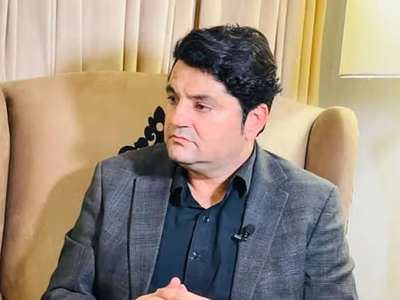
A Taliban official in Kabul told the Associated Press on Tuesday that the group's representatives had been invited to attend an upcoming UN climate summit as observers for the second time. The summit is scheduled to begin next week in Antalya, Türkiye.
Two years ago, Taliban officials attended the UN climate summit in Baku, Azerbaijan, for the first time since returning to power in 2021.
Rohullah Amin, head of the climate change department at Afghanistan's National Environmental Protection Agency, confirmed to the Associated Press that a Taliban official planned to attend the summit.
A Turkish official, who spoke on condition of anonymity because of government regulations, also said the Taliban would attend the conference as observers.
The United Nations has not allowed the Taliban to take Afghanistan's seat at the UN General Assembly. The Taliban government also remains unrecognised by most UN member states.
The group's severe restrictions on women's education and freedom of movement are among the reasons for the lack of international recognition.
Since the Baku summit, the governing bodies of UN climate conferences have postponed decisions on Afghanistan's representation, effectively leaving Kabul largely excluded from negotiations.
Observer countries can attend climate meetings and discussions but do not participate in formal negotiations over the conferences' policies and objectives.
According to the United Nations Office for the Coordination of Humanitarian Affairs (OCHA), Afghanistan is among the countries most vulnerable to climate change worldwide.
The country faces overlapping crises of drought, water shortages, extreme heat and unpredictable flooding, which have devastated livelihoods and caused widespread displacement.
A large proportion of Afghanistan's population depends on agriculture, and successive droughts have severely reduced food production.
According to a report by the International Organization for Migration (IOM), more than 1.6 million people across Afghanistan were forced to leave their homes because of the effects of climate change between March and December 2025.
The Taliban argues that the Afghan people should be represented at climate conferences and have access to funding to address the effects of climate change.
However, critics of the Taliban maintain that the international community should not recognise the group's government.
UNICEF confirmed to Afghanistan International that funding shortages have forced it to reduce staff worldwide, including in Afghanistan. Meanwhile, several Afghan women said the agency's Kabul office had not renewed their employment contracts.
The United Nations Children's Fund (UNICEF) told Afghanistan International on Tuesday, 3 November, that a review of employment records indicated the women were not directly employed by UNICEF and had probably been hired by partner organisations or contractors.
However, the women protesting the decision said nine of them had been employed through the HPL organisation, while at least four were directly employed by UNICEF.
UNICEF said it was facing challenging funding conditions in implementing its programmes worldwide. Its Afghanistan office confirmed that budget shortages had affected the continued employment of both male and female staff.
The UN children's agency stressed that despite funding reductions, it was working to maintain the delivery of services to Afghan children. It also reaffirmed its commitment to maintaining gender diversity among its workforce in accordance with UN obligations.
A group of Afghan women claimed that UNICEF had not renewed their contracts because of the ban on women working in UN offices. The women said there were 13 of them, most of whom had worked as kindergarten teachers, while others held reception and cleaning positions at UNICEF's main office in Pul-e Charkhi, Kabul.
In a letter to Afghanistan International, the women wrote that following the ban on women working in UN offices, they had been prevented from reporting to work for approximately a year but had continued to receive their salaries.
They claimed UNICEF had recently informed them that, because of the restrictions on women working in UN offices, their services were no longer needed.
The women said they had worked at UNICEF's main office in Pul-e Charkhi, Kabul, with some claiming to have been employed there for around 10 years.
According to the information provided, 10 of the women worked as kindergarten teachers, while four others held positions in reception, cleaning and supervision.
In September last year, Taliban officials, acting on orders from their leader Hibatullah Akhundzada, prevented Afghan women from entering UN offices. Since then, Afghan women have not been allowed to work in UN offices in Afghanistan.
In mid-April, the United Nations announced that 3,300 male and female employees had been confined to their homes as a result of Taliban restrictions.
UN officials have repeatedly emphasised that women's participation is essential for delivering life-saving assistance to millions of people in need.
The ban on women working in UN offices has also prompted criticism from Afghan activists. Several women's rights activists abroad have accused the United Nations of normalising the Taliban's gender discrimination.
Speaking at the UN Security Council on 27 October, human rights activist Zubaida Akbar questioned how much longer Afghan women must wait and what further evidence of Taliban violations of their rights they must provide before the international community takes action.
Akbar accused the United Nations of applying a selective approach to human rights and women's rights. She added that the organisation avoids including female representatives in meetings with the Taliban in order to accommodate the group's demands.
Anti-Taliban resistance groups claim to have carried out 82 attacks against Taliban positions and members across Afghanistan in October. According to figures released by the groups, the number of attacks more than doubled compared with September.
In a report written by Will Selber, a retired regional affairs officer at the US Central Command (CENTCOM), The Long War Journal said the attacks included improvised explosive device (IED) blasts, rocket and mortar attacks, ambushes and assassinations.
The attacks were reported in Kandahar, Helmand, Zabul, Badakhshan, Baghlan, Takhar, Kabul, Bamiyan, Parwan, Kapisa, Panjshir, Maidan Wardak, Ghor, Herat, Sar-e Pol, Kunar, Nangarhar, Nuristan, Ghazni, Paktia and Logar provinces.
According to the anti-Taliban groups, 122 Taliban members were killed and another 68 wounded in the attacks. However, these casualty figures have not been independently verified.
According to the report, the Afghanistan United Front, led by Sami Sadat, the former commander of the Afghan army's 215th Corps in Helmand, claimed the highest number of operations among anti-Taliban groups, reporting 36 attacks.
The report added that most of these attacks took place in Kandahar and Helmand provinces.
The National Resistance Front of Afghanistan (NRF), led by Ahmad Massoud, also claimed responsibility for 11 attacks in Badakhshan, Baghlan, Panjshir, Herat, Kandahar and Maidan Wardak provinces.
The Afghanistan Freedom Front (AFF), led by Yasin Zia, Afghanistan's former army chief of staff, claimed responsibility for 10 attacks in Badakhshan, Parwan, Kabul, Kapisa, Kunar, Logar, Nuristan and Takhar provinces.
The front also claimed to have attacked Bagram Air Base on 22 October, allegedly killing or wounding more than 10 Taliban members.
The military wing of the Green Trend, led by former Afghan Vice President Amrullah Saleh, claimed responsibility for eight attacks in Badakhshan, Panjshir, Bamiyan, Helmand and Herat provinces.
The group also claimed to have shot down an Indian-made Cheetal helicopter in Panjshir, saying two pilots were injured in the incident.
The Taliban rejected the claim, saying the helicopter struck a rock while attempting to land at an unsuitable location.
In his report, Will Selber also highlighted the activities of smaller anti-Taliban groups.
According to the report, the Afghanistan Republican Front, led by Tahir Zuhair, the former governor of Bamiyan, claimed to have carried out nine attacks. Meanwhile, the National Mobilisation Front claimed responsibility for killing a senior Taliban prison official in Jalalabad, Nangarhar province.
The report also noted the emergence of two new anti-Taliban groups. The Afghanistan National Freedom Front, led by Abdul Sattar Hussaini, a former member of parliament, reportedly carried out its first attack in Gardez, Paktia province.
Meanwhile, the National Arman Front claimed responsibility for three attacks in Ghazni, Baghlan and Helmand provinces.
The report highlights an increase in anti-Taliban resistance activity, although the groups continue to face fragmentation and a lack of coordination.
Richard Bennett, the UN Special Rapporteur on Afghanistan, said Taliban restrictions have severely limited or destroyed young Afghans' hopes of pursuing higher education, finding employment, achieving financial independence, starting families and contributing to society.
Speaking on Monday, 2 November, at an event on the sidelines of the UN General Assembly's Third Committee, Bennett stressed that Afghanistan cannot achieve lasting peace and stability without the participation of young people in education, employment, leadership and decision-making.
The event, titled "Afghanistan's Youth at a Crossroads: Rights, Aspirations, Challenges and Opportunities", was organised by Afghanistan's Permanent Mission to the United Nations in cooperation with the Raoul Wallenberg Institute of Human Rights and Humanitarian Law, with support from the permanent missions of Ireland and Denmark.
Citing figures from the United Nations Population Fund (UNFPA), Bennett said approximately 34% of Afghanistan's population, nearly one-third of the total, is aged between 10 and 24, while two-thirds of the country's population is 25 or younger.
He said young Afghans aspire to pursue higher education, find suitable employment, achieve financial independence, start families, participate in social life and contribute to their communities. However, many of these opportunities have been severely restricted or completely eliminated in Afghanistan.
The UN Special Rapporteur emphasised that young people have different experiences, priorities and aspirations, and that their needs must be considered individually, according to their circumstances.
Bennett warned that systematic human rights violations by the Taliban affect not only the current generation but also the future of generations to come in Afghanistan.
According to him, young Afghans face a range of interconnected challenges, including discrimination, exclusion from education and employment, poverty, limited access to information and freedom of expression, and exclusion from decision-making processes.
Bennett added that the consequences of Taliban restrictions do not affect all young people equally but vary depending on gender, ethnicity, religion, place of residence, economic circumstances, disability and educational background.
He described the situation of women and girls as particularly concerning, saying they face severe and structural discrimination that could amount to gender-based persecution and oppression.
Bennett also expressed concern about increasing restrictions on academic freedom and critical thinking, alongside a growing emphasis on ideological education, warning of their implications for Afghanistan's future.
He said young people also have limited opportunities to develop leadership skills and participate in decision-making processes.
The UN Special Rapporteur called on the international community to invest in creating practical opportunities for Afghanistan's young people.
He identified scholarships, high-quality online education programmes, technical and vocational training, digital skills development, entrepreneurship and access to international employment opportunities as important areas for supporting Afghan youth.
Qaiser Afridi, UNHCR spokesman in Islamabad, told Afghanistan International on Monday, 2 November, that the US had not contacted the agency about deporting Afghans via Pakistan.
He said UNHCR had no role in the process and was unaware of any talks between the two countries.
On 28 October, The New York Times reported that Washington was finalising a plan with Islamabad to return around 150 Afghan asylum seekers to Afghanistan via Pakistan. Their asylum applications in the United States had been rejected, and they had received deportation orders.
Responding to the reports, the spokesman for the United Nations High Commissioner for Refugees (UNHCR) told Afghanistan International: Our position is absolutely clear: people whose lives are at risk and who need protection must not be forcibly deported.
He added that, given the difficult conditions in Afghanistan and the denial of education to girls, forcibly returning asylum seekers poses serious risks. He stressed that any transfer must take place with the consent of the asylum seekers and in accordance with international law.
Referring to concerns raised by human rights organisations, Afridi emphasised that respecting human rights and refugee laws is a fundamental obligation for all countries.
Pakistani officials and informed sources in Islamabad had previously told Afghanistan International that they had no knowledge of any plan to bring these asylum seekers into Pakistan.
Meanwhile, the Taliban's Foreign Ministry has also expressed concern over the reports, urging Washington to ensure that any decisions concerning the fate of Afghan citizens are made through bilateral coordination and respect their human dignity.
These developments come amid widespread human rights concerns over Washington's reported plans to return Afghan asylum seekers.
At the same time, pressure on Afghan migrants in neighbouring countries has intensified. According to UN figures, millions of Afghan refugees and migrants have returned to Taliban-controlled Afghanistan during waves of forced deportations from Pakistan and Iran alone.
Human rights activists warn that forcibly returning people who fled Afghanistan because of security threats, their work with foreign organisations or the Taliban's restrictive policies could expose them to irreversible threats to their lives and safety.