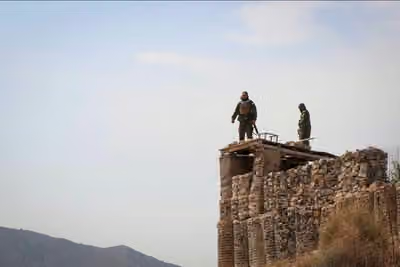
In a report written by Will Selber, a retired regional affairs officer at the US Central Command (CENTCOM), The Long War Journal said the attacks included improvised explosive device (IED) blasts, rocket and mortar attacks, ambushes and assassinations.
The attacks were reported in Kandahar, Helmand, Zabul, Badakhshan, Baghlan, Takhar, Kabul, Bamiyan, Parwan, Kapisa, Panjshir, Maidan Wardak, Ghor, Herat, Sar-e Pol, Kunar, Nangarhar, Nuristan, Ghazni, Paktia and Logar provinces.
According to the anti-Taliban groups, 122 Taliban members were killed and another 68 wounded in the attacks. However, these casualty figures have not been independently verified.
According to the report, the Afghanistan United Front, led by Sami Sadat, the former commander of the Afghan army's 215th Corps in Helmand, claimed the highest number of operations among anti-Taliban groups, reporting 36 attacks.
The report added that most of these attacks took place in Kandahar and Helmand provinces.
The National Resistance Front of Afghanistan (NRF), led by Ahmad Massoud, also claimed responsibility for 11 attacks in Badakhshan, Baghlan, Panjshir, Herat, Kandahar and Maidan Wardak provinces.
The Afghanistan Freedom Front (AFF), led by Yasin Zia, Afghanistan's former army chief of staff, claimed responsibility for 10 attacks in Badakhshan, Parwan, Kabul, Kapisa, Kunar, Logar, Nuristan and Takhar provinces.
The front also claimed to have attacked Bagram Air Base on 22 October, allegedly killing or wounding more than 10 Taliban members.
The military wing of the Green Trend, led by former Afghan Vice President Amrullah Saleh, claimed responsibility for eight attacks in Badakhshan, Panjshir, Bamiyan, Helmand and Herat provinces.
The group also claimed to have shot down an Indian-made Cheetal helicopter in Panjshir, saying two pilots were injured in the incident.
The Taliban rejected the claim, saying the helicopter struck a rock while attempting to land at an unsuitable location.
In his report, Will Selber also highlighted the activities of smaller anti-Taliban groups.
According to the report, the Afghanistan Republican Front, led by Tahir Zuhair, the former governor of Bamiyan, claimed to have carried out nine attacks. Meanwhile, the National Mobilisation Front claimed responsibility for killing a senior Taliban prison official in Jalalabad, Nangarhar province.
The report also noted the emergence of two new anti-Taliban groups. The Afghanistan National Freedom Front, led by Abdul Sattar Hussaini, a former member of parliament, reportedly carried out its first attack in Gardez, Paktia province.
Meanwhile, the National Arman Front claimed responsibility for three attacks in Ghazni, Baghlan and Helmand provinces.
The report highlights an increase in anti-Taliban resistance activity, although the groups continue to face fragmentation and a lack of coordination.