• العربية
  • پښتو
  • فارسی
BrandBrand
  • Afghanistan
  • Sport
  • Analysis
  • Markets
  • Afghanistan
  • Sport
  • Analysis
  • Markets
  • Theme
  • Language
    • العربية
    • پښتو
    • فارسی
  • Afghanistan
  • Sport
  • Analysis
  • Markets
All rights reserved for Volant Media UK Limited
volant media logo

RSF Names Trump & Taliban Leader Among Those Restricting Press Freedom

Nov 2, 2026, 10:32 GMT+0

Reporters Without Borders has named Taliban leader Hibatullah Akhundzada and US President Donald Trump among 33 individuals and organisations it says restricted press freedom in 2026.

The organisation criticised the Taliban's repressive policies in Afghanistan and restrictions on journalists' access to government institutions in the United States.

To mark the International Day to End Impunity for Crimes Against Journalists on 2 November, Reporters Without Borders (RSF) published its 2026 report listing those it identifies as press freedom restrictors.

The organisation classified 33 political leaders, government institutions, criminal groups and technology companies into five categories: political, security, judicial, economic and social.

One of the most notable developments in this year's report is the inclusion of US President Donald Trump following the start of his second presidential term.

RSF said the Trump administration's actions against the media were no longer limited to verbal attacks and political statements, with his government also restricting journalists' access to government institutions and decision-making centres.

According to the report, the United States now ranks 64th in the World Press Freedom Index.

Thibaut Bruttin, director-general of Reporters Without Borders, said the individuals and organisations identified in the report use physical and verbal violence, judicial and economic pressure, and information manipulation to restrict independent media and prevent citizens from accessing information freely.

Hibatullah Akhundzada Among Leaders Accused of Restricting Press Freedom
The political category of the report identifies eight political leaders and officials whom RSF says have played a role in suppressing independent media and restricting freedom of expression.

Taliban leader Hibatullah Akhundzada is listed alongside Russian President Vladimir Putin, Azerbaijani President Ilham Aliyev, Belarusian President Alexander Lukashenko, Nicaraguan leaders Daniel Ortega and Rosario Murillo, Uganda's Muhoozi Kainerugaba and US President Donald Trump.

Violent Attacks Against Journalists

In the security category, eight individuals and organisations are identified for their alleged involvement in the killing, attacking and detention of journalists.

The Israeli armed forces and the government of Benjamin Netanyahu are included in this category over their treatment of journalists and media organisations in Gaza, the West Bank and Lebanon.

The Chinese Communist Party, led by Xi Jinping, is also listed for imprisoning large numbers of journalists. According to Reporters Without Borders, China holds the highest number of imprisoned journalists in the world.

The organisation also named Mexican drug cartels, including the Jalisco New Generation Cartel.

According to the report, organised criminal groups in Mexico have killed an average of nearly one journalist per month since the beginning of 2026.

The military junta ruling Burkina Faso, the Saudi Arabian government, Egyptian President Abdel Fattah el-Sisi, the March 23 Movement (M23) armed group in the Democratic Republic of the Congo and Guinea's ruling military junta are also included in this category.

Use of Judicial and Economic Pressure Against the Media

In the judicial category, Reporters Without Borders accused six individuals and organisations of using the legal system to suppress journalists and restrict media activities.

Those listed include Brendan Carr, the US Chairman of the Federal Communications Commission, Turkish President Recep Tayyip Erdogan, Hong Kong Chief Executive John Lee Ka-chiu, Russia's communications regulator Roskomnadzor, India's Adani Group and Kazakhstan's President Kassym-Jomart Tokayev.

In the economic category, six individuals and companies are accused of using financial tools to pressure media organisations and interfere with editorial independence.

The report names US technology companies Alphabet and Meta, Bidzina Ivanishvili of Georgia, Vincent Bolloré of France, Vladimir Tabak of Russia and Kenyan President William Ruto.

Attacks on Media Credibility and Growing Public Distrust

The social category identifies seven individuals and organisations that, according to Reporters Without Borders, have contributed to growing public distrust of journalism by attacking the credibility of media organisations and journalists.

Those listed include American billionaire Elon Musk, Argentine President Javier Milei, Slovak Prime Minister Robert Fico, Russia Today executive Margarita Simonyan, the Israeli organisation HonestReporting, India's OpIndia media outlet and another organisation based in Burkina Faso.

According to the report, Javier Milei published more than 1,600 messages attacking the media on the social media platform X over a 47-day period between April and May 2026.

Who Has Been Removed From This Year's List?

In the final section of its report, Reporters Without Borders outlined changes to this year's list compared with the previous year.

According to the report, Ali Khamenei, the former supreme leader of the Islamic Republic of Iran, was removed from the list following his death in US attacks during the war involving Israel and the United States.

Former Venezuelan President Nicolás Maduro was also removed from this year's list following his arrest and transfer to a federal prison in the United States.

Former Hungarian Prime Minister Viktor Orbán and Serbian President Aleksandar Vučić were also removed from the list following electoral and political developments.

Reporters Without Borders said it compiled the list based on the actions of individuals and organisations during 2026, aiming to highlight their roles and responsibilities in suppressing the media and restricting journalists' activities.

Most Viewed

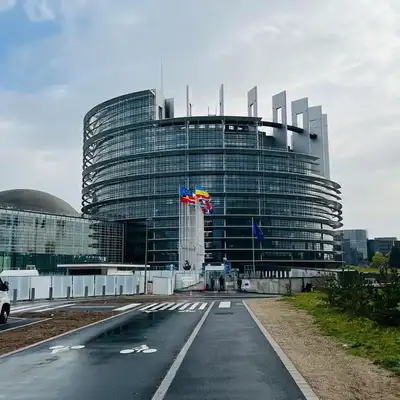
European Parliament Backs Recognition Of Gender Apartheid In Afghanistan
1

European Parliament Backs Recognition Of Gender Apartheid In Afghanistan

2

Taliban Governor Dismisses Opposition Claims Of Capturing Territory

3

Residents Protest Against Taliban In Nuristan's Waygal District

4

PTI Leader Khan Facilitated Return Of Militants From Afghanistan, Says Pakistan PM

5

Taliban-Pakistan Clashes Threaten Aid Workers In Afghanistan, Says UN

•
•
•

More Stories

Women’s Labour Force Participation In Afghanistan Falls To 5 Percent, Says ILO

Aug 18, 2026, 13:38 GMT+1
100%

The International Labour Organization (ILO) said in a report that women’s labour force participation in Taliban-ruled Afghanistan has fallen to 5.1 percent, compared with 18.3 percent in 2019.

The organisation warned that the exclusion of women from economic activity has brought profound structural changes to Afghanistan’s labour market.

In a report released on Tuesday, 18 August, the ILO said Afghanistan’s labour market had undergone significant changes because of gender inequalities since the Taliban returned to power. It said women’s employment had declined “dramatically” under Taliban rule.

The report said Afghanistan’s labour market had become heavily reliant on male employment.

According to the report, women’s labour force participation stood at 18.3 percent in 2019 under the former government.

The ILO said women’s labour force participation fell sharply in 2022, dropping to less than one-third of its 2020 level. According to the organisation’s estimates, Afghanistan has the second-lowest female labour force participation rate in the world, reflecting what it described as the “exceptional scale of women’s exclusion” from economic activity.

By contrast, male employment in 2026 is estimated to be about 22 percent higher than its 2020 level. The organisation noted that amid broader pressures on employment, women were increasingly being excluded from Afghanistan’s labour market.

According to the report, employment growth has failed to keep pace with population growth. The overall employment-to-population ratio is estimated at 32.5 percent, more than four percentage points below its 2020 level.

Ramin Behzad, head of the ILO office in Afghanistan, said: “Afghanistan cannot build a resilient labour market while excluding a large part of its population [women] from economic activity.”

He stressed that expanding women’s access to productive employment and creating job opportunities for returnees, young people and other vulnerable workers were essential to strengthening livelihoods and supporting inclusive economic development.

The ILO called on the Taliban administration to place productive employment at the centre of its policies and priorities. It also stressed the need to support private-sector development, labour-intensive sectors and small businesses.

Rights Group Calls For Full Inquiry Into Afghan’s Death In ICE Custody

Jul 14, 2026, 10:42 GMT+1
100%

Human Rights Watch has called for transparency and accountability over the death of Afghan asylum seeker Mohammad Nazeer Paktiawal in US immigration detention, urging authorities to release his full autopsy report.

Alyssa Kellman of Human Rights Watch said the death of Paktiawal highlighted the need for transparency and accountability in US immigration detention facilities.

Paktiawal, a 41-year-old Afghan asylum seeker who served alongside US forces in Afghanistan for about a decade, died on March 14, less than 24 hours after being detained in Texas. US authorities said he died following what they described as an allergic reaction.

His death certificate was released 103 days after his death.

Kellman said US Immigration and Customs Enforcement (ICE) described Paktiawal as a “criminal illegal alien” when announcing his death, despite the fact that he had no criminal convictions and had been granted humanitarian parole because of his years of service alongside the US military.

His asylum application was under review, but the US government suspended the processing of Afghan asylum claims in November last year.

Paktiawal was detained on March 13 while taking his children to school. His family told the organisation AfghanEvac that he suffered from a respiratory condition requiring an inhaler and that his wife had tried to provide it to him.

US immigration authorities said Paktiawal complained of shortness of breath and chest pain after his arrest, was taken to hospital and died the following day.

Kellman said his death was part of a growing number of deaths in ICE detention facilities.

She added that calls for greater transparency over deaths in immigration detention had increased since the current US administration took office.

Although Paktiawal’s death certificate listed the cause of death as an accident, Coleman said the finding raised further questions about the circumstances surrounding his death.

Human Rights Watch said the US government had declined to release further details despite requests from Paktiawal’s family, refugee advocacy groups and several members of Congress.

Local authorities have also withheld the full autopsy report, saying its release could affect an ongoing federal criminal investigation.

Human Rights Watch said transparency and accountability required a full investigation and the publication of information related to the case, arguing that releasing Paktiawal’s complete autopsy report would be an important first step.