• العربية
  • پښتو
  • فارسی
BrandBrand
  • Afghanistan
  • Sport
  • Analysis
  • Markets
  • Afghanistan
  • Sport
  • Analysis
  • Markets
  • Theme
  • Language
    • العربية
    • پښتو
    • فارسی
  • Afghanistan
  • Sport
  • Analysis
  • Markets
All rights reserved for Volant Media UK Limited
volant media logo

Four-Party Meeting On Afghanistan Planned In Coming Months, Says Iran

Nov 3, 2026, 09:05 GMT+0

Iran's Foreign Ministry spokesperson announced on Monday that Tehran is planning another four-party meeting on Afghanistan in the coming months. Esmail Baghaei said regional developments had not diminished Iran's focus on Afghanistan and its role in regional security.

Speaking at his weekly press briefing on Monday, 2 November, Baghaei said Iranian Foreign Ministry officials had raised the issue of Afghanistan during regional visits, including trips to Türkiye and Pakistan. According to him, consultations on continuing the process were also held on the sidelines of the Moscow Format meeting in October.

Referring to regional meetings held in October, including those of the Shanghai Cooperation Organisation, the four-party group and the Moscow Format, the Iranian Foreign Ministry spokesman said Tehran was closely monitoring developments in Afghanistan.

Baghaei did not provide further details about the exact date of the planned four-party meeting or the level of representation expected from participating countries.

The Regional Contact Group on Afghanistan was established at the initiative of the Islamic Republic of Iran to coordinate regional countries' approaches to developments in Afghanistan. The group comprises special representatives from Iran, China, Russia and Pakistan.

The group's first round of consultations took place in Kabul on 29 January 2024, with representatives from Iran, China, Pakistan, Russia and several other regional countries in attendance.

The group's second meeting was held in Tehran on 8 June 2024, attended by representatives from Iran, China, Russia and Pakistan. The Taliban had also been invited but did not participate.

The meeting addressed issues including collective engagement with the Taliban, terrorist threats, and Afghanistan's security and economic situation.

At the time, Hassan Kazemi Qomi, Iran's Special Representative for Afghanistan, announced that plans for a third round of meetings were under consideration.

Most Viewed

Strikes Carried Out On Several Taliban Border Posts, Says Pakistan
1

Strikes Carried Out On Several Taliban Border Posts, Says Pakistan

2

RSF Names Trump & Taliban Leader Among Those Restricting Press Freedom

3

Pakistan Military Calls Taliban An Indian Proxy, Warns Of Heavy Price

4

Terrorist Attacks In Pakistan Surge 53 Percent In First 10 Months Of 2026

5

US Has Made No Contact Over Reported Afghan Deportation Plan, Says UNHCR

•
•
•

More Stories

US Has Made No Contact Over Reported Afghan Deportation Plan, Says UNHCR

Nov 2, 2026, 16:29 GMT+0
100%

Qaiser Afridi, UNHCR spokesman in Islamabad, told Afghanistan International on Monday, 2 November, that the US had not contacted the agency about deporting Afghans via Pakistan.

He said UNHCR had no role in the process and was unaware of any talks between the two countries.

On 28 October, The New York Times reported that Washington was finalising a plan with Islamabad to return around 150 Afghan asylum seekers to Afghanistan via Pakistan. Their asylum applications in the United States had been rejected, and they had received deportation orders.

Responding to the reports, the spokesman for the United Nations High Commissioner for Refugees (UNHCR) told Afghanistan International: Our position is absolutely clear: people whose lives are at risk and who need protection must not be forcibly deported.

He added that, given the difficult conditions in Afghanistan and the denial of education to girls, forcibly returning asylum seekers poses serious risks. He stressed that any transfer must take place with the consent of the asylum seekers and in accordance with international law.

Referring to concerns raised by human rights organisations, Afridi emphasised that respecting human rights and refugee laws is a fundamental obligation for all countries.

Pakistani officials and informed sources in Islamabad had previously told Afghanistan International that they had no knowledge of any plan to bring these asylum seekers into Pakistan.

Meanwhile, the Taliban's Foreign Ministry has also expressed concern over the reports, urging Washington to ensure that any decisions concerning the fate of Afghan citizens are made through bilateral coordination and respect their human dignity.

These developments come amid widespread human rights concerns over Washington's reported plans to return Afghan asylum seekers.

At the same time, pressure on Afghan migrants in neighbouring countries has intensified. According to UN figures, millions of Afghan refugees and migrants have returned to Taliban-controlled Afghanistan during waves of forced deportations from Pakistan and Iran alone.

Human rights activists warn that forcibly returning people who fled Afghanistan because of security threats, their work with foreign organisations or the Taliban's restrictive policies could expose them to irreversible threats to their lives and safety.

European Parliament Backs Recognition Of Gender Apartheid In Afghanistan

Oct 31, 2026, 13:47 GMT+0
100%

The secretariat of the European Parliament's Delegation for Relations with Afghanistan told former Afghan MP Baktash Siawash it would support efforts to advance recognition of gender apartheid. It said work on a new convention on crimes against humanity was ongoing.

According to a copy of the letter obtained by Afghanistan International, Raquel García Hermida-van der Walle, chair of the delegation, expressed appreciation for Siawash's petition.

The secretariat stressed that, where appropriate and within its mandate, the delegation would cooperate in advancing consideration of the codification of "gender apartheid" in the European Parliament.

The secretariat also noted that the website of the European Parliament's Delegation for Relations with Afghanistan provides welcome packs and information brochures for newly elected members.

The European Parliament's Committee on Petitions recently informed Baktash Siawash in a written letter that it would examine the recognition of gender apartheid in Afghanistan on 5 November in Brussels.

In recent months, Afghan women's rights activists and human rights defenders have staged sit-in protests in Brussels, Strasbourg and Geneva, collecting thousands of signatures to urge European institutions to take a firmer stance against the systematic exclusion of women from public life in Afghanistan.

Siawash previously told Afghanistan International that he had been in contact with European Union representatives and had shared a petition containing more than 5,000 signatures.

He warned that protests would continue and intensify if the demands of Afghan women and the wider population were not taken seriously.

In recent days, the European Union expressed concern over the deteriorating human rights situation in Afghanistan during the Third Committee of the 81st session of the United Nations General Assembly, strongly condemning severe and institutionalised gender-based discrimination and repression against women and girls.

In a statement, the EU said the systematic violation of women's and girls' rights in Afghanistan could constitute gender-based persecution and a crime against humanity.

In May 2026, the European Parliament adopted a resolution on the human rights situation in Afghanistan.

During a plenary session, the Parliament condemned the Taliban's criminal procedure code for courts and called for an end to public floggings and executions, as well as sanctions against Taliban leaders.

16 Attacks Kill 18 Taliban Fighters In One Week, Says Afghanistan United Front

Oct 30, 2026, 12:39 GMT+0
100%

The Afghanistan United Front, led by Sami Sadat, says it carried out 16 attacks against Taliban forces across eight provinces in the past week. According to statements issued between 22 and 29 October, 18 Taliban members were killed and nine wounded.

A review of statements released by the Afghanistan United Front shows that the attacks were concentrated in Kandahar, Kapisa, Helmand, Ghor, Zabul, Badakhshan, Ghazni and Parwan provinces.

According to the statements, four operations were carried out in Kandahar, two in Ghor and two in Zabul. One operation was reported in each of Badakhshan, Ghazni and Parwan, while four additional operations took place in Helmand and Kapisa.

Timeline of Attacks and Reported Casualties

According to a statement issued by the front on 22 October, four separate attacks were carried out in the first and fifth police districts of Lashkar Gah city in Helmand and in Hesa Awal Kohistan district of Kapisa. The attacks reportedly killed five Taliban members and destroyed a Ranger vehicle.

In another statement issued on 23 October, the front said it had targeted a Taliban police officer in Daman district in Kandahar, killing him and seizing his motorcycle.

A further statement issued on 26 October said the front had conducted seven simultaneous operations across six provinces.

In separate attacks in Charsada district and Firozkoh city in Ghor province, four Taliban members were reportedly killed and seven wounded.

On the same day, attacks in Qalat city in Zabul, Muqur district in Ghazni, the Gulbahar foothills of Jabal Saraj in Parwan, Tagab district of Badakhshan, and Dand district in Kandahar reportedly killed five other Taliban members and wounded two.

According to a statement issued on 27 October, a Taliban intelligence officer was killed in Shahr-e Safa district of Zabul, while a Taliban police officer identified as Mullah Samargul was killed in Tagab district in Kapisa.

Statements issued on 29 October reported two further operations in Kandahar province.

The front said it attacked a Taliban checkpoint in Arghistan district without causing casualties. In a separate attack in Spin Boldak district, the group said it targeted a Taliban vehicle, killing one Taliban member and destroying the vehicle.

Taliban officials have not yet commented on the reported attacks.

The Afghanistan United Front formally announced the launch of its armed activities against the Taliban administration in August this year.

The front initially began its attacks in southern Afghanistan, particularly in Kandahar province, and says it has since carried out numerous operations against Taliban forces across the country.

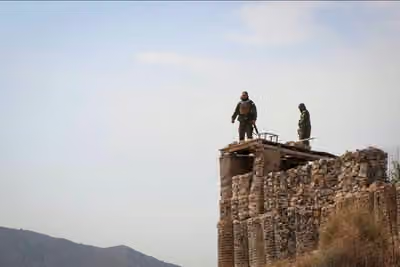
Regional Border Commanders Agree To Strengthen Security Along Afghan Borders

Oct 30, 2026, 10:37 GMT+0
100%

The 93rd meeting of the Council of Border Troop Commanders of the Commonwealth of Independent States (CIS) was held in Astana on Thursday, 29 October, with a focus on border security, terrorism, drug trafficking, illegal migration and cross-border organised crime.

The meeting, held in Kazakhstan's capital, Astana, focused on strengthening security along the CIS's external borders and countering security threats.

Representatives of member states discussed ways to combat terrorism, illegal migration, drug trafficking and transnational organised crime.

Improving the exchange of operational intelligence between border security agencies was among the key topics discussed.

Participants also examined the use of modern technologies for border control and the coordination of joint responses to emerging security threats.

Alexander Manilov, deputy chairman of the CIS Council of Border Troop Commanders, emphasised the need for coordinated efforts, saying that addressing existing threats requires constant operational readiness among border units and coordinated action by military agencies.

Yerlan Aldazhumanov, deputy chairman of Kazakhstan's National Security Committee and head of the country's Border Guard Service, said the meetings are held twice a year to assess the operational situation along external borders and organise protective measures.

According to Aldazhumanov, particular attention is given to joint border operations covering areas from Afghanistan's borders to the western frontiers of CIS member states, facilitating coordination in addressing cross-border threats.

In addition to operational matters, the meeting addressed personnel training, military education and development programmes, and scientific and research cooperation.

Aldazhumanov noted that most decisions adopted by the council are approved unanimously, helping member states coordinate their approaches to border security.

The meeting comes as the Collective Security Treaty Organisation (CSTO) has repeatedly expressed concern in recent weeks about security threats originating from Afghanistan, particularly along its border with Tajikistan.

The organisation's secretary-general recently announced that member states, including Russia, Kazakhstan, Kyrgyzstan and Belarus, are expected to begin supplying weapons and military equipment to Tajikistan by the end of this year to strengthen its border with Afghanistan.

Russian Foreign Minister Sergei Lavrov previously warned that Islamic State Khorasan Province (ISKP) intends to use Afghanistan as a base to expand its terrorist activities into Central Asia and Russia.

Lavrov said terrorist groups maintain a significant number of training camps in Afghanistan's border regions with Tajikistan and Uzbekistan.

Systematic Violations Of Afghan Women's Rights May Be Crimes Against Humanity, Says EU

Oct 29, 2026, 13:14 GMT+0
100%

The European Union expressed concern over the worsening human rights situation in Afghanistan and strongly condemned severe, institutionalised gender-based discrimination and repression against women and girls, warning that such abuses may amount to crimes against humanity.

In a statement, the EU called on the Taliban to end restrictions imposed on women and girls.

At the Third Committee of the 81st session of the UN General Assembly, the EU welcomed the latest report by the UN Special Rapporteur, Richard Bennett, on human rights in Afghanistan, saying it documented the country's deteriorating human rights situation.

The EU said Bennett's report also highlighted the devastating impact of Taliban policies on children and young people, particularly girls, children returning to Afghanistan and children with disabilities.

In its statement, the EU said Afghan women and girls continue to be denied their fundamental rights, including education, employment, freedom of movement and participation in public life.

The EU stressed that these systematic and structural violations of women's and girls' rights may constitute gender-based persecution, a crime classified as a crime against humanity under the Rome Statute of the International Criminal Court.

The EU also criticised the increasing use of corporal punishment and public floggings, urging the Taliban to suspend executions and ultimately abolish the death penalty. It described these practices as violations of human dignity and contrary to international human rights standards.

The statement also condemned the repression of civil society and independent media, calling on the Taliban to end arbitrary detentions, intimidation, censorship and interference in media activities.

The EU further emphasised the need to protect the rights of ethnic and religious minorities and other vulnerable groups.

The EU's statement comes after Richard Bennett, the UN Special Rapporteur on human rights in Afghanistan, recently told the General Assembly that the Taliban had shown no indication of changing their policies. Instead, he said, the group had intensified pressure on women, girls and other Afghan citizens by introducing further restrictions.

The EU reiterated that Afghanistan remains the only country in the world where women and girls are barred from continuing their education beyond the age of 12.

The EU also reaffirmed its commitment to supporting accountability and justice, including through the International Criminal Court.

The statement said the EU supports an Afghan-led political process that includes all Afghans and guarantees the full, equal and meaningful participation of women.