• العربية
  • پښتو
  • فارسی
BrandBrand
  • Afghanistan
  • Sport
  • Analysis
  • Markets
  • Afghanistan
  • Sport
  • Analysis
  • Markets
  • Theme
  • Language
    • العربية
    • پښتو
    • فارسی
  • Afghanistan
  • Sport
  • Analysis
  • Markets
All rights reserved for Volant Media UK Limited
volant media logo

Systematic Violations Of Afghan Women's Rights May Be Crimes Against Humanity, Says EU

Oct 29, 2026, 13:14 GMT+0

The European Union expressed concern over the worsening human rights situation in Afghanistan and strongly condemned severe, institutionalised gender-based discrimination and repression against women and girls, warning that such abuses may amount to crimes against humanity.

In a statement, the EU called on the Taliban to end restrictions imposed on women and girls.

At the Third Committee of the 81st session of the UN General Assembly, the EU welcomed the latest report by the UN Special Rapporteur, Richard Bennett, on human rights in Afghanistan, saying it documented the country's deteriorating human rights situation.

The EU said Bennett's report also highlighted the devastating impact of Taliban policies on children and young people, particularly girls, children returning to Afghanistan and children with disabilities.

In its statement, the EU said Afghan women and girls continue to be denied their fundamental rights, including education, employment, freedom of movement and participation in public life.

The EU stressed that these systematic and structural violations of women's and girls' rights may constitute gender-based persecution, a crime classified as a crime against humanity under the Rome Statute of the International Criminal Court.

The EU also criticised the increasing use of corporal punishment and public floggings, urging the Taliban to suspend executions and ultimately abolish the death penalty. It described these practices as violations of human dignity and contrary to international human rights standards.

The statement also condemned the repression of civil society and independent media, calling on the Taliban to end arbitrary detentions, intimidation, censorship and interference in media activities.

The EU further emphasised the need to protect the rights of ethnic and religious minorities and other vulnerable groups.

The EU's statement comes after Richard Bennett, the UN Special Rapporteur on human rights in Afghanistan, recently told the General Assembly that the Taliban had shown no indication of changing their policies. Instead, he said, the group had intensified pressure on women, girls and other Afghan citizens by introducing further restrictions.

The EU reiterated that Afghanistan remains the only country in the world where women and girls are barred from continuing their education beyond the age of 12.

The EU also reaffirmed its commitment to supporting accountability and justice, including through the International Criminal Court.

The statement said the EU supports an Afghan-led political process that includes all Afghans and guarantees the full, equal and meaningful participation of women.

Most Viewed

Repression Of Women's Rights In Afghanistan Has Intensified, Says UN Secretary-General
1

Repression Of Women's Rights In Afghanistan Has Intensified, Says UN Secretary-General

2

Army Destroyed Several Taliban Posts Along Border, Says Pakistan

3

Pakistani Drones Struck Border Facilities In Paktika, Says Taliban

4

Tajik Border Guards Kill Armed Afghan Smugglers, Say Sources

5

Germany Deports 40 Convicted Afghans to Kabul on Fifth Flight

•
•
•

More Stories

Norway Backs Efforts To Document Human Rights Violations In Afghanistan

Oct 29, 2026, 10:58 GMT+0
100%

Norway's representative to the UN General Assembly's Third Committee expressed support for international efforts and mechanisms to document human rights violations in Afghanistan, calling for an end to systematic discrimination against women and girls.

Expressing deep concern over the worsening human rights situation, the Norwegian representative called for the repeal of discriminatory and systematic policies targeting women and girls in Afghanistan.

Speaking at a meeting of the UN General Assembly's Third Committee on Wednesday, 28 October, Norway's representative welcomed the report of the UN Special Rapporteur on human rights in Afghanistan and reaffirmed the country's full support for his mandate and vital work in documenting human rights conditions and ensuring that Afghan voices, particularly those of women and girls, are heard.

Highlighting the deteriorating human rights situation in Afghanistan, the representative stressed that Norway remained deeply concerned about systematic discrimination against women and girls, which has severely restricted their fundamental rights and freedoms, including access to education, employment, healthcare, freedom of movement and participation in public life.

The Norwegian representative urged Taliban authorities to immediately repeal these policies and comply with Afghanistan's international human rights obligations.

The representative also emphasised the need to keep accountability at the centre of the international response and welcomed strengthened international efforts, including the independent investigative mechanism established by the UN Human Rights Council.

The representative noted that the Special Rapporteur and the new mechanism, through their distinct but complementary roles, would help preserve evidence and lay the groundwork for justice.

Norway's representative also highlighted the essential role of Afghan civil society and women's rights organisations, reaffirming the country's continued support for civil society activists despite the extraordinarily difficult conditions they face.

The representative raised the question of how the international community could effectively support civil society and women's organisations in such a restrictive environment without exposing them to further risks.

Taliban's Statement Over Border Clashes Is False, Says Pakistan

Oct 29, 2026, 10:02 GMT+0
100%

Pakistan's Information Ministry on Wednesday, 28 October, rejected the Taliban Defence Ministry's account of clashes in Angoor Adda, calling it fabricated. Both sides have accused each other of starting the fighting and offered conflicting accounts of the incident.

In a statement, Pakistan's Ministry of Information and Broadcasting said Taliban forces had opened fire on Pakistani military posts and residential areas in Lower South Waziristan on Tuesday, 27 October, without provocation.

According to the ministry, one civilian was killed and five others were wounded in the incident.

The Taliban's Defence Ministry had earlier claimed that Pakistan used drones to target the Angoor Adda market and a civilian office in Paktika province without provocation or justification. The ministry said Taliban forces responded by attacking a Pakistani military base and nearby border posts.

Responding to these allegations, Pakistan's Information Ministry said Taliban forces had initiated the gunfire and mortar shelling against unarmed civilians on Pakistani territory.

The ministry also claimed that Pakistani forces responded immediately, inflicting heavy casualties and material losses on Taliban forces and destroying seven of their border posts.

Without providing independent evidence, Pakistan's Ministry of Information and Broadcasting further alleged that the Taliban forces' actions followed a pattern of behaviour and instructions from India.

Faisal Karim Kundi, governor of Pakistan's Khyber Pakhtunkhwa province, also condemned the firing from Afghanistan, saying Pakistan would not tolerate attacks on its citizens or violations of its sovereignty.

According to Pakistani officials, the firing originated from posts inside Afghanistan, with Pakistani troops targeted by both light and heavy weapons. Pakistani sources said the army responded by targeting several Taliban border posts, mortar positions and defensive fortifications using light and heavy weapons, including artillery.

Angoor Adda is one of the most important and sensitive border crossings between Afghanistan and Pakistan, serving as a key route for trade and the movement of people between the two countries.

Tensions between Pakistan and the Taliban administration have increased in recent years, particularly over the presence of armed groups in Afghanistan and attacks inside Pakistan. Islamabad has repeatedly demanded that the Taliban dismantle Tehreek-e-Taliban Pakistan (TTP) safe havens in Afghanistan. Pakistani officials say these demands have so far produced no results.

In recent months, both sides have repeatedly accused each other of launching cross-border attacks. Pakistan also carried out air strikes in September and early October against what it described as terrorist hideouts in Afghanistan. The Taliban administration condemned the strikes as violations of Afghanistan's sovereignty.

Opium Production In Afghanistan Has Increased Fivefold, Says UN

Oct 29, 2026, 09:03 GMT+0
100%

The United Nations Office on Drugs and Crime (UNODC) has released a new report on drug cultivation and production in Afghanistan. Published on Thursday, 29 October, it says opium production reached nearly 1,500 tons in 2026, around five times the previous year's level.

According to figures presented in the report, Afghanistan's total opium production increased from approximately 300 tones in 2025 to nearly 1,500 tons in 2026. The rise was driven by both an expansion in cultivation and higher crop yields resulting from improved rainfall conditions.

According to UNODC, Afghanistan's drug ban appears to have weakened in 2026.

Although cultivation remains below pre-ban levels, the area under poppy cultivation increased sharply from around 10,000 hectares in 2025 to more than 43,000 hectares in 2026.

The report found that poppies are now cultivated in 16 of Afghanistan's 34 provinces, five more than last year. Around 76% of the country's total opium poppy cultivation area is concentrated in the northeast, particularly in Badakhshan province.

The report added that, following this increase, total revenue from the sale of harvested opium to traders reached approximately $525 million in 2026, equivalent to around 2.7% of Afghanistan's gross domestic product (GDP) or 8.5% of its agricultural sector.

Average regional prices for dried opium declined from the previous year to approximately $500 per kilogram, but remained significantly higher than pre-ban levels of less than $100 per kilogram.

According to the UN findings, farmers have adopted concealment strategies to reduce the risk of detection and eradication. These include growing poppies among cereal crops such as wheat and barley, cultivating fields enclosed by compound walls, and staggering planting and harvesting periods.

In Helmand, for example, more than 90% of poppy fields were reportedly concealed.

The report also noted that significant price differences between regions, including lower prices in the northeast and higher prices in the southwest, could strengthen the domestic illicit drug market and increase incentives for internal trafficking.

The assessment further indicated that opium stockpiles accumulated before the ban were running low. Continuing economic difficulties and the lack of suitable alternative livelihoods could increase the risk of sustained or expanded poppy cultivation in the coming years.

Taliban Claims Progress in Combating Drugs

The Taliban's Foreign Ministry held an event in Kabul on Tuesday, 27 October, highlighting what it described as its achievements in combating drugs. The gathering, attended by ambassadors and diplomats from several countries, featured Taliban claims of progress in controlling narcotics in Afghanistan.

Abdul Rahman Munir, the Taliban Interior Ministry's deputy minister for counter-narcotics, said authorities had conducted 25,116 anti-drug operations in 2026.

According to Munir, the operations resulted in the destruction of 26,500 hectares of land used to cultivate opium poppies and cannabis, as well as the arrest of 10,065 suspects.

He added that authorities had discovered and shut down 301 drug-processing laboratories, two factories producing chemical tablets and 15 alcohol-production facilities.

The Taliban official also emphasised the importance of creating alternative livelihoods for farmers and supporting the cultivation of legal agricultural products.

Taliban Foreign Minister Amir Khan Muttaqi told the gathering that widespread drug cultivation and trafficking in countries neighbouring Afghanistan had become a serious concern for the group.

Without naming any specific country, Muttaqi stressed that combating narcotics required international attention and that cooperation in this area should not be politicised.

In recent years, Taliban officials have repeatedly claimed significant reductions in poppy cultivation and drug trafficking in Afghanistan.

However, concerns over regional drug trafficking persist. Russia is among the countries that have expressed concern about the consequences of narcotics trafficking originating from Afghanistan.

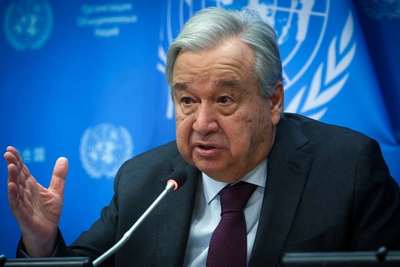
Repression Of Women's Rights In Afghanistan Has Intensified, Says UN Secretary-General

Oct 28, 2026, 11:58 GMT+0
100%

UN Secretary-General António Guterres warned that the repression of women's and girls' rights in Afghanistan was intensifying, with severe restrictions imposed on them. He also stressed the importance of supporting local women-led organisations in the country.

Speaking at a UN Security Council meeting on women, peace and security on Tuesday, 27 October, Guterres named Afghanistan alongside Mali, Yemen and Somalia as countries where women and girls face severe restrictions and increasing repression of their rights.

The UN chief said women and girls continued to face violence, discrimination, deprivation and abuse. He added that girls were being denied education, a fundamental right, while women politicians, journalists and human rights defenders were being marginalised and targeted.

Guterres cited support for local women-led organisations in Afghanistan, the Democratic Republic of the Congo and Syria as part of the United Nations' efforts to advance the women, peace and security agenda.

He warned that funding cuts had worsened conditions for women and girls, forcing some women's organisations to suspend their activities. According to Guterres, the closure of clinics and safe spaces, along with the loss of vital humanitarian assistance, were among the consequences of reduced funding.

The UN secretary-general said that while global military spending had reached nearly $2.9 trillion last year, humanitarian assistance continued to decline sharply.

He urged countries to honour their development aid commitments and immediately restore funding for organisations supporting women and girls in conflict-affected areas.

Criticising the gap between international commitments and action, Guterres said that 26 years after the adoption of UN Security Council Resolution 1325, there had often been plenty of words, but not enough action.

He stressed that women's participation in peace processes was not merely symbolic and that their meaningful involvement increased the likelihood of achieving lasting peace. According to Guterres, societies become stronger when women and girls can live free from fear and violence.

Guterres said women accounted for just 5% of negotiators across 57 peace processes last year, while fewer than one in five peace agreements contained at least one reference to women, girls, gender or sexual violence. He described the gap between commitments and implementation as unacceptable.

The UN chief called for binding targets and quotas for women's participation, stressing that their needs and demands must be reflected in all negotiations, ceasefires and peace agreements.

He also said the number of conflict-related sexual violence cases verified by the United Nations had exceeded 9,700 last year, adding that the actual figure was undoubtedly higher.

Guterres identified women's participation at every peace negotiating table, increased funding and efforts to combat violence against women and girls as three urgent priorities. He also called for full accountability for perpetrators of violence.

He urged countries to incorporate their commitments on women, peace and security into national laws and policies and to ensure women's economic security.

"Equality is not a dream. It is a decision," Guterres said.

Army Destroyed Several Taliban Posts Along Border, Says Pakistan

Oct 28, 2026, 10:58 GMT+0
100%

Pakistani officials said the army destroyed several Taliban border posts after a shell struck a house in Angoor Adda, South Waziristan, killing one civilian. Five other members of the family were wounded, according to the officials.

The Associated Press reported that Taliban forces had fired mortar shells at residential areas and the market in Angoor Adda, Khyber Pakhtunkhwa province.

According to the report, one of the shells struck a house, killing one person and wounding five other family members. Several shops in the local market were also damaged.

Samar Haroon Bilour, a local official in Khyber Pakhtunkhwa, wrote on X on Tuesday, citing security sources, that Taliban forces had targeted residential areas in Angoor Adda. She said the attack had sparked anger among local residents and prompted the Pakistani army to destroy several Taliban border posts in a retaliatory operation.

A local official in South Waziristan also said Taliban forces had opened fire on civilian homes and shops in the Angoor Adda market without provocation.

According to the official, Pakistani forces stationed along the border responded to the attacks strongly and effectively.

Faisal Karim Kundi, governor of Khyber Pakhtunkhwa, condemned the attack on residential areas and the Angoor Adda market, describing it as unprovoked aggression by the Taliban.

Pakistani officials also said the country's border forces remained on high alert and were prepared to respond to any further attacks.

The Taliban has not yet commented on the clashes or Pakistan's claim that its border posts were destroyed. It remains unclear what triggered the exchange of fire between the two sides.

The clashes occurred days after Islamabad renewed its demand that the Taliban take concrete action against armed groups that Pakistan says use Afghan territory to launch attacks.

Border tensions between Pakistan and the Taliban have escalated in recent months, with the two sides repeatedly clashing along the frontier.

Pakistan has also carried out several air strikes inside Afghanistan this year, saying the operations targeted positions belonging to armed groups operating in Pakistan.

Islamabad has repeatedly accused the Taliban of sheltering Tehreek-e-Taliban Pakistan (TTP) and the Balochistan Liberation Army (BLA).

The TTP is a separate organisation from the Afghan Taliban, although the two groups maintain close ties.

The Taliban has rejected these allegations, saying it does not allow Afghan territory to be used against other countries. The group also maintains that insecurity in Pakistan is an internal matter.