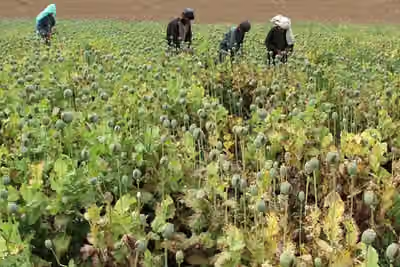
According to figures presented in the report, Afghanistan's total opium production increased from approximately 300 tones in 2025 to nearly 1,500 tons in 2026. The rise was driven by both an expansion in cultivation and higher crop yields resulting from improved rainfall conditions.
According to UNODC, Afghanistan's drug ban appears to have weakened in 2026.
Although cultivation remains below pre-ban levels, the area under poppy cultivation increased sharply from around 10,000 hectares in 2025 to more than 43,000 hectares in 2026.
The report found that poppies are now cultivated in 16 of Afghanistan's 34 provinces, five more than last year. Around 76% of the country's total opium poppy cultivation area is concentrated in the northeast, particularly in Badakhshan province.
The report added that, following this increase, total revenue from the sale of harvested opium to traders reached approximately $525 million in 2026, equivalent to around 2.7% of Afghanistan's gross domestic product (GDP) or 8.5% of its agricultural sector.
Average regional prices for dried opium declined from the previous year to approximately $500 per kilogram, but remained significantly higher than pre-ban levels of less than $100 per kilogram.
According to the UN findings, farmers have adopted concealment strategies to reduce the risk of detection and eradication. These include growing poppies among cereal crops such as wheat and barley, cultivating fields enclosed by compound walls, and staggering planting and harvesting periods.
In Helmand, for example, more than 90% of poppy fields were reportedly concealed.
The report also noted that significant price differences between regions, including lower prices in the northeast and higher prices in the southwest, could strengthen the domestic illicit drug market and increase incentives for internal trafficking.
The assessment further indicated that opium stockpiles accumulated before the ban were running low. Continuing economic difficulties and the lack of suitable alternative livelihoods could increase the risk of sustained or expanded poppy cultivation in the coming years.
Taliban Claims Progress in Combating Drugs
The Taliban's Foreign Ministry held an event in Kabul on Tuesday, 27 October, highlighting what it described as its achievements in combating drugs. The gathering, attended by ambassadors and diplomats from several countries, featured Taliban claims of progress in controlling narcotics in Afghanistan.
Abdul Rahman Munir, the Taliban Interior Ministry's deputy minister for counter-narcotics, said authorities had conducted 25,116 anti-drug operations in 2026.
According to Munir, the operations resulted in the destruction of 26,500 hectares of land used to cultivate opium poppies and cannabis, as well as the arrest of 10,065 suspects.
He added that authorities had discovered and shut down 301 drug-processing laboratories, two factories producing chemical tablets and 15 alcohol-production facilities.
The Taliban official also emphasised the importance of creating alternative livelihoods for farmers and supporting the cultivation of legal agricultural products.
Taliban Foreign Minister Amir Khan Muttaqi told the gathering that widespread drug cultivation and trafficking in countries neighbouring Afghanistan had become a serious concern for the group.
Without naming any specific country, Muttaqi stressed that combating narcotics required international attention and that cooperation in this area should not be politicised.
In recent years, Taliban officials have repeatedly claimed significant reductions in poppy cultivation and drug trafficking in Afghanistan.
However, concerns over regional drug trafficking persist. Russia is among the countries that have expressed concern about the consequences of narcotics trafficking originating from Afghanistan.